Wanna Reduce Poverty? Build Bridges.
If you’re like me, you’d rather not think about poverty on a daily basis. It’s painful for me to see and I don’t know what to do about it. So I’d rather not know the specifics of a family struggling to find food or housing or jobs or transportation or medical care. I’d rather not see the line outside the shelter, the bedraggled man holding the cardboard sign at the end of the exit ramp or asleep in the library, the makeshift tent under the overpass, the breakfast line at the school. And for the most part I don’t have to: 7/8 of us have created a set of policies that make it possible to keep the other 1/8 of us mostly behind walls, inside buildings and in zip codes we know to avoid.
But even if we don’t want to think about poverty, most Americans do want it to go away (depending on the poll, somewhere between 70-80%). A majority say they would be willing to spend more tax dollars on addressing poverty if they thought there were ideas that would make a difference; a bigger majority doesn’t think there are any such ideas.
But what if there were a new strategy, one backed up by real data and showing real promise to make a dent in intergenerational poverty?
A new study gives me some hope. It’s the latest in a series of brilliant pieces of analysis by Raj Chetty and the organization he runs called the Opportunity Insight Lab. This one is a 30-year study of a housing strategy called Hope VI.
Hope IV was a government-backed strategy to reimagine public housing in the US. Between 1993 and 2010, the program invested $17 billion in public and private money to tear down and rebuild 262 big public housing projects (averaging 1355 residents each). Replacing highrise buildings serving only the poorest of residents, the new developments provided a mix of market rate and subsidized housing and provided residents with nearby services, including childcare and job training services.
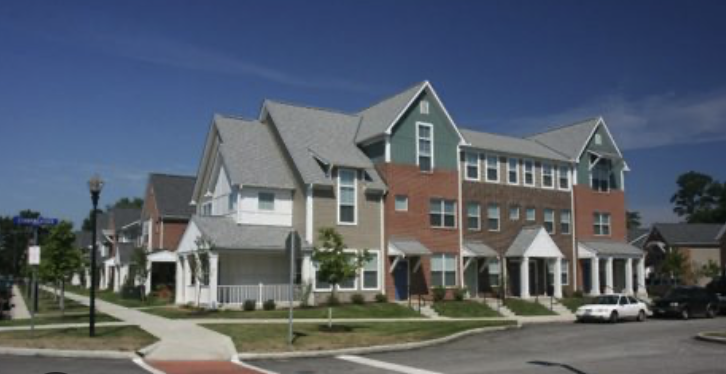
Hope VI developments looked very different from traditional housing “projects,” with neighbors of different income levels living side by side — or nearby. And there were very different outcomes for the children growing up in them.
After an exhaustive review of 40 years of tax returns of the families involved in Hope VI, Opportunity Insights came up with one finding that probably won’t surprise you: the investment did not result in higher incomes for the poorer adults living in the new housing. Crime went down and happiness with housing went up, but their incomes didn’t move. Maybe adulthood is too late a time to reverse poverty.
But the impacts of Hope VI on lower-income kids were dramatic.
Poor children growing up in the new mixed-income neighborhoods were 17% more likely to attend college than those in income-segregated neighborhoods. Boys were 20% less likely to end up incarcerated. And those living in the new housing for their entire early years increases a child’s income at age 30 by 50%.
As the Opportunity Insights team reviewed the data more closely, they recognized it wasn’t having better housing that made the difference for poor kids growing up in the revamped neighborhoods. It was the exposure to wealthier friends and different role models.
“The single strongest predictor of economic mobility across areas is the fraction of higher-income friends that low-income people have,” Chetty told The New York Times. “In communities where you have more cross-class interaction, kids do much better.”
If the traditional approach to low-income housing was to stick poor people on islands, the Hope VI strategy was to create bridges. And, for the kids, the bridges worked.
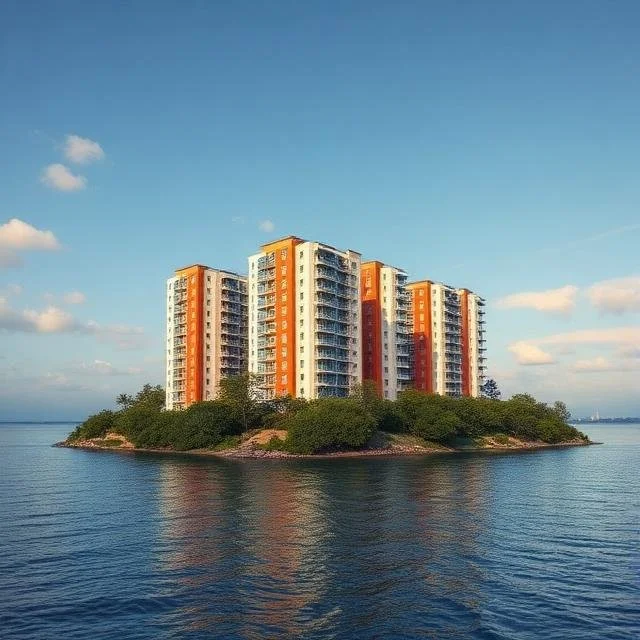
The traditional approach to poverty is to isolate it. New research shows everyone wins if we can create economic integration (Image generated with deepai.org)
Researchers were able to use anonymized Facebook information and cellphone data to show that poor kids in the new neighborhoods spent more time in homes outside of public housing, with friends whose families made more money.
Through those friendships with higher-income peers and their families, the lower-income children made important connections, Chetty said:
“If you’re connected to people whose parents have a good job at a good company, you’re more likely to get an internship there, get to develop a career in that kind of business.”
The team also found that exposure had a positive impact on decisions made by lower-income children about a range of other decisions, including homework completion, gang membership, drinking and drug behavior and, later in life, decisions to marry. Interestingly, exposure to lower-income children did not have a negative effect on achievement of higher-income children.
When it comes to learning, other studies mirror the Opportunity Insights finding on the power of peer influence. A synthesis of reports pulled together by the Century Foundation concludes that low-income students in classrooms that are socioeconomically or racially integrated have higher test scores, are more likely to enroll in college, are less likely to drop out without reducing performance of their higher-income peers. Other studies show that those attending integrated schools earn more, have better health outcomes are less likely to be incarcerated.
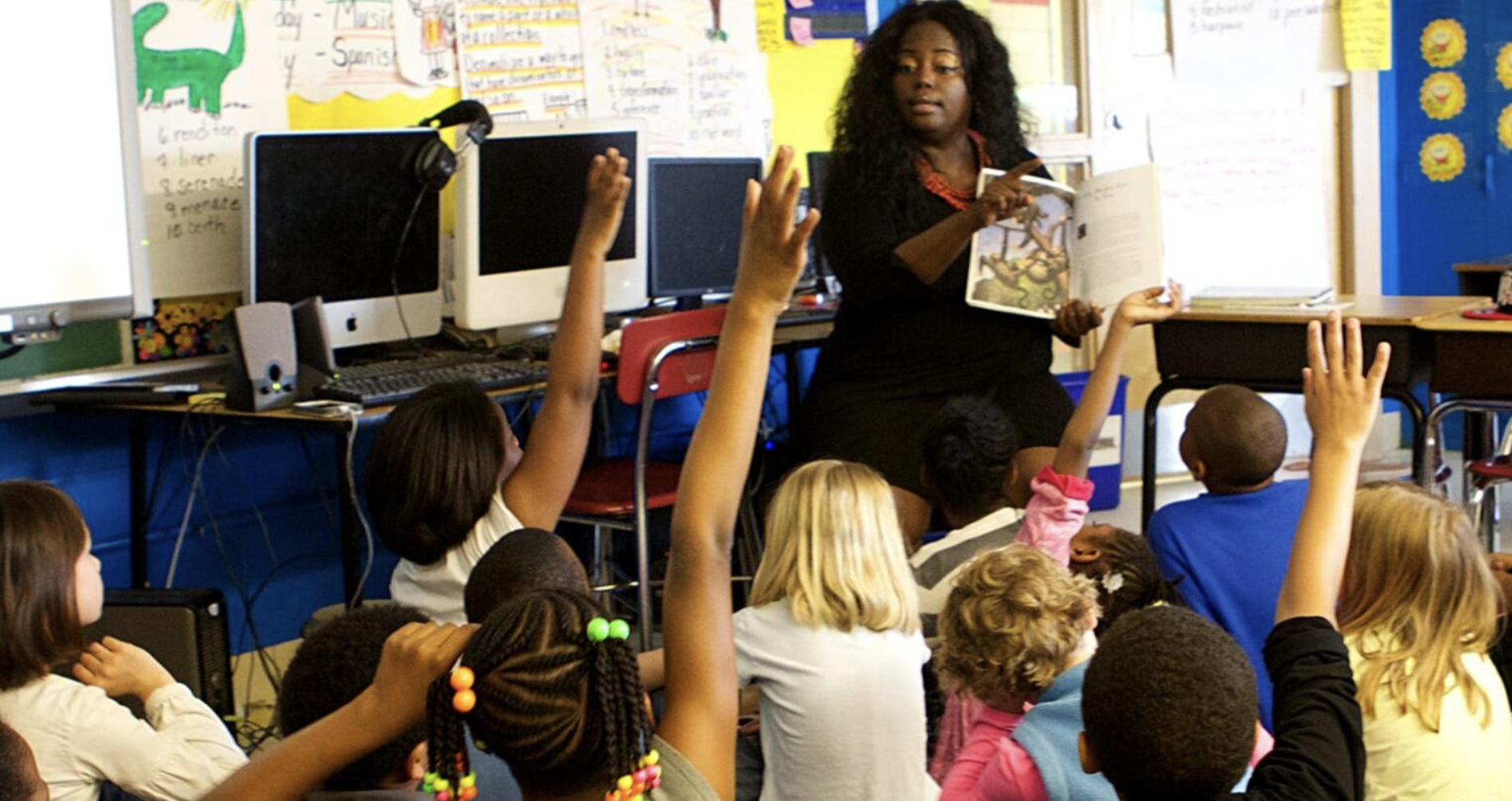
Research shows poor kids learn better when they are side-by-side with wealthier kids; the wealth kids learn just as well (Photo US Department of Education).
Opportunity Insights found that it cost about $170,000 to redevelop each Hope VI housing unit. Each child growing up in the redeveloped neighborhoods was projected to make an additional $500,000 over the course of their lifetimes. Given that units housed multiple children, the study estimates that between increased tax payments, reductions in the cost of public support and lower prison costs, the program would more than pay for itself.
But before all this long-term evidence could be gathered, the Hope VI program was defunded.
That doesn’t mean the lessons can’t be applied to other neighborhoods.
Opportunity Insights has identified neighborhoods across the country where poor people are just as isolated as the folks in Hope VI projects were before they were rebuilt. If communities can find support to revitalize neighborhoods while preserving affordable housing, some of the same results might be possible.
Could it be done without Hope VI funding? Yes. Some communities are already doing it.
An Atlanta-based nonprofit group called Purpose Built Communities is working nationally to restructure neighborhoods to create more interaction across class lines. In Charlotte, NC the Affordable Housing Fund is taking a for-profit approach to buy up and rehab existing rental properties in the city, rent them to families making 80% or less of the area’s median household income, with a guarantee that the units will remain affordable for at least another twenty years. By the end of the next round of funding, the group’s apartments will house more than 10,000 residents in locations with existing easy access to food, schools, services and transportation. Mark Ethridge, president of Ascent Housing, which is buying and managing the purchases, told WFAE when the project began that “these are neighborhoods that I think anybody could identify that are near major public and private investments, that are in mixed-income neighborhoods, (where) you know that affordability is eroding.”
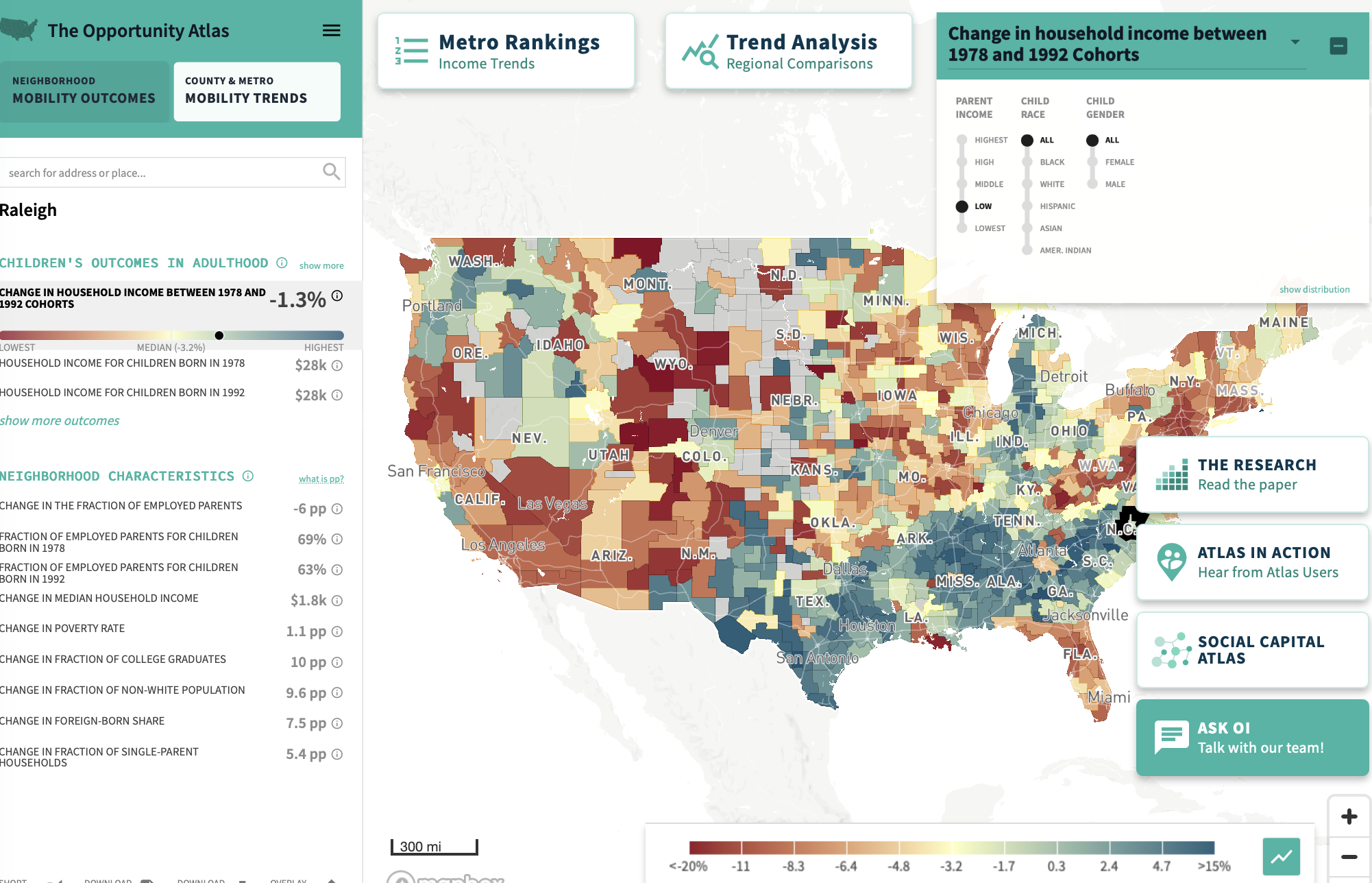
On the Opportunity Insights website, you can find a neighborhood in your hometown that is likely to benefit financially from a broader socioeconomic mix of residents (see link to tool in “Notes” section below.
Whether it’s nonprofits or for-profits doing it, a few communities are proving it can be done. Opportunity Insights research proves it should be done. Now we just need more people learning from the research so that it will be done.
Notes:
Chetty/Opportunity Insights study of impact of access to friends outside of public housing projects: https://opportunityinsights.org/wp-content/uploads/2025/09/HopeVI_Paper.pdf
Impact of socioeconomic integration on school performance:
Impact of peer groups on success: https://medium.com/@ameerrosic/how-the-people-around-you-affect-personal-success-9ce993ae3dc7
Nicholas Kristoff on implications of Chetty neighborhood study: https://www.nytimes.com/2026/01/28/opinion/american-dream-poverty.html?unlocked_article_code=1.IFA.N6Ri.C0QTgY3B3Xs-&smid=nytcore-ios-share
Century Foundation summary of benefits of socioeconomically integrated schools: https://tcf.org/content/facts/the-benefits-of-socioeconomically-and-racially-integrated-schools-and-classrooms/
Link to Chetty map on neighborhoods where economic integration would have a high likelihood of success: https://www.opportunityatlas.org
Official Poverty Measure summary (2024): https://www.americanprogress.org/data-view/poverty-data/