The March of Badness
It’s hard not to love March Madness. This year I got at least a dozen invitations to predict the winners of the 63 men’s college basketball games that will be played over the next three weeks in the year-end men’s tournament. The impossible dream? Being the first person ever to pick the winner of every game, defying the 1/9.2 quintillion odds.* The more achievable dream? You might just win the office pool you bet $10 to enter.

This year Americans have filled out 26 million brackets on the ESPN app alone; millions more on other apps.
Joining in an office pool gives us something to talk about with people we might not normally hang out with. It makes us more interested in games we might not normally care about (how about the end of that Kentucky-Santa Clara game?!). And hey, it’s just $10.
This is not a piece about March Madness.
It’s about a discussion we never had -- about everything that lies in the depths beyond the office pool. The one where we would have talked about whether we’re comfortable with a world that is all in on drinking and drugs, porn and prostitution, gambling and graft.
As recently as ten years ago, we seemed to feel some vague discomfort with most of that (local conditions may vary). Today, our legal system, our institutions and our culture reacts to the various activities that we have, at some point or another, called “vice,” on a scale that is restricted to the part of the range from “meh” to “YEAH!”
For most of the world’s history in most parts of the world, humans have had to put in some effort if we wanted to get vice-y. In my day, if you wanted alcohol or smokes as a young person, you’d have to take a chance going to a store in person or pay someone a premium to get them for you. If you wanted porn or pot, a hooker or a bookie, you were going to have to go to a tricky part of town, pay cash and take the risk of a friend or a member of the “vice squad” busting you.
No more. Almost all that stuff is almost frictionless now – easy and private.

Cell phones — and changes in government regulation — are making self-indulgence frictionless (Image generated using deepai.org).
Vice has never been easier, more popular or more valuable.
· Annual US alcohol sales total about $230 billion. Despite declines in consumption, Americans still spend about $78 billion a year on traditional cigarettes, with price increases projected to drive sales to $100 billion by 2030. E-cigarettes and vapes are filling in the decline in the traditional cigarette market, with the current $11 billion US market expected to pass $100 billion by 2033.
· The latest estimates put online porn as a $76 billion business globally, with projections showing growth to $118 billion by 2030; abut 40 million Americans “regularly” visit porn websites.
· Forty-five US states are now in the lottery business, selling about $100 billion a year in tickets. Forty states currently permit online sports gambling (one reason 50% of 18-49-year-old men now have an online sports betting account). Forty-four states now have some sort of casino.
· Twenty-four states have legalized recreational cannabis use; two states and several cities have legalized use of psychedelic drugs. Of the former “vices,” only prostitution and “hard drug” use remain as consistently state-prohibited (although to be clear, it is fine to pay someone for sex as long as you film it and sell the film as pornography).
If you lean libertarian, you may not participate in any of the behaviors above, but you’re delighted to see the “nanny state” getting out of the way of people’s personal liberties. Why should the state be able to tell us we can’t drink or smoke or shoot, sell our bodies or gamble away our fortunes? Good on those politicians, you might say, for finally getting out of our way and letting us make our own decisions.
But political philosophy isn’t what is driving politicians to abandon rules about vice. The problem is that vice solves two important political problems:
Politicians are terrified about taxation: If there is one message that works on both sides of the political aisle these days, it is this: someone is coming to take what is yours. If you can convince your voters you are protecting them from whoever that is, they will vote for you. For the past two decades, political leaders have determined that the best way to avoid raising taxes on everyone is to take a cut of of every dollar we lose on a lottery ticket, crap shoot, or player parlay, every stick of cigarette or puff of vape or ounce of pot or bottle of vodka, every online porn transaction. More vice = more revenue for the government. And, these days, no negative consequences for the politician.
Sports leagues make a similar compromise. While leagues used to fight gambling to ensure “the integrity of the game,” now they are percentage owners in or contract partners with sports betting companies. Major League Baseball is the latest, this week signing a four-year, $300 million deal with prediction company Polymarket that will enable users to bet on everything from game outcomes to player performance to balls and strikes. Hey, more betting on games, more revenue for the league.
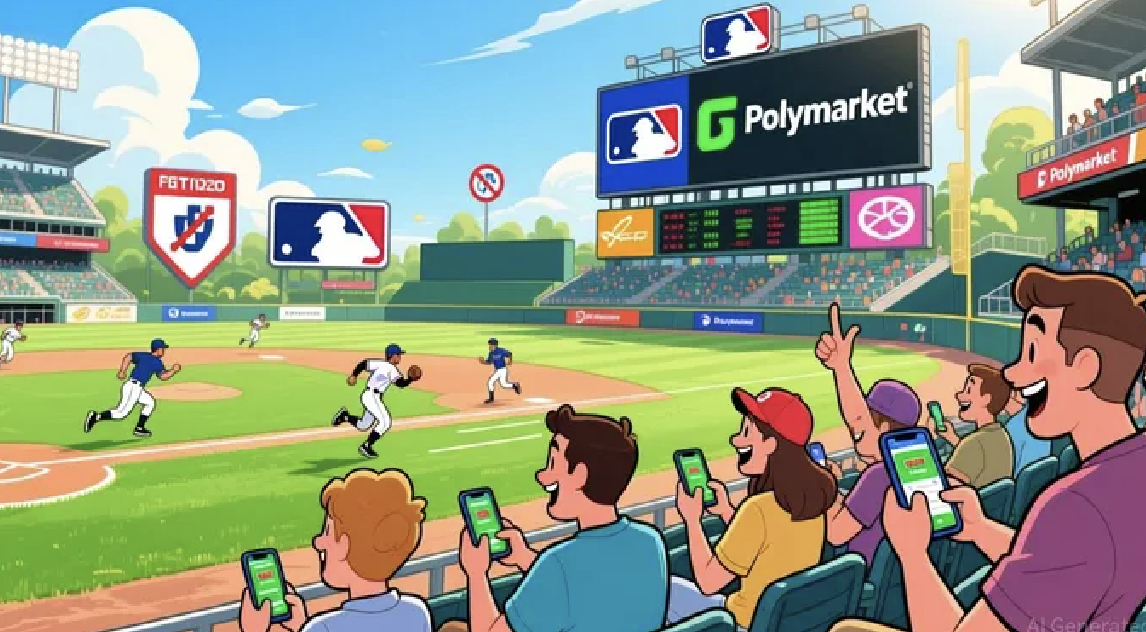
Polymarket is moving beyond political predictions into baseball betting; MLB says an official relationship will restore “the integrity of the game.”
Politicians are powered by PACs: The amount of money invested by sports gambling companies in political action committees (PAC’s) is stunning. This past Christmas Eve, FanDuel donated $500,000 to four different PAC’s – two to elect a Republican majority in Congress; two to elect a Democratic majority. Kalshi, the other big company in the explosive-growth prediction market, spend more than $1 million last year on federal lobbying. But those are just the splashiest contributions. The real story is hundreds of contributions to individual campaigns, on a federal and state level, to make sure deregulation continues. The companies don’t care who wins as long as the politicians look favorably at their industry; the politicians don’t care as long as the checks clear.
Politicians (and sports leagues) would still care if they thought we still cared. Increasingly we’ve made clear we don’t.
Our tolerance of and tendency toward gambling and porn and inebriation has risen as we have swapped the ideal of self-sacrifice for self-indulgence, loyalty for free agency.
The religious traditions we’ve turned our backs on may have had their shortcomings, but for this kind of issue, they gave us some guidance that asked us to think beyond our own convenience. When Judeo-Christian thinkers argued for control of lust and greed, or Islam discussed the dangers of intoxicants and obscenity, it wasn’t so much about the acts themselves as the consequences of the acts.
In moderation, not every vice is vicious; it’s the cumulative impact of the actions that turns our attention away from God and others. More time on vice = less time for nice.
More time on vice also means less money for nice. I’ve written about the knock-on effects of legalization of sports gambling: among other things, in states that legalize gambling, bankruptcy rates increase by 28%, household saving decreases by 14% and child abuse reports increase by 5-7% the year after legalization.
As with so many issues in our world today, I don’t think there is a binary here. I don’t know the precise place where I draw the line between March Madness pools and family-bankrupting gambling addictions; where the line is between my belief in people’s right to make personal decisions and a belief that our personal decisions effect others and there are some behaviors we just shouldn’t officially celebrate.
But we should be talking about the line, wrestling over where it is, not just erasing it.
Are we ready to give up and declare game over? Free agent nation? Wild West? Maybe not.
Here’s something that happened this week. The Atlanta Hawks, an NBA team, had scheduled a special theme night, Magic City Monday, for March 16. The evening would pay reverential homage to what the team called an “iconic cultural institution,” a strip club called “Magic City.”
Then somebody said something.
Luke Kornet, who plays for the NBA’s San Antonio Spurs, wrote that the night would “reflect poorly” on the NBA, “specifically in being complicit in the potential objectification and mistreatment of women in our society.” Local anti-sex trafficking groups joined in. The Internet world divided, but a lot of people called out the team and the league for what amounted to an endorsement of a strip club. The NBA caved, cancelling the promotion.
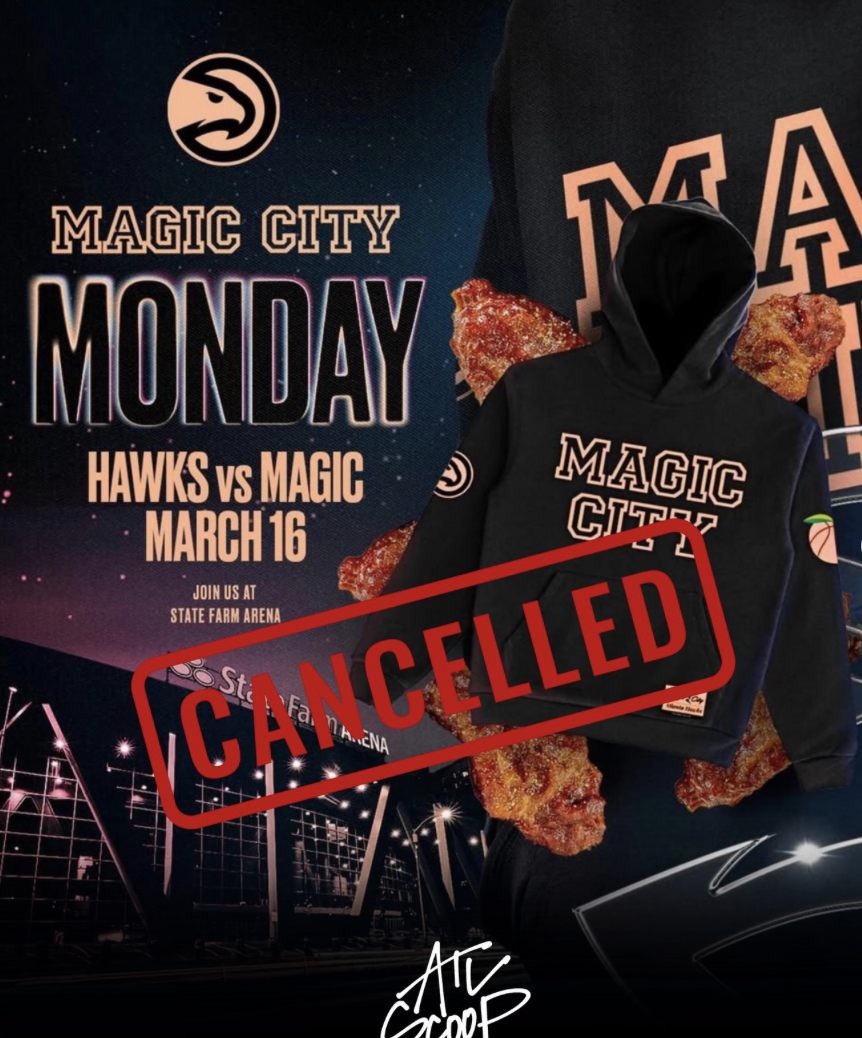
Magic City Night would have included appearances by dancers, merch and a free commercial for the club… until a few people called it out.
“It’s a really powerful litmus test to get a sense of what’s acceptable,” Marcus Colins, who teaches marketing at the University of Michigan, told the New York Times.
Maybe. And maybe this litmus test will remind us that we can still talk about these subjects, maybe even consider drawing or redrawing lines some of the fuzzy lines. None of these activities is going to go away. But maybe we should just have to work a little harder if we really want to do them. Here’s an idea for a slogan: “Make Vice Inconvenient Again.”
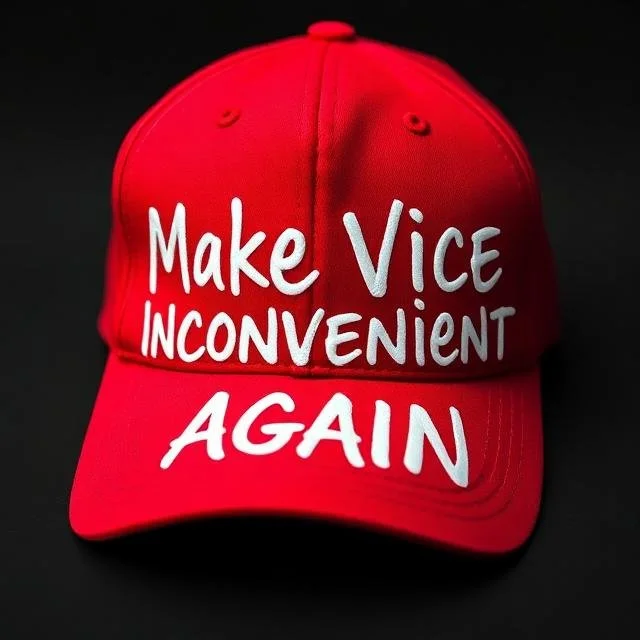
Not sure sales are going to skyrocket for this hat (Image generated through deepai.org)
-Leslie
*If you flip a coin on every men’s NCAA tournament basketball game, you get the quadrillion odds; if you make educated guesses, your chances soar to 1/120 billion.
Notes:
Lottery sales: https://www.cnn.com/2022/11/09/business/states-without-a-lottery
US alcohol sales: https://alcohol.org/guides/the-alcohol-industry-in-data/
Cannabis legalization: https://en.wikipedia.org/wiki/Cannabis_in_the_United_States
States and sports gambling: https://www.cbssports.com/betting/news/u-s-sports-betting-where-all-50-states-stand-on-legalizing-online-sports-betting-sites-proposed-legislation/
Online gambling PAC contributions: https://popular.info/p/draftkings-and-fanduel-spending-millions
Kalshi 2025 lobbying efforts: https://nexteventhorizon.substack.com/p/kalshi-has-spent-1-million-on-lobbying
What lobbying by sports gambling companies looks like on a state level: https://mississippitoday.org/2025/04/23/house-speaker-jason-white-staff-treated-to-super-bowl-by-gambling-giant-pushing-for-legalized-betting/#:~:text=The%20Spillmans%20pose%20for%20a,supports%20other%20causes%20as%20well.
MLB deal with Polymarket: https://www.mlb.com/press-release/press-release-mlb-names-polymarket-exclusive-prediction-market-exchange-partner-and-signs-agreement-with-cftc-to-establish-integrity-framework
Magic City Night cancellation: https://www.nytimes.com/2026/03/15/business/magic-city-atlanta-hawks-strip-club.html