AI Update Part 5: Why We’re Aiming Our Rocks at Data Centers
Note: This is the 5th part of a series looking at how people and companies and governmental organizations are responding to the impact of widespread implementation of AI on employment in the US. You can find the other parts beginning here.
I went to Panama in 1989 as a reporter, covering a US military operation designed to depose a military dictatorship and ensure the Panama Canal stayed open. The military operation was brief and one-sided, so I spent a lot of my time there talking with people about what life was like for them under the regime of military dictator Manuel Noriega.
By the time I got arrived in Panama City, small pockets of civilians were emerging from behind closed doors and what I heard most clearly from them was their feeling of utter, complete powerlessness. They wanted to work, but there weren’t any jobs – unemployment in Panama City had hit 20%. What jobs there were didn’t pay much – more than 50% of people were living in poverty and a third of the population was living on $2 a day or less. They had voted for a president, but their vote didn’t matter: the military had prevented the elected president from taking office. Then a US invasion force had come in unannounced to end the military regime, but in the process knocking down doors and causing fires. The people on the streets couldn’t fix unemployment or poverty or oppression or invasion, but they could do one thing — take aim at the homes of the wealthy of the country, protected in their homes behind 15-foot iron fences.

Panamanian protestors in 1989 weren’t sure where to focus their frustration.
I asked the folks on the streets why they were throwing rocks at the houses – what were they hoping to change? They didn’t know, they said, but they felt like they had to do something.
It’s hard not to think about Panama when I look at how Americans are reacting to data centers these days.
For at least a decade, local, regional and state recruiters have been falling all over themselves to bribe companies to bring data centers to their communities. And as recently as August of 2025, Americans were about evenly split on the construction of data centers in their backyards – 43% strongly supported or supported data centers; 42% opposed or strongly opposed. By August 2026 support had cratered: just 15% supported or strongly supported data centers; 75% opposed or strongly opposed.
That means that there are more people opposed to data centers in their backyard than coal plants (48%) or nuclear power plants (34%).
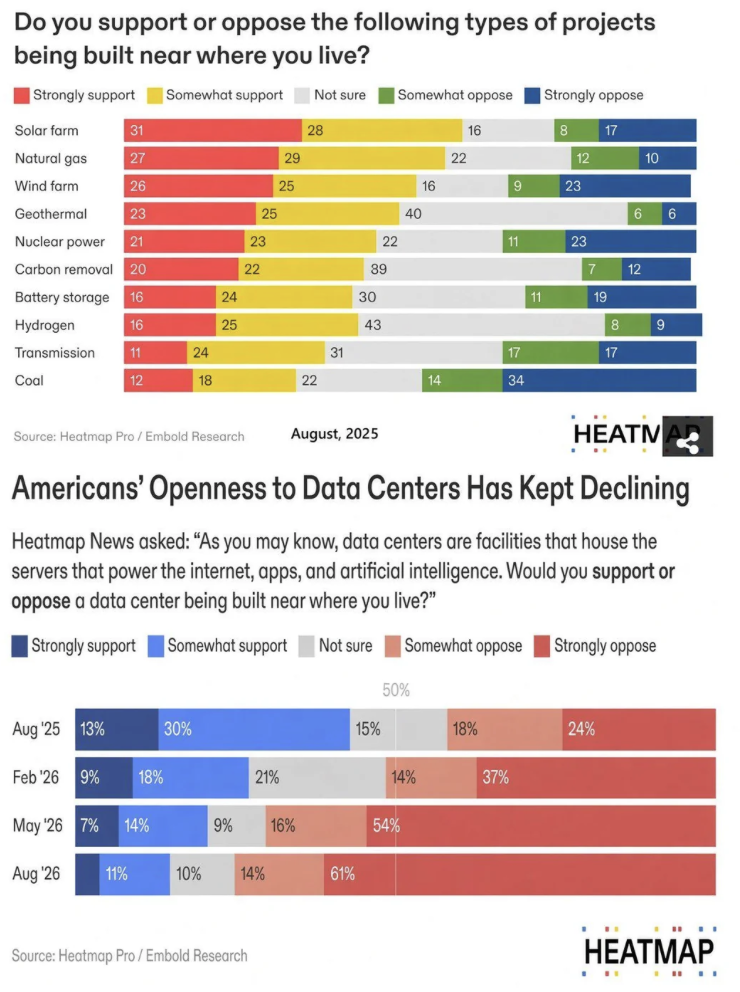
Polling from Heatmap shows the collapse in support for data centers over the past year. Fewer folks want a data center in their backyard than a coal plant or a nuclear plant.
Separate polling by Gallup in May 2026 found that it doesn’t much matter which party you belong to either: 75% of Democrats oppose data centers; 74% of independents; and 63% of Republicans.
As the comedian Charlie Berens put it, opposition to data centers has become “the most bipartisan issue since beer.”
The plans to build more data centers present a problem for communities, for politicians and for AI planners. Depending on your definition of when a server farm becomes a “data center,” there are roughly 3,000 giant buildings crunching huge amounts of data already in the US, with another 1,500 being built and a total of 4,000 in various stages of planning. But after years of frenzied competition among local and state political leaders to recruit data centers, state and local leaders are reading the polls and beginning to put on the brakes as public opposition mounts.
Over the past year, more than 500 local governments have enacted temporary local bans. Lawmakers in 15 states have proposed statewide bans or studies on the centers. And two of the governors formerly most supportive of data centers, Democrat Josh Shapiro of Pennsylvania and Republican Greg Abbott of Texas, have both called for strict new rules limiting future construction of data centers in their states.
There’s a slow-moving effort by AI supporters to try to turn the opposition around.
Open AI has posted jobs listings for “community engagement coordinators” in Ohio and Georgia who would be charged with trying to “reduce risk of opposition” to data centers.
Last month Meta announced a new fund to support jobs programs in communities hosting its data centers.
Some construction labor unions are touting the benefits of data centers for their members.
And President Trump is pushing back against the opposition: “The only reason that communities through the U.S.A. should not want data centers is if they want to end up being backwards and poor. If they want to be successful and rich, with far lower taxes and jobs all over the place, let data reign… If we want to kill the Golden Goose, we will only have yourselves to blame.”
So far the numbers aren’t moving. Data center opposition is creating a rainbow coalition.
William Lawrence, a Democratic congressional candidate in Michigan, summarized the opposition this way: “It’s bringing together three-time Trump voters, anti-vaxxers, environmentalists, independents, nonvoters, people who are in our cities, people who are in the rural areas.”
How did this happen and what does it tell us about where our country is these days?
I think there are four problems with data centers that can probably be fixed; two problems without an easy solution; and one deep underlying problem that just won’t go away.
4 “Fixable” Problems:
Secrecy: Over the past three years, local officials interested in recruiting data centers have agreed to sign nondisclosure agreements with big data companies, essentially agreeing to tell the public nothing until a deal is done. Solution: local officials (and big data companies) now have polling data proving this is an idiotic idea.
Water: Earlier data center designs drew on huge amounts of limited water resources to help cool the massive amounts of heat thrown off by servers. Solution: newer designs allow repeated recirculation of the same water.
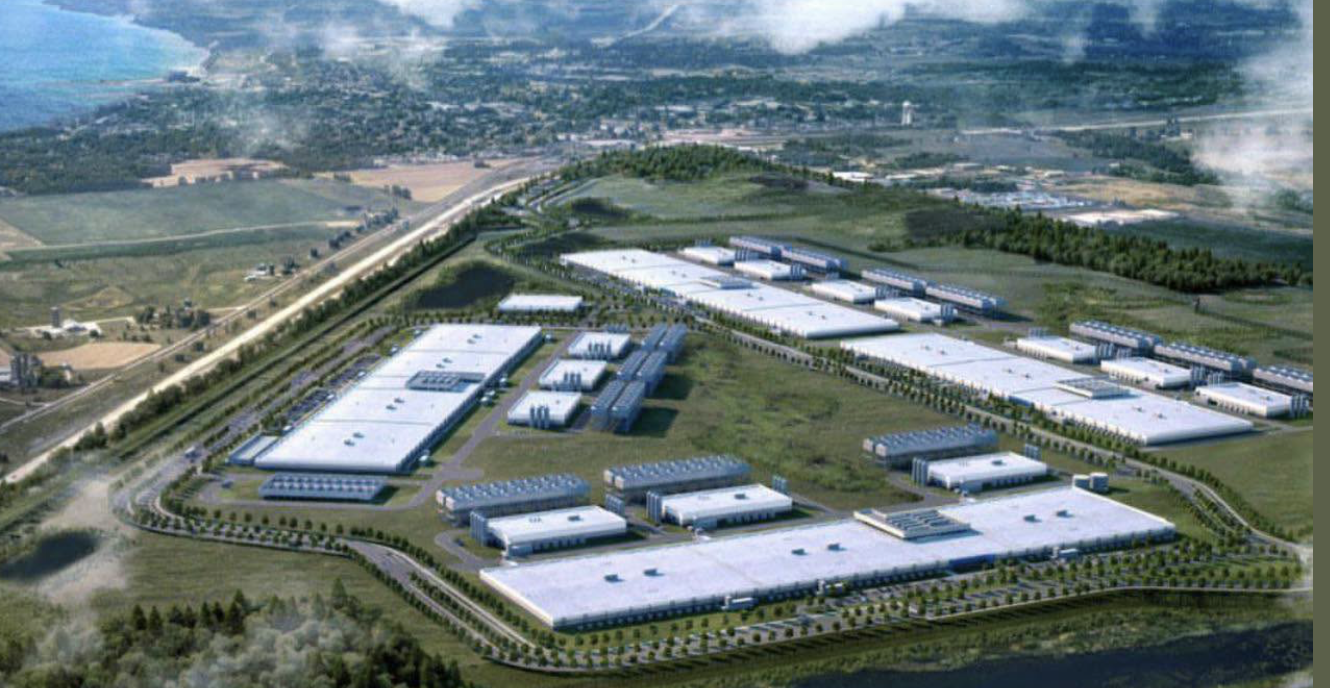
Data centers need an extreme makeover.
Design: The typical design has been hideous – long, windowless, flat and boring. In a recent Substack post on data center pushback, reporter Jasmine Sun described the centers’ appearance this way: “Data centers don’t look cyberpunk, solarpunk, or otherwise inspiringly futuristic. They are just greige.” And they go on forever: one community resident found that it took her 104 seconds, driving at 70 miles per hour, to go from one end of a data center in Port Washington, Wisconsin to the other. Community members deserve better. Solution: The same people who are smart enough to figure out how to make AI superintelligent should be smart enough to figure out how to make their buildings look less god-awful. Get some architects involved. Use different colors. Put in fake windows. Paint murals. Plant gardens in between air conditioning units on top of the buildings. Or just bury them.
Noise: People living near data centers complain that a low-frequency hum emanates 24/7 from the buildings. The sound comes mostly from rooftop air conditioners placed on top of the buildings and high-speed fans inside. Solution: Acoustical panels, lower fan speeds, and other sound barriers can dramatically reduce the thrum of data centers. Now that the power balance is shifting from data centers to communities, locals can demand that big data companies show the steps they are taking to reduce noise prior to getting building permits.
2 Problems Without an “Easy” Solution:
Power: Data centers are putting huge pressure on electrical grids, drawing 1.5% of all world energy in 2024, with expected growth to 3% by 2030. In the US it is even more extreme: a Berkeley Lab report estimates data centers will draw somewhere between 9.5% and 15% of US energy by 2030 (data centers already draw an estimated 26% of Virginia’s power usage). Consumers complain they are currently paying higher energy bills because of big data. Potential solution: Most of the big data companies have signed on to a “rate-payer protection pledge,” agreeing in theory to cover the costs of expanding the grid to meet their demand. But so far the pledge hasn’t been tested and it is unclear where the additional power would come from.
Jobs: Since they typically negotiate with data centers to defray property taxes for years, the biggest selling point for local government officials has been that the centers create lots of jobs. That is true on the front end: standard facilities create 400-600 jobs during construction, large campuses 800-1500 and hyperscale facilities even more. That is good news for many construction workers, particularly electricians, who are seeing huge increases in their hourly wages during construction. The news is not as good for homebuyers, as homebuilding companies are finding it hard to match the wages of construction workers without jacking up the price of homes even further. And in the post-construction phase, data centers employ considerably fewer people: typically they require 50-100 people to operate. Potential solution: Instead of offering companies tax breaks to locate data centers, local officials should insist on reaping the full tax benefits from companies locating in their communities and there should be an expectation that tech companies who move there give back to the community. Meta’s $1 billion “Future Is for Everyone” fund for communities where it is building data centers could start a trend: if other companies made similar pledges, this could address some of the shortages of skilled tradespeople.
1 Deep Underlying Problem:
The deepest problem big tech companies face when trying to locate data centers is that people are deeply scared right now – about a host of things. For the past two decades, we’ve watched as the speed of change in everything has picked up – news cycles, public opinion and idea dissemination are all moving more quickly than ever, but we’re also watching record change in the sort of jobs we do and the norms by which we apparently live.
AI is moving the pace of change to warp speed -- a little more than half of us are already using the technology in some form within two years of its introduction – the fastest rate of tech adoption in history.
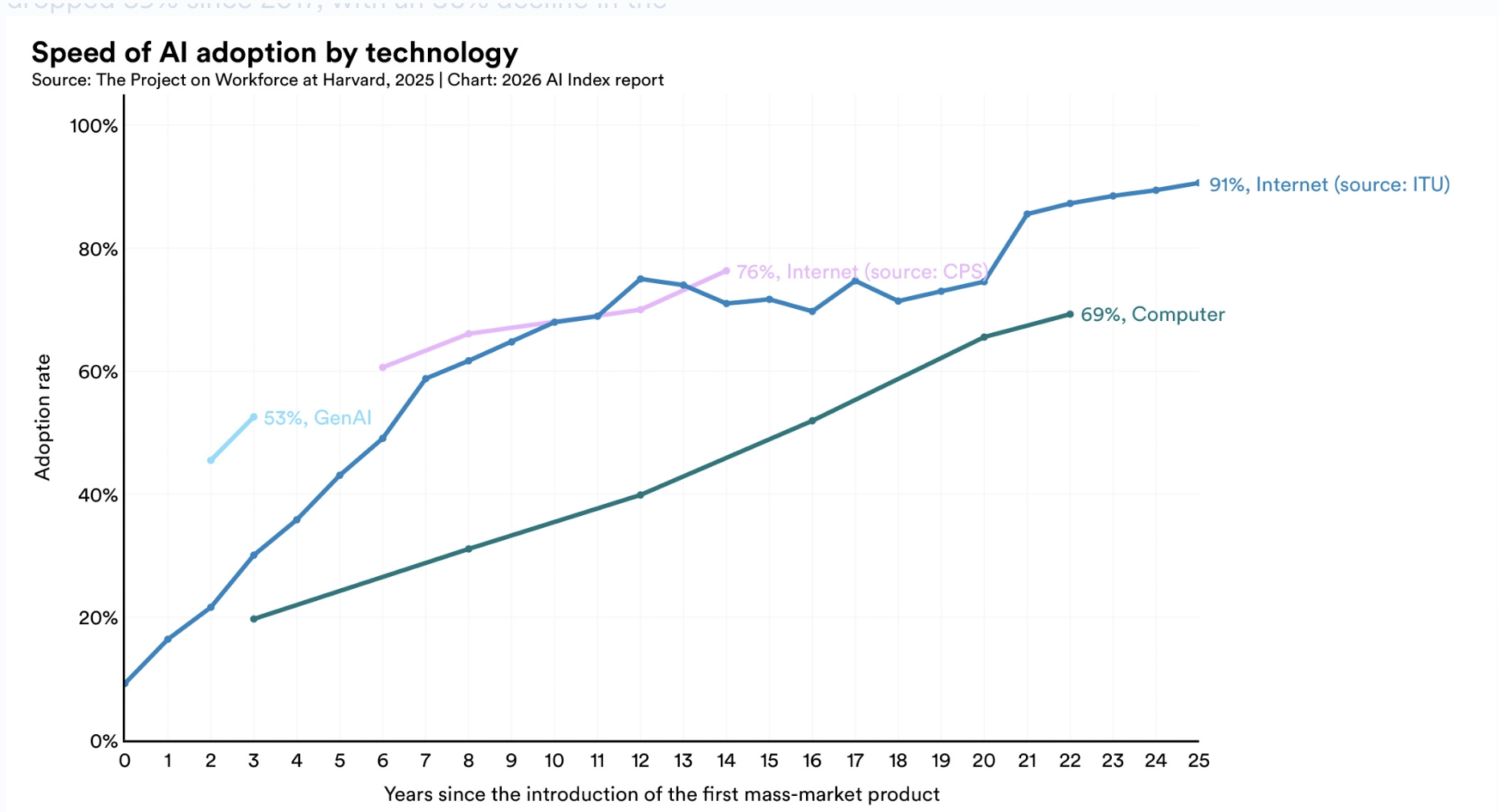
We normally have time to get used to new technologies in our lives. AI just appeared.
It’s all going too fast. We have reached what Jim VandeHei of Axios describes “post processable velocity,” the point where we feel like we can no longer even understand the change, much less have any impact on what it is doing to our jobs or our companies or our lives.
We want to blame someone for the anxiety we feel about what is happening in our lives. President Trump has offered up immigrants and wokeness and communists – if we just get rid of them, America can be great again. Opponents of Trump have offered a simpler solution – just get rid of Trump and everything will be better.
But there’s more to it than that. I think it gets back to powerlessness.
A bunch of ridiculously smart techies, people we don’t know and don’t have any control over, who seem to have gazillions of dollars and bunkers to hide in if things don’t work out, are developing a technology that will completely change the way we live and work. They casually throw around phrases like “there’s a 10% chance that AI leads to the end of the world, but a 40% chance it solves all the world’s problems” or “there’s a 20% chance that 80% won’t have to work anymore in 10 years” — as if that’s a normal way of talking and that the future is just a math problem or a prop bet. But none of the tech geniuses seem to be asking us if we like that bet. To me, the end of the world or the end of work both sound scary.
Meanwhile, a bunch of people we do know, our local elected officials, are negotiating in secret with the tech billionaires to build data centers, the very places that make those potential scary outcomes possible, in our back yards.
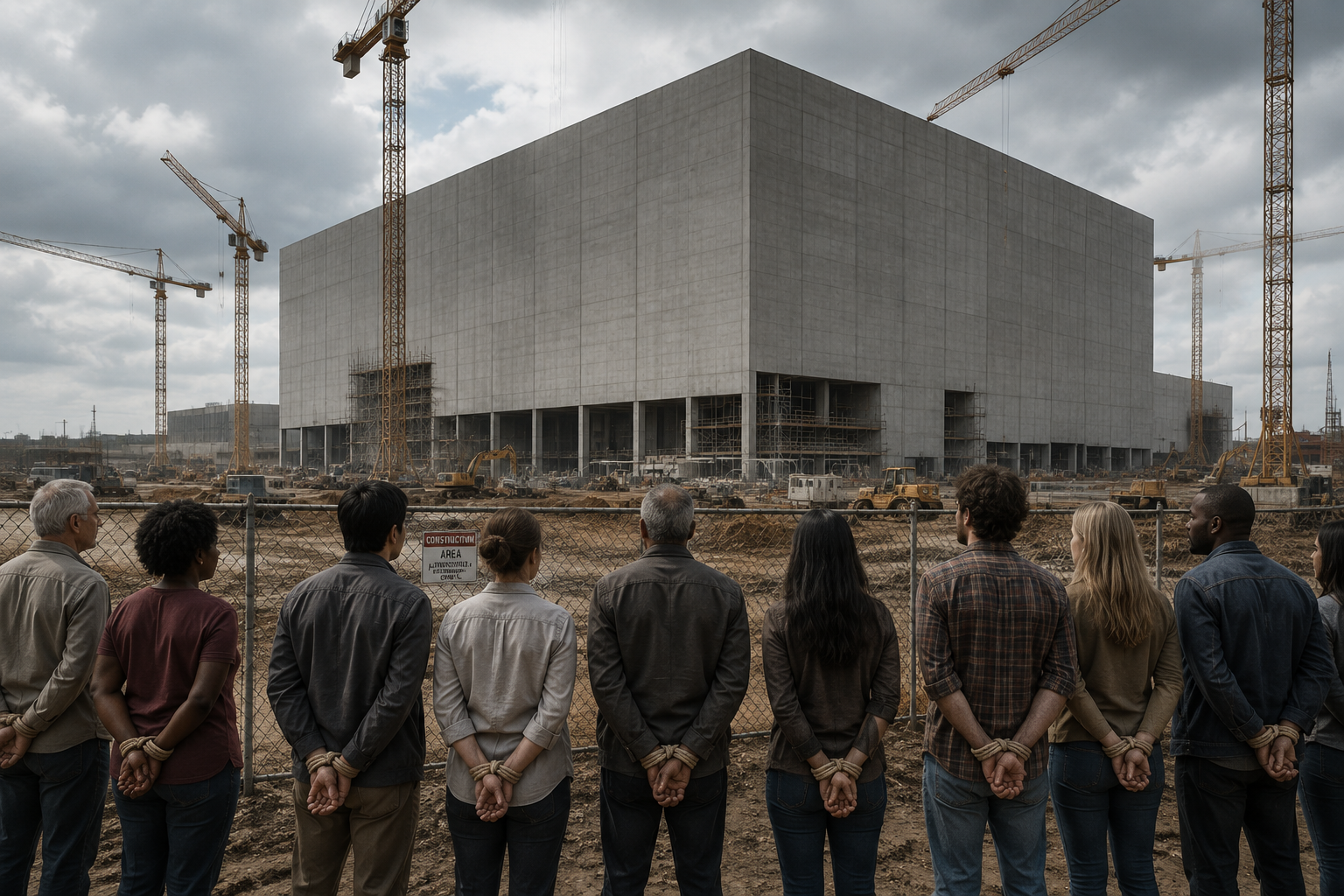
Up until now we haven’t had any easy way to show our feelings about AI. The data center debate has untied our hands.
But nobody seems to have been noticing our growing disquiet.
So when someone asks us what we think about building a data center down the street, we have an answer. It seems impossible to know how to fight a concept, but data centers give us a way to be modern-day Luddites throwing wrenches in the machinery, a physical adversary we can oppose. Maybe we think, as New York Times magazine writer David Wallace-Wells noted in a recent discussion: “Here is a town hall I can go to and scream my ass off and get this project killed.” Or maybe we decide instead we can vote out local officials who’ve been keeping us in the dark, write letters and make phone calls. All that may sound like opponents are saying “not in my back yard,” but maybe what it really means is “slow the hell down.”
Maybe if there’s a collective squeeze on new data center construction, tech billionaires will start paying as much attention to protecting us from the downside of AI as much as they are on selling us on the upside. Maybe politicians will hear the voice of voters outshouting the scream of campaign contributions. Maybe somebody will start thinking seriously about what the post-AGI job world actually looks like for real people.
Until then we’re all going to keep throwing rocks at the data centers.
Notes:
Heatmap polling on AI data centers: https://heatmap.news/daily/data-center-opposition-poll-collapse#
Gallup poll on data centers: https://news.gallup.com/poll/709772/americans-oppose-data-centers-area.aspx
Charlie Berens “most bipartisan issue”: https://www.theguardian.com/us-news/ng-interactive/2026/may/17/comedian-charlie-berens-ai-datacenters
Facebook post on data center size: https://www.facebook.com/christinaloreynews/posts/one-minute-42-seconds-thats-how-long-it-takes-going-70-mph-to-drive-past-the-sit/1443939550886619/
State and local attempts to regulate data centers: https://www.ncsl.org/fiscal/which-states-are-banning-data-centers
Jasmine Sun’s Substack article on data centers: https://jasmi.news/p/no-data-centers-in-my-backyard
Berkeley Lab report on projected data center draw as % of US load: https://bies.lbl.gov/news/berkeley-lab-report-evaluates-increase-electricity-demand-data-centers
Data center usage of electricity in Virginia: https://environmentamerica.org/virginia/articles/data-centers-could-derail-virginias-clean-energy-progress/
Data center energy potential solutions: https://fortune.com/2026/08/25/data-center-backlash-midterms-new-bargain/
Ratepayer protection pledge: https://www.axios.com/2026/08/20/data-center-uproar-2026-midterms