Eating Alone Part 2: Goodbye Moose Lodges and Masonic Temples; Hello Book Clubs and Bird Binges
We are born in water.
The rest of our lives unwind like a river.
Our parents navigate for us for our first few years. We jump back and forth onto other supervised vessels for a few years – school and teams, hobby groups.
And then, if all goes well, we take the helm of our own ship. It can be exhilarating and terrifying to start steering.
For much of the past few centuries we had established groups that could help guide us through our lives – churches, civic groups, community clubs – places where we could get informal advice and counsel. These groups all had people in them who could serve as role models, who provided us with a sense of responsibility or community, who supported us when things were falling apart. They gave us a place to develop deep friendships, make new friends or meet our partners. And then, slowly but steadily, more and more of us stopped going to those places. Then we started opting out of the informal versions of those groups too – dinner parties, neighborhood pot lucks, athletic groups, card games.
This was our Great Desocialization.
We had our reasons (see Part 1 from last week). All of us, men and women, started working longer hours. We started spending more time with our kids. As politics became higher stakes, we got gunshy about socializing with mixed groups. It was an easier sell for our kids (and for many adults) to spend Sunday morning on sports rather than in church. Meanwhile, Facebook, then Twitter/X, then Instagram gave us the ability to feel like we were still interacting with “friends” without the hassle of meaningful interaction. Dating apps let us swipe right or left among hundreds of possible matches from the safety of our own living rooms. And television and YouTube and TikTok and gaming kept getting more and more seductively entertaining.
The downside of this desocialization is that we systematically eliminated everyone who is not in our immediate inner circle from our lives. You can only go so long before that catches up with you: as Bette Midler put it, “You got to have friends.” Maybe the stage for re-engagement was set when 1/8 of us, and 1/7 men, started having “no close friends.” Maybe the pandemic pushed us over the edge – half of us said COVID made friendship more difficult. Maybe having 100 dating options gave us so many options we were paralyzed.
Whatever it was that pushed us over the edge, we are apparently hungry for more meaningful interactions with real people.
Call it The Great Resocialization.
What The Great Resocialization is Not
The path back to In Real Life (IRL) socialization probably doesn’t look exactly like the old path.
Some of the clubs we ditched during the Great Desocialization had worked just fine for Boomers and Gen X. They didn’t work as well for the generations that followed.
The past 50 years have seen huge declines in the membership of Moose Lodges, Elks Clubs, Civitans, Ruritans, Kiwanis, Shriners and other fraternal organizations.
Last week I spoke to the Rocky Mount Kiwanis club at its weekly meeting about my Japanese whistling adventure. I had a great time.
· When I arrived I got a friendly greeting at the door.
· I had energetic conversations with several of the attendees, who looked me in the eye and asked good questions.
· We stood together to say the pledge of allegiance before sitting down for a nice meal.
· I left feeling energized and socialized.
But then I realized that format was targeted for people like me – Boomers and Gen X’ers. When I looked around I realized that the average age was probably 65.
What The Great Resocialization Appears to Be
People aren’t flocking back to the clubs of old, but over the past year it appears millions of people are re-engaging with the real world.
Some 77% of Gen Z’ers are reporting meeting dates in real life, not through digital apps; 75% of younger users report they are burned out on traditional swipe apps, citing a frustration with superficiality. About 47% prefer book clubs over dating apps as a way to meet people, and a 2025 survey of more than 2,000 book club participants found that 23% had found a romantic interest through their book club.
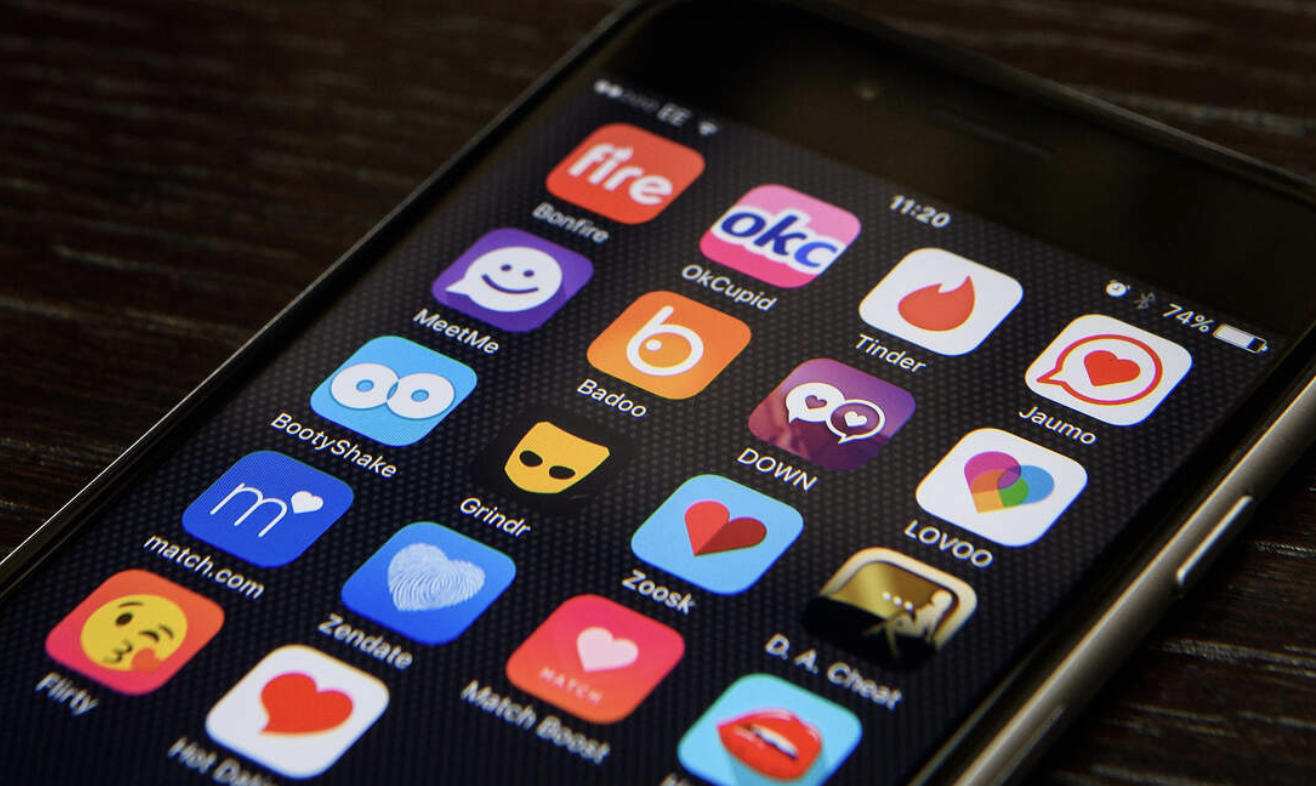
Could book clubs beat out Bumble and outmaneuver Match as a way to find romantic partners?
“For a long time, people kept dating in one box and hobbies in another,” Andrea Parodi, Eventbrite General Manager, said in a recent news release: “What we’re seeing is that line starting to dissolve. People are starting with what they already love, or exploring a totally new pastime, and staying open to whatever it turns into. When you remove the pressure of a forced introduction, there’s less chance the night feels like a letdown, and more room for an organic spark to happen.”
Eventbrite is reporting big growth of In Real Life (IRL) events that mention the term “meet-cute” language. In the first half of this year those kinds of events were up 117%.
But it’s not just dating that is fueling the spike of meet-ups. People are yearning for friendship, and events organized around shared interests help people get over the awkward early moments of getting to know someone. Here are some of the “soft socializing” events that are soaring:

Mahjong players may start out just trying to learn the rules, but the game becomes a vehicle for other conversation.
· Trivia Night events: up 403%
· Mahjong gatherings: up 235%
· Birdwatching meetups: up 131%
· Plant swaps and terrarium workshops: up 117%
· Pilates socials: up 84%
· Pottery and craft circles: up 38%
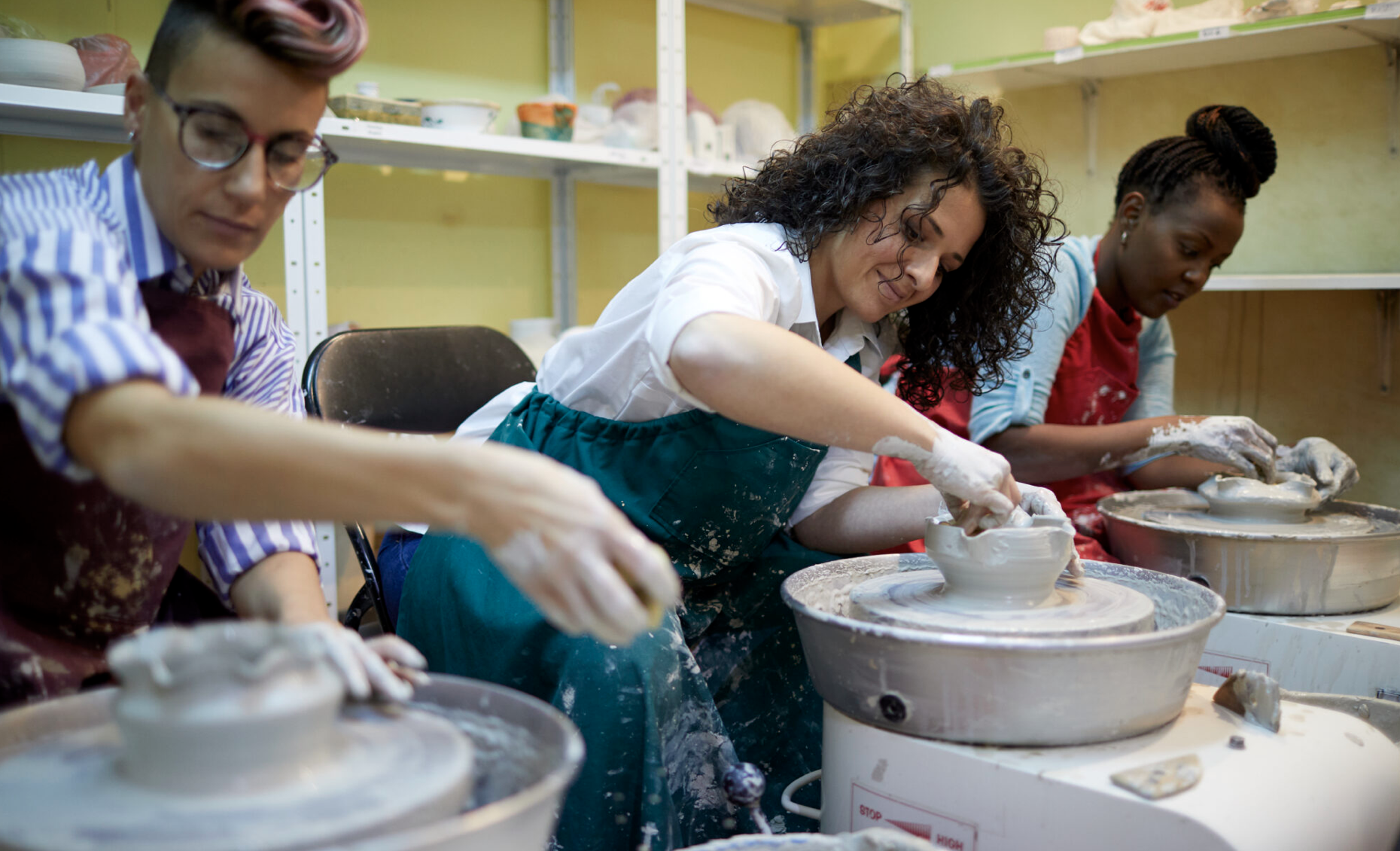
The casual conversations you have while standing beside a fellow pot thrower may be easier than facing off across a table. We may be “bowling alone,” but we are throwing and kicking and castling and birding and knitting together.
Other activities that are spiking: niche activities like chess clubs, knitting circles, kickball leagues.
Some of these events are organized by professional event firms, who have discovered that organizing fun can make them some money. Places like Mahjong Social Club; Tampa Bae Social and others manically market “meet-cutes.”
But you don’t need a business to help you re-engage with the world: you can create your own community, building it around things that interest you. Over the past couple of years, I’ve started a tennis book club (where we discuss, believe it or not, books about tennis) and a men’s discussion group (creatively called “Man Dinner,” where a small group of folks who talk about public policy). I also joined an existing book club (we seem to read a lot of non-fiction).
Rik Lovett, a Raleigh attorney and friend, was having trouble finding a group built around his interests. Rik likes to wrestle with life’s most perplexing questions, so he’s created a group of like-minded people to do that with him. “I’ve long been a bohemian philosopher myself,” he told me. “We are clearly in the minority of society, but there are enough of us out there to make a go of a group like this.”
He keeps an eye out for “meaty meaningful” topics, then invites people to come to a “Thinkers Forum” at his house 2-3 times a year. To avoid partisan bickering, he tries to phrase the questions neutrally and asks people to focus on philosophical/psychological responses. A lot of invitees ask him questions like “Where in the world did you come up with an idea for something like this?” But then 50-60 people show up at his house to dig in. It takes some time for Rik to organize, but, as Rik puts it, “The juice is worth the squeeze for someone like me.”
The Thinker’s Forum is not an Elks Lodge or a bowling league or a church night supper. It’s filling a different gap in people’s lives. Rik’s found 50-60 other “bohemian philosophers” like him. Together they make a community that means something to the people who come.
What’s missing from your life? What could you do to fill it? And is it time to get started?
Notes:
The importance of friendship: https://www.boneconnector.com/writings/spirit-making-friends
Eventbrite on socialization trend: https://www.eventbrite.com/blog/press/newsroom/the-modern-meet-cute-index/
Book clubs as a dating app: https://www.thriftbooks.com/blog/are-book-clubs-the-new-dating-app-survey-infographic/?srsltid=AfmBOooK9lJlYkETo79HXL7vzq_i9CpAC-TiZ8Cc1MxxwefAa6ZWm-EY
The decline of dating apps: https://www.newsobserver.com/living/article315644959.html
Growth of “meet-cutes”: https://www.instagram.com/p/DbWJWr1AstW/
“Soft socializing”: https://www.eventbrite.com/blog/press/newsroom/the-modern-meet-cute-index/