One of the scariest and saddest books I’ve read in my adult life was Robert Putnam’s Bowling Alone. After writing a long article by that name in 1995, Putnam expanded the idea into a book, tracing a half century of plummeting American participation in civic, religious and social life.
Fewer and fewer of us, Putnam found, were joining clubs, volunteering to help people and organizations, going to church, or inviting people over. More and more were doing things like bowling, but instead of joining bowling leagues, with other people, we were bowling alone.
In 2024, I made a brief attempt to update Putnam’s findings, as part of a series on America’s loneliness epidemic. Derek Thompson has just published a new essay that takes a much more in-depth look at what has happened since Putnam’s initial analysis in 1995.
His conclusion: nothing good.
Nowadays, we are more likely than ever to bowl — and game and give and pray and play and eat — alone.
Here’s what the trend line looks like.
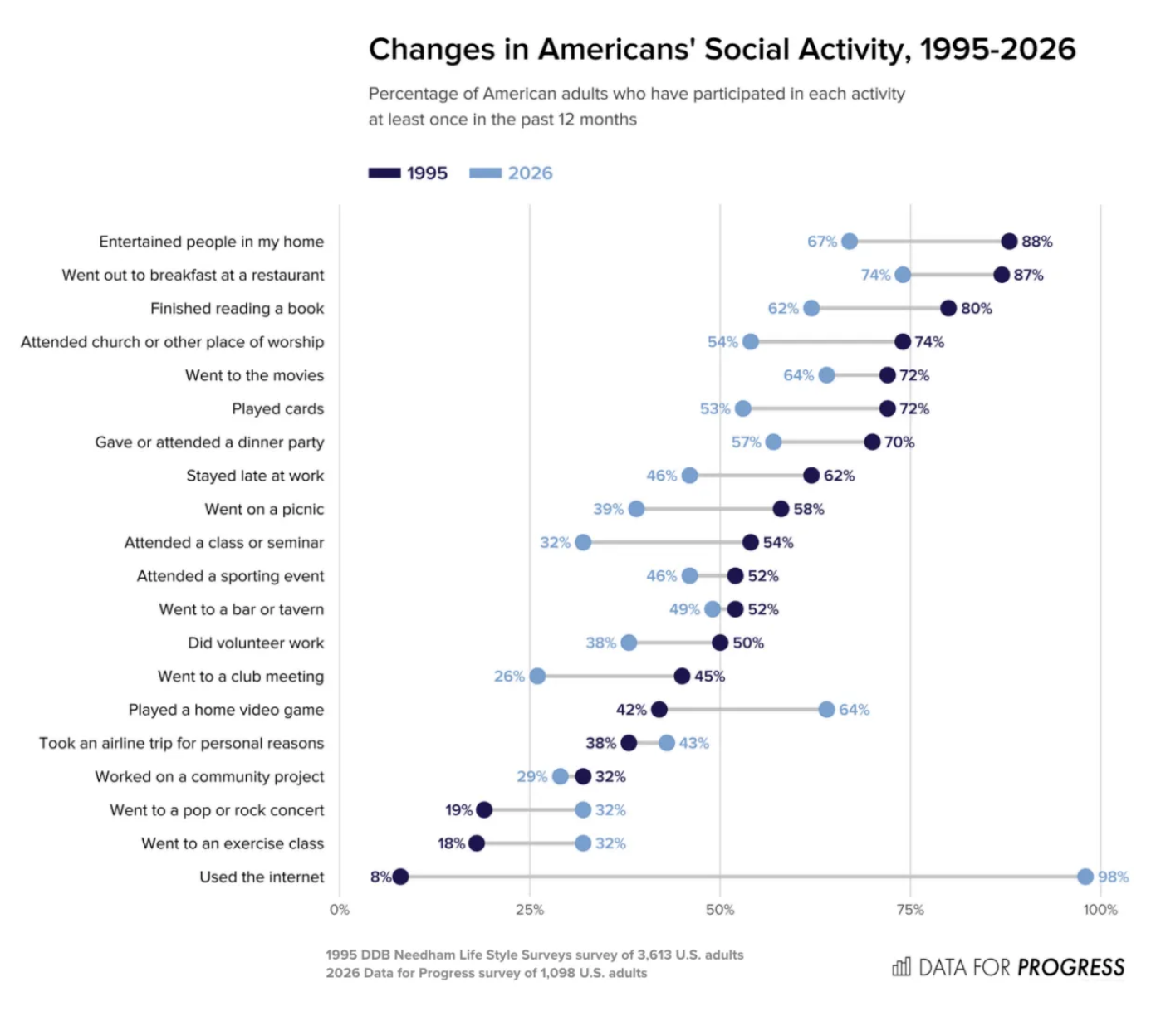
The dark blue dots show where our social activity was in 1995; the light blue dots show where we are now.
I know there’s a lot in this chart. But here’s a quick summary.
· We are dramatically less likely to invite others over to our houses than we used to. Since 1995 the percentage of Americans who have entertained friends or family in their homes in the past year has declined by about 20 percentage points. In his essay, Thompson combines Putnam’s survey and a new one to reach this conclusion: “The share of Americans who host friends or family at their home at least monthly has fallen from 42% in 1976 to 12% in 2026 – a 70% collapse in a half-century.”
· We’re not just moving our dinner parties outside of the home either. When we go out of our house, the big chart above shows that we are significantly less likely than we were in 1995 to do anything social: less likely to go to a church, picnic, or class, to do volunteer work or go to a club meeting. We are slightly less likely to go to a bar or work on a community project. The only external social activities we appear to do more of are exercise classes and pop concerts, but there is decent evidence to suggest that we are increasingly doing exercise classes either from home or wearing earbuds, and, as great as rock concerts are, they don’t exactly promote conversation.
Thompson calls all this “the great disinvitation” – we aren’t inviting anyone to do anything with us.
He offers four possible explanations:
1. We’re exhausted. When work can be done anywhere, anytime, sometimes we can’t clear enough brain space to do something intentionally social. And when both partners in a relationship are working, it’s even harder. Arranging a dinner party, or even a night out with friends, requires us to take initiative, to manage babysitters, food allergies and logistics, probably with other folks who are just as busy. Why would you do all that when you can just plop down in front of a Netflix show and catch up on email while you half-watch?
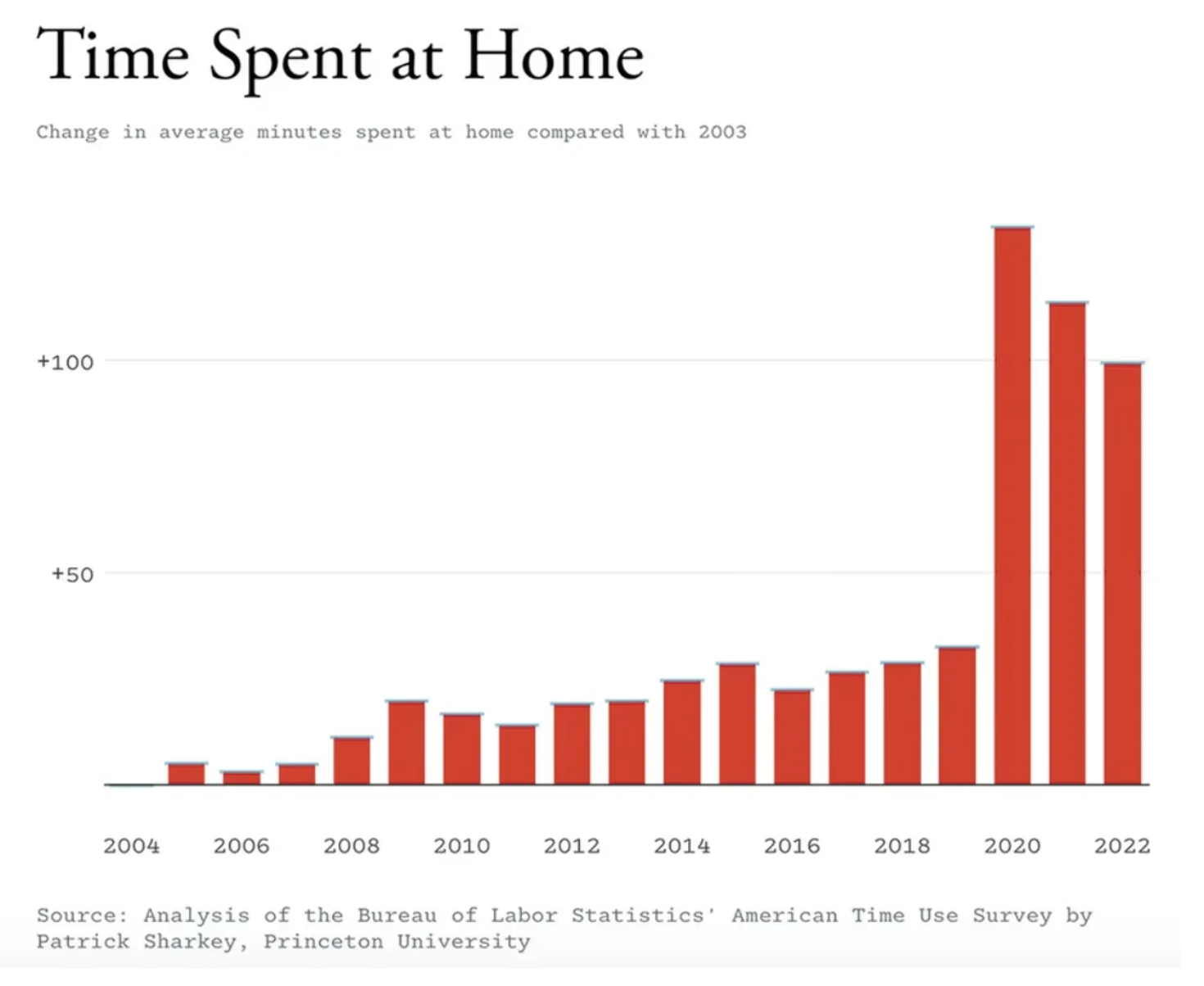
We could spend more of that time we are spending at home deepening friendships. Or we could watch Netflix. Guess which one we’re doing.
2. We’re spending a lot more time with our kids. Between 1975 and 1998, mothers increased the time they spent with their kids by about 200 minutes a week. Since then that number has continued to increase for mothers. Men still don’t spend as much time as women on parenting, but the amount of time they are spending as parents is increasing faster. The average 30-year-old millennial dad spends 80 minutes a day parenting, more than twice as much time as baby boomer parents did. More time with kids sounds like a good thing, but if time is finite, it also means less time with folks outside of your immediate circle.
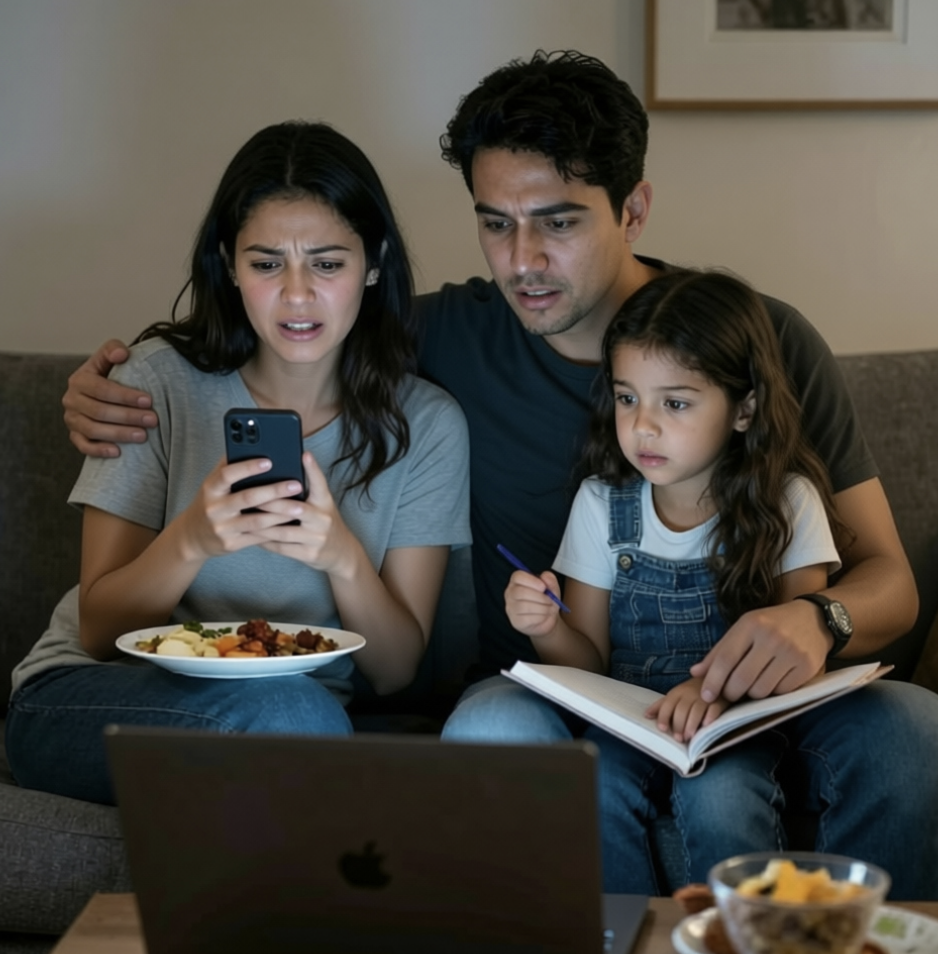
There’s a lot competing for our time once we get home (image generated using deepai.org)
3. We don’t have as many friends as we used to. I’ve written before about Americans’ declining number of close friends. Since 1990 the American Community Survey finds that the percentage of Americans with 6 or more close friends has declined from 55% to 27% and the percentage of us with no close friends has increased 12% (15% of men; 9% of women). Data for Progress finds that two groups are most likely to have never had people over to their house for dinner over the previous year. Some 44% of political independents haven’t entertained in their home in the past year (say what you want about political parties, but they at least offer us a clear group of people to bond with); about 39% of people without a college degree haven’t entertained (Thompson speculates that in tough times friendship and entertainment may now be seen as an unaffordable “luxury good” ).
4. It’s more fun than ever to be at home. There has never been more entertainment product available to distract me from friends. I can see any movie from any time and more new shows than ever on my television. If I especially love shows about dogs, hoarders, true crime, romance, horror, bounty hunters or any one of a hundred other topics, there is now a network waiting for me to spend my evening wallowing in any of those. I can see pretty much any athletic contest at pretty much any time.
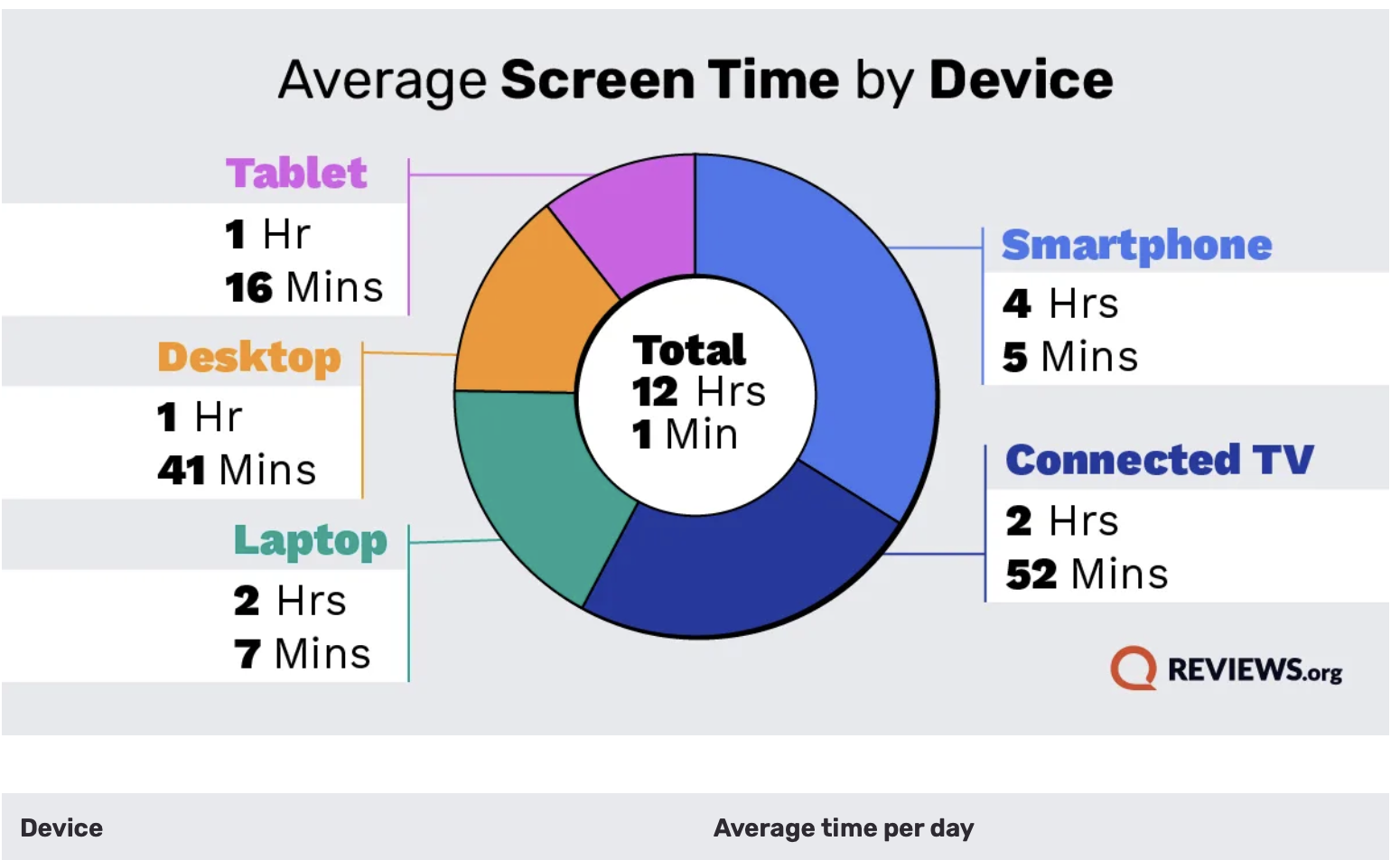
How can we possibly have time to entertain friends when we spend so much time entertaining ourselves? (Chart from Reviews.org)
I can spend hours on TikTok watching other people’s creative minds do the work I am too tired to do. I can play interactive games so realistic I can lose myself in (and if I am a ridiculously busy football coach, I can sink every spare moment I have into building an entire fictional world on Minecraft).
Movies and shows and apps and games are easy; dealing with the complexities of real human interaction brings the possibility of conflict or failure or disappointment. Why not play it safe and interact with a machine instead?
Given all that, it’s not so hard to see why we’re not entertaining anymore.
Eating alone is safe. Other people, for more and more of us, are risky.
As Thompson puts it, “We’ve built a world in which being alone has never been easier, more comfortable, or more fun. And then we wonder why everybody stopped coming over…Compared to TikTok, a dinner party is a terrible leisure technology. It requires matching schedules, cleaning the house, buying food, accommodating children and allergies, tolerating awkwardness and taking the risk that the evening if mediocre. By contrast what does television ask of us? Nothing. TikTok? Even less. We keep crating opportunities for downtime that eliminate the need for other people to be present. Not all progress is progress.”
Next time: reviving the dinner party.
Notes:
An earlier essay of mine connected the decline of social activity to the rise of loneliness: https://www.boneconnector.com/writings/spirit-loneliness-epidemic
Bowling Alone’s major findings: https://en.wikipedia.org/wiki/Bowling_Alone#:~:text=Bowling%20Alone%3A%20The%20Collapse%20and,the%20United%20States%20since%201950
Thompson’s essay updating Putnam findings: https://www.derekthompson.org/p/the-death-of-the-american-host
Evidence we are exercising more alone: https://sociologicalscience.com/download/vol_11/august/SocSci_v11_553to578_updated.pdf
Screen time survey: https://www.reviews.org/internet-service/internet-screen-time-statistics/
ACS survey data: https://www.americansurveycenter.org/research/the-state-of-american-friendship-change-challenges-and-loss/