Note: A version of this story first ran in The Assembly, an online journal featuring long-form articles about North Carolina news and culture (subscribe!) You can read that version here. For a version of this story in podcast form, try this episode of the NPR pod The Broadside.
I step onto a stage in Kawasaki, Japan, and walk to a microphone. When I hear my name, I remove a pitch pipe from my pocket and sound an F#, the starting note for my arrangement of Mozart’s “Eine Kleine Nachtmusik.”
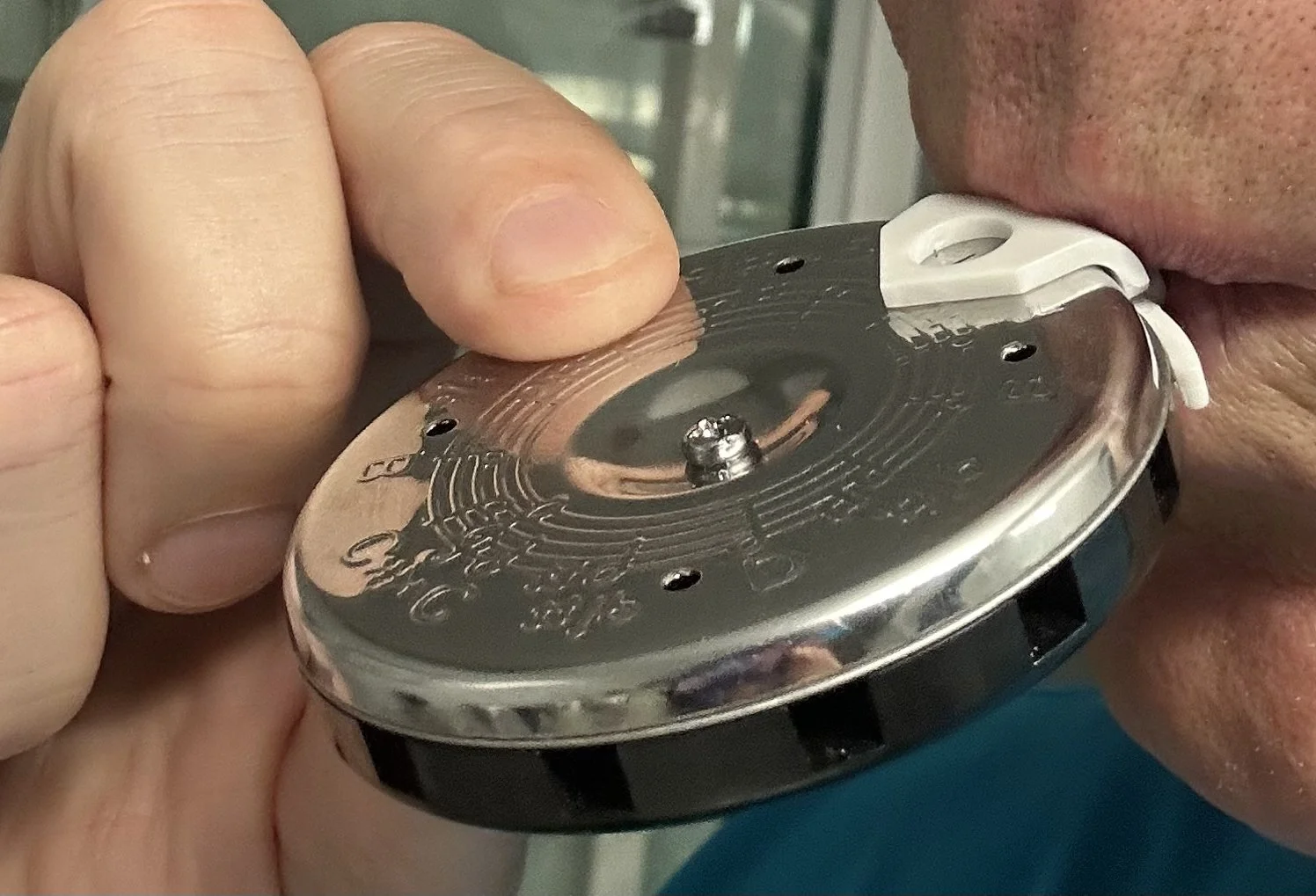
Never get the wrong starting note….
I look out into an audience of about 200 people, mostly Japanese, then down to a table with five solemn judges. I bow. The next five minutes will decide if I’ve got the lips and breath—and skill and guts—to hold my own against the best whistlers in the world.
I breathe in and blow.
***
It’s a moment six and a half months—or maybe 65 years—in the making. I grew up in Wilmington, N.C., learning to whistle from my Aunt Sue (the only family practitioner), but then I slowly absorbed an unwritten lesson: whistling isn’t something you do in public. Whistling is something you do in the privacy of your car or shower. At some point I even publicly dissed whistling myself: playing King Arthur in a community theatre production of Camelot, I sang a lyric asserting that whistling was something only “simple folks do.”
I got a glimpse of serious whistling as a reporter for WRAL News in my 30s. Not just serious, either—competitive. My editor sent me to cover a whistling championship in Louisburg, a small town north of Raleigh, where I spent the day watching a parade of puckerers young and old.
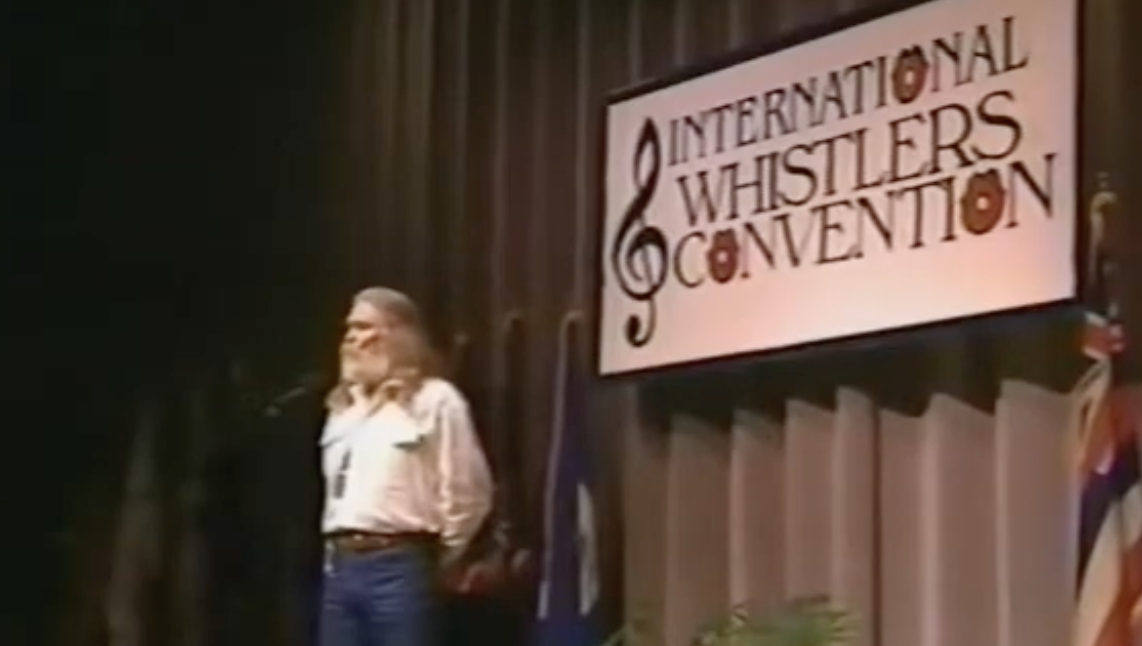
The convention held in Louisburg had a similar format, but a different accent.
Offstage, they whistled in the hallways and bathrooms. They whistled into each other's faces. They asked each other how to make whistle sounds, where to find good background tracks, how to shorten long songs, and which other whistlers they should listen to.
There seemed to be a whole subculture of people who took whistling very seriously. Could I be one of them?
I parked the idea for decades. Then, last fall, I wrote a blog post arguing that each of us, if we cut the criteria narrowly enough, is probably world-class at something. But…what was that for me?
I looked up the whistling contest I’d covered years ago. It was no longer held in Louisburg, though; it had moved to Japan. I decided to audition anyway.
Because there are no popular songs exclusively written for whistling, I started by looking for audition pieces heavy on woodwinds—clarinet, flute—or harmonica – or anything that sounded “whistleable.” Over the course of two eight-hour solo car rides, I sorted through 46 songs, ranging from Beethoven’s “Moonlight Sonata” to Monk’s “Round Midnight,” and started narrowing them down. Then, in December, I submitted two audio files to the contest judging panel for consideration (video isn’t allowed; judges don’t want to be swayed by visual appearance), and paid the 3,000 yen entry fee (a little less than $20).
I’d nearly forgotten it four months later, when I got the email: “We are pleased to inform you that you have been selected to participate.” Surely Aunt Sue was beaming down at me.
The thrill of receiving my acceptance letter was followed by the gut-punch of the judges’ critique: They liked my “warm tone,” but they really didn’t like my portamento (sliding between notes). They also thought I used “too much vibrato.”
The judges ranked me ninth of the 10 people selected in my division, senior a capella. But, hey, I wasn’t dead last. And I was in!
***
Anthropologists believe humans have likely whistled since their earliest days, whether to coordinate hunts, herd animals, or simply communicate over long distances.
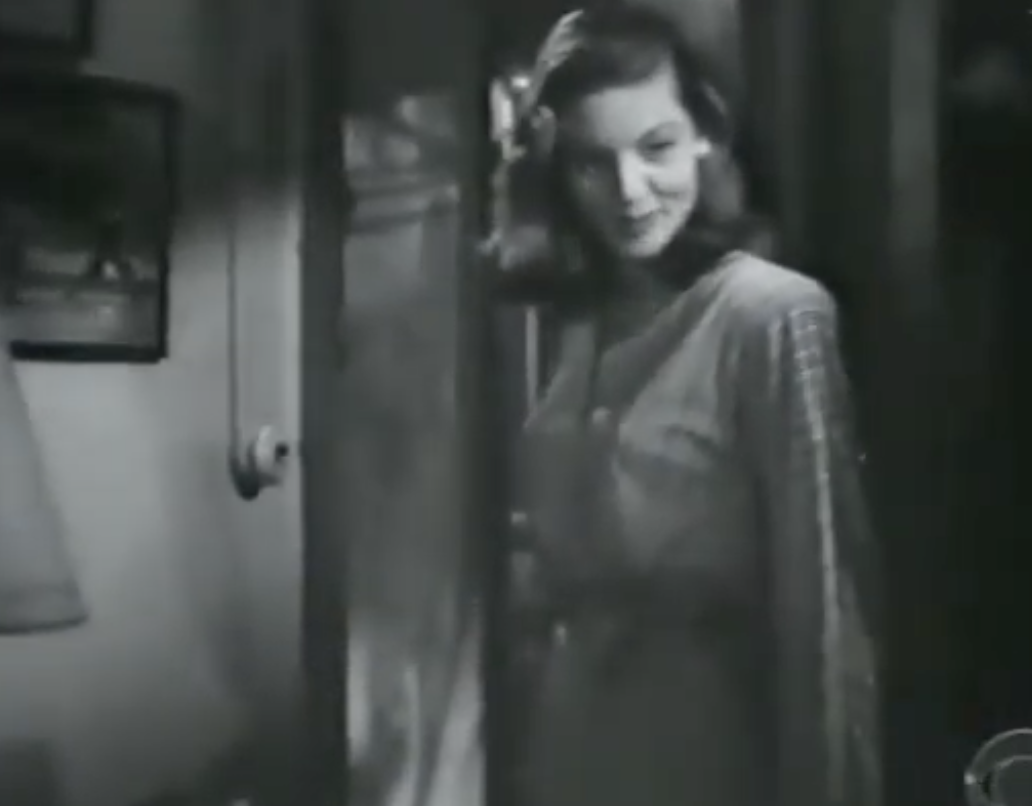
When Lauren Bacall told Humphrey Bogart how to whistle in “To Have and To Have Not” in 1944, chances were much better he already knew (Warner Brothers).
Musical whistling has come and gone over the centuries, with the most recent revivals coming during the early days of vaudeville, when a whistler might slot in as a “novelty act,” then again in the Big Band era, when a whistler might perform one verse of a popular tune or the brass section might stand and collectively whistle 16 bars. Movie dwarves whistled while they worked.
By the mid-1950’s, public whistling had all but disappeared. Radio stations wanted rock n’ roll, not whistle tunes. Then, in 1974, a tiny spark lit in an unlikely place: the hinterlands of the North Carolina Piedmont.
Allen DeHart, the chair of the Franklin County Arts Council and director of the local folk festival, received a strange entry for its musical competition. Darrell Williams from Durham wanted to whistle an original song, “Little River Blues.” After some reportedly heated debate, DeHart and the other organizers accepted Williams’ entry.
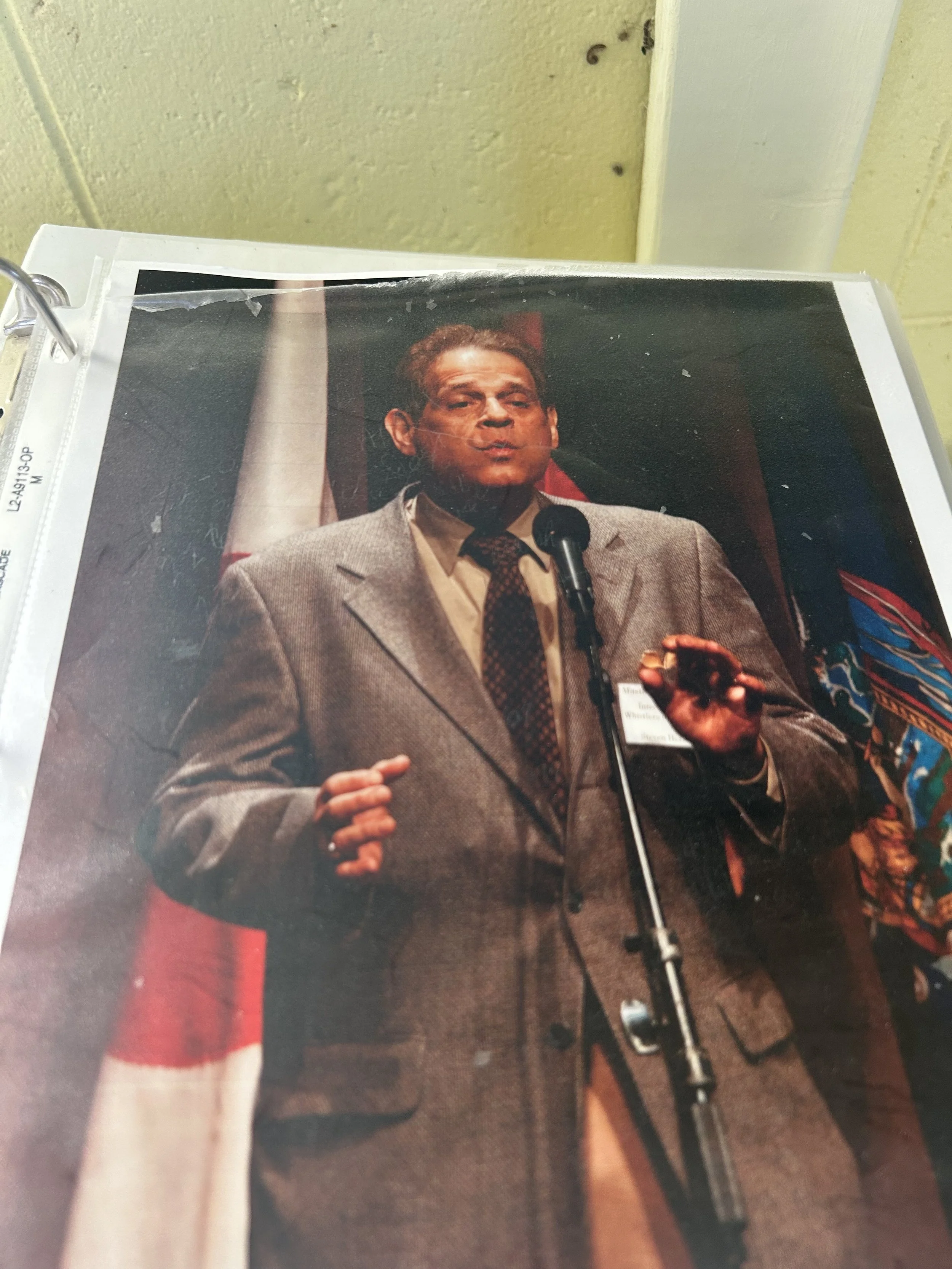
A photo of Darrell Williams, the first whistling champ, still hangs in the Whistling Museum in Louisburg.
Then he won.
“You might call it the warble heard round the world,” DeHart recalled in a documentary.
After Williams won again in 1975, DeHart realized he had something special and moved to capitalize on it. He created an entire festival just for whistlers, which he eventually called, aspirationally, the National Whistlers Convention.
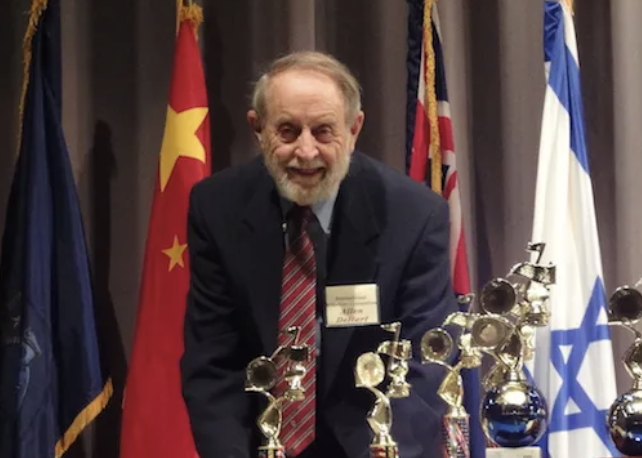
Allen DeHart dreamed up, nurtured and fought for the whistlers convention for more than 30 years (Photo courtesy World Whistlers Convention)
DeHart was a force of nature, recalls Lillian Benton, a spunky former Marine Corps communications specialist, now 87, who helped with several of the events. As the “frontman” for the competitive whistling world, DeHart had an eye for marketing and a way of influencing people. “As long as he was heading it,” Benton told me, “we were going to have a whistling contest.”
By 1981, DeHart had established the National Whistlers Museum in Louisburg (funded in part by a grant from the Library of Congress). In 1986, he created the Whistlers Hall of Fame, with somewhat flexible criteria. Bing Crosby (you may remember his whistle verse on “White Christmas”?) died ten years before his induction in 1987, but he was admitted anyway.
Within 10 years of the festival’s founding, more than 3,000 entrants were submitting audition tapes hoping to be invited to come to Louisburg (population, about 3,000) for the spring competition. Winners regularly appeared on The Tonight Show with Johnny Carson, then later on Late Night with David Letterman. Finally, in 1997, DeHart took the next logical step: he renamed the event the “International Whistlers Convention.”
In 2004, the documentary Pucker Up: The Fine Art of Whistlingcaptured the color and suspense of that year’s championship, during which newcomer Geert Chartrou, a chain-smoking domestic violence counselor from the Netherlands, upset New Jersey turkey hauler Joe Sodano, the Florida boat captain “Whistling” Tom Bryan, and corporate exec and four-time Grand Champion Chris Ullman. The film became a whistling cult classic, inspiring an entire generation of warblers.
“Louisburg, North Carolina, is the mecca for whistlers,” former champion Steve Herbst says in the film,
“If you wanna be at the top of the whistling world, you have to go to Louisburg.”
There was more to the allure of the event than that. The contest wasn’t cutthroat or cold, as other world championships can be. Both the competitors and the organizers “were just amazingly friendly,” Ullman told me in an interview this spring. “You could meld together the friendliness with serious competition.”
It also gave the Franklin County town something to brag about. “It put Louisburg on the map, so to speak,” recalled Robert Poole, who managed the auditorium where the competition was held. Residents were proud to have people from all over the world come to their small town.
***
The event left Louisburg slowly, and then it left quickly.
“Allen (DeHart) was getting up in age,” says Benton, the former Convention volunteer. “He was hoping somebody would take over, but nobody from here would. Some people in town were just unhappy we were spending money on this thing.” A series of sponsors – the Franklin County Arts Council, the North Carolina Arts Council, then the Franklin County Historical Society -- all determined that the Convention wasn’t consistent with their mission. A common question: is whistling really “art”? Another one: does it really have anything to do with Louisburg? As funding ebbed and flowed, the event bounced between Louisburg, Japan and China between 2008 and 2013.
Dewey Botts, a former federal soil conservationist, managed the final competition in Louisburg in 2013. Now 84, he met me in the Bunn Library in April carrying a trove of memorabilia and detailed memories from past events: “I get chills all over my body right now… there is not a place on my back or my toes that don’t have chills (remembering) when I walked in” to the whistling competition.
In his efforts to help DeHart keep the convention in Louisburg, Botts tried to convince county leaders to allocate some of the hotel/motel occupancy tax revenues to support the festival. For him, the Convention was a tourism play: “Long story short, for those funds and for what they were intended for, they don’t come better,” he says. “The way I sold it,” he says, “I would tell them, they don’t come to spend just one night…. And there were more people that came than just the whistlers that stayed in hotels because there (was) a buttload of people.”
The argument didn’t work. The convention left Louisburg for good after the 2013 event.
***
When was the last time someone was down here?” I asked Chris Jones, as he pushed open a door in the basement of the Franklin County Adult Corrections Center in early May. Outside was a flaking sign: this is still, officially, the home of the Franklin County International Whistlers Convention Office and Museum.
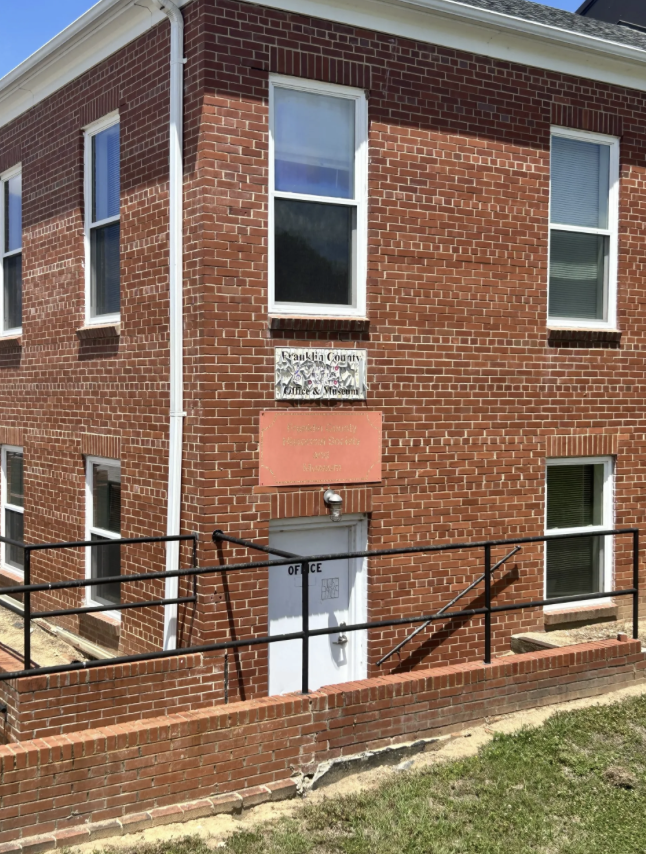
A sign still hangs outside of Louisburg’s Whistlers Museum and the exhibits remain, but the museum is permanently closed to the public.
“As far as visitors,” he said, “I’ve been the facilities maintenance director for going on nine years. And you are the first person I’ve brought down here.”
Inside, a 30’x30’ room holds a treasure trove of memories -- dozens of photos of whistling champions, scrapbooks with posters and articles about competitions and the flags of more than 20 nations that sent competitors over the years. Under dusty glass, mixed in these days with Civil War records, memorabilia from the Franklin County Historical Society and stacks of clothing (available in case the adult probationers upstairs run short), under dusty glass you can still find whistle-centric LP’s, books about whistling and VHS videotapes of past competitions (the TV to play them no longer works).
It’s all that’s left in Louisburg of the event that put the town on the world map.
-Leslie
Part 2 of the story is here. If you want to know more about whistling technique and lingo, you can find that here.
Notes:
Thanks to Asato and Amy Nishida for translation help and to Cristina Toyohashi for assistance with interviews and logistics.
47th World Whistlers Convention event website: https://whistling.jp/en/wwc2026/wwc2026-event-outline
Louisburg as “first and oldest” competition: https://whistleindia.org/ourfriends/
Library of Congress grant to help set up Whistling Museum: https://www.newspapers.com/article/the-herald-sun-hark-the-sound-of-the-nat/136564485/
Early chronology of International Whistlers Convention:https://en.wikipedia.org/wiki/International_Whistlers_Convention
Pucker Up: The Fine Art of Whistling:https://youtu.be/PgZY5iDQxKY
A short history of whistling: https://www.mastersofwhistling.com/about-mmw
Steve Herbst whistlography: https://stevethewhistler.com
DeHart gives blessing to Kawasaki event: https://whistling.jp/en/wwc
Yuki Takeda’s website: https://yukitakeda.comHis YouTube channel is a rich source of insight into the whistling world: https://www.youtube.com/YukiTakeda
You can order a copy of Find Your Whistle here: https://www.amazon.com/dp/1684010209?lv=shuf&channelId=500&plpRedirect=mhFallback