When Winning Becomes the “Only Thing”
Contrary to popular belief, it wasn’t Green Bay Packers coach Vince Lombardi who first said “Winning isn’t every thing – it’s the only thing.” As far as can be established, it was UCLA football coach Red Sanders who first said that, back in 1949.
The phrase kicked around for a few years, even finding its way into a B-movie in 1953, but not catching on.
After all, there were already a couple of other more-popular aphorisms about winning that everyone knew and loved. Legendary sportswriter Grantland Rice had written that “It’s not whether you win or lose, but how you play the game.” This one from Olympics founder Pierre de Coupertin was popular too: “The most important thing is not winning… but taking part.”
How quaint.
Then Lombardi, a charismatic, ultra-successful, future-Hall-of-Fame, two-time-Super-Bowl-winning coach started using the “only thing” phrase. And it went as viral as anything could in the pre-Internet world. It was plastered on the walls of locker rooms across the country. CEO’s trotted it out at board meetings. It even found its way into Richard Nixon’s presidential campaign headquarters (hmm).
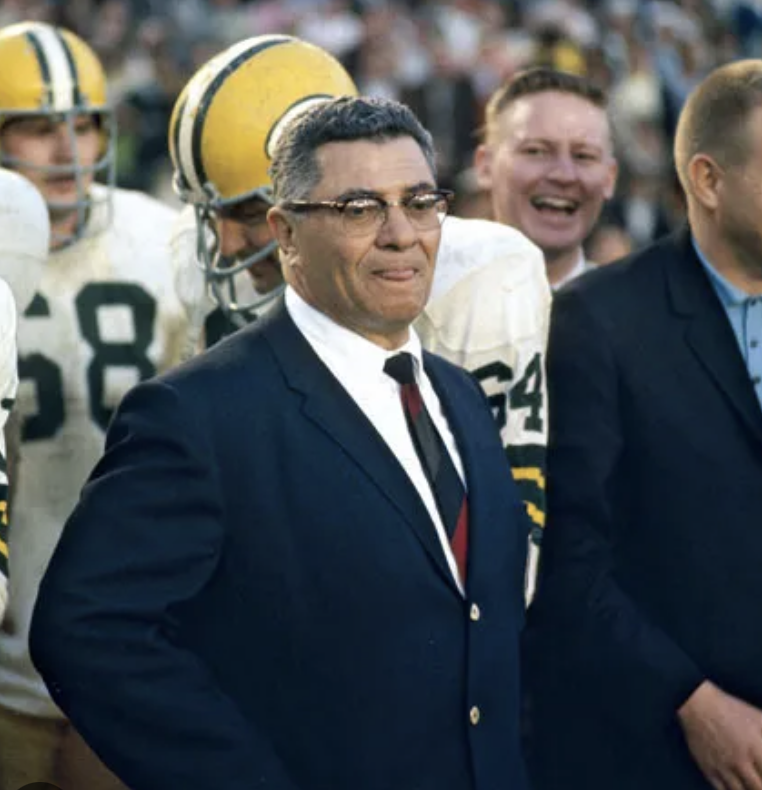
Legendary Packers coach Vince Lombardi got the train moving. Then we all jumped on.
Rice and de Coubertin never had a chance. The Sanders-Lombardi mantra in turn inspired a cottage industry of win-at-all-costs blusterings, including my favorite, from the movie Talladega Nights. In the film, NASCAR driver Ricky Bobby drives like a maniac to live up to what he thinks his father told him: “If you ain’t first, you’re last.”
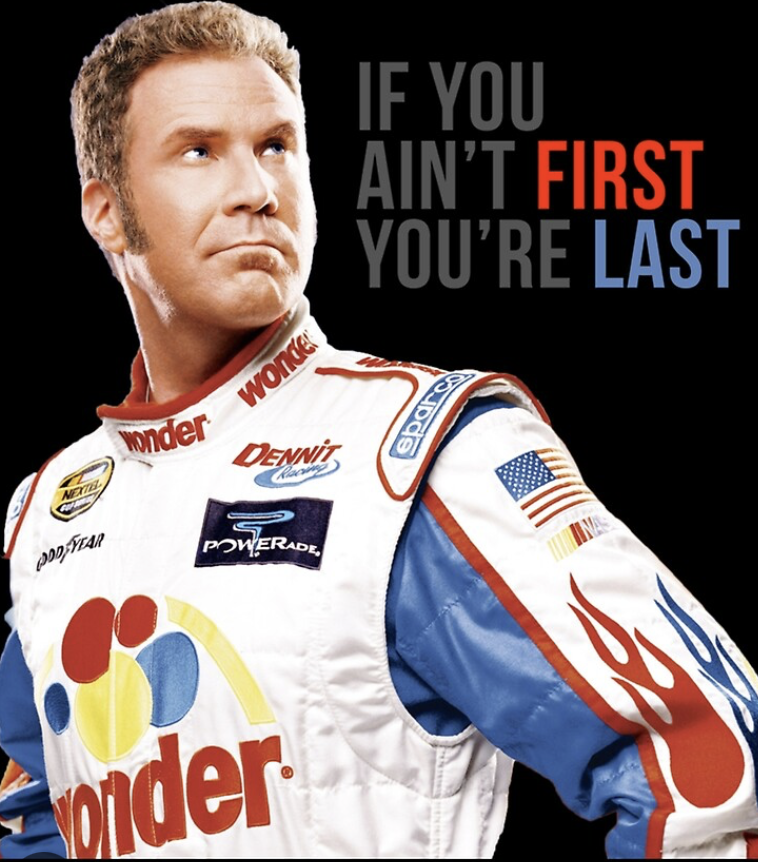
The spirit of a generation.
***
The past 60 years have seen an explosion in the value of sport. The Dallas Cowboys NFL team is now valued at $17 billion. Real Madrid’s soccer club is valued at $9.5 billion. And in September the LA Lakers NBA team sold for $12.5 billion.
Player salaries have ridden the rocket. Soccer star Cristiano Ronaldo makes an estimated $300 million a year; the NFL’s Patrick Mahomes makes $64 million a year; basketball’s Steph Curry makes $62.6 million. Baseball’s Juan Soto makes do with $51 million a year. The average salary for players in those three leagues ranges from $5.2 million to $12 million.
With that much money at stake, it may have been inevitable that sports has become a win-at-all-costs endeavour. But holy moley, the compromises players and clubs are making to collect the cash are killing my fan buzz.
Athletes Behaving Badly
By now y’all know that I am a huge tennis fan. But at last month’s US Open I found myself on the edge of throwing my shoe at the television every time eventual winner Alexander Zverev took the court.
Over the course of the tournament, Zverev bounced the ball before his serve more than 12,000 times (someone added it up). Someone else added up the amount of time Zverev spent bouncing the ball during his seven matches.
He spent 2.5 hours bouncing the ball.
I counted up the total number of serves he hit: that’s an average of 15.3 times for every toss.
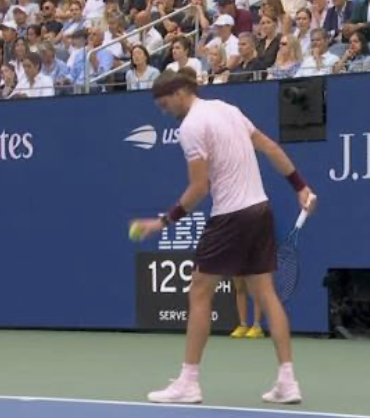
While Zverev bounced the ball at the US Open, I lost 2.5 hours of my life. Opponents lost their minds.
The bouncing gave Zverev a physical advantage – he got big chunks of extra time to rest between points. It also gave him a psychological advantage – it kept his opponents on edge waiting for him to get around to serving (and complaining in vain to officials to get Zverev to speed up). It gave me shoe-shedding outrage: the tactic made the matches almost unwatchable.
But Zverev bounced his way to the bank: he won the tournament and $5.5 million. He found a loophole in tennis’ rules. Then he drove a Mack truck over the rule book.
Hey, why not? If an athlete truly believes that winning is the “only thing,” it’s easy to justify whatever means are necessary to achieve that end.
Illegal performance enhancing drugs? Sure! Lance Armstrong injected as much EPO as needed to win the Tour de France and Barry Bonds rubbed on “the cream” and injected “the clear” in pursuit of the all-time homerun record. The drugs worked. They “won.”
In pursuit of the “only thing,” football players have been known to gouge opponent’s eyes and even break fingers once player piles form; baseball pitchers hunt heads with fastballs when hitters get hot; soccer and basketball players flop like flounders faking fouls. With more and more regularity, professional tennis players have started calling “medical timeouts” when their opponent gets on a roll. They claim a hip or a back or a calf needs treatment, then come back after a ten minute “treatment” break -- without any apparent impairment. A few years ago, hockey player Sean Avery stopped playing altogether, turning his back on all his teammates and instead just started waving his arms in front of the goalie to block his view.
Institutions Behaving Worse
The incentives for the corporations that we call “teams” are even higher. Win and you sell more tickets, gain more TV viewers and jack up the valuation of your franchise. So they cheat too.
The Houston Astros were busted after institutionalizing a cheating strategy on their way to winning the World Series in 2017. They set up a camera in the stands to zoom in on the signal the catcher gave the pitcher for the next pitch. Then an employee watching the feed from the dugout would bag a drum to tell the batter which pitch was coming. It worked. They won.
The Los Angeles Clippers, apparently trying to make up for only paying player Kawhi Leonard $44 million a year, set up an illegal scheme to circumvent the league’s salary cap so they could pay him an additional $45-$50 million a year under the table.
Sport’s cheaters-in-chief, my once-favorite New England Patriots, apparently learned nothing from getting caught illegally spying on other teams (“Spygate”) and illegally deflating game footballs to make it easier for their quarterback to throw (“Deflategate”). Last month we learned that, after those scandals, for ten years, the team’s video staff would project fake crossbars on a Jumbotron to confuse opposing field goal kickers. It worked. Opposing kickers had the lowest field goal percentage in the league when they played in the Patriots’ stadium.
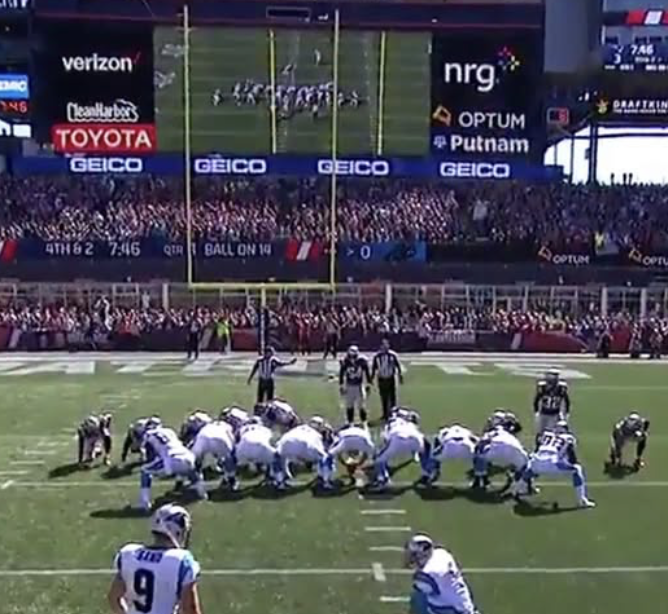
When opposing kickers tried to figure out which goal posts to aim for, the Patriots gave them four to choose from.
None of this behavior makes any sense in a world where Rice and de Coupertin are setting the norms for our behavior. None of it should be surprising if our role models are Sanders and Lombardi.
But let’s be honest: sports isn’t an outlier to shake our heads at.
We wouldn’t tolerate this behavior as fans if we weren’t already swimming in a society that was systematically obliterating honesty as an expectation. We elect and tolerate and admire political leaders who lie because, they tell us, they are God’s instrument or their opponents are evil, and we accept the logic that this makes even the most outrageous lies acceptable, even morally justified. We lionize corporate leaders who do whatever it takes to seize market share, even if that means kneecapping their competitors. The water we swim in makes it easy for us to make our own, smaller compromises – shading truth with loved ones, throwing shade on rivals, buying shady products.
***
It’s not impossible to imagine changes that could decrease cheating in sports. Tennis could limit ball bounces. Soccer and basketball officials could hammer floppers. Football and baseball leagues could issue death penalties for cheating franchises. Fans could stop buying merch of cheating players or teams. I could stop loving the Patriots or write a screed about Alexander Zverev (oh, wait).
But given our own moral ambivalence, sports regulators – and players and clubs -- get mixed signals from us. Sure, we get riled up when Zverev bounces, Lance injects, that Astros bang drums, and the Patriots spy and deflate and distort, but then we keep cheering on the cheaters, buying tickets and merch, tuning in to the TV – as long as they keep winning.
Maybe we’d prefer it if they could win without cheating, but we consistently care less about how they play the game, and more about whether they win or lose.
***
Late in Talladega Nights, Ricky Bobby tells his dad he’s built his life around that advice: “If you ain’t first, you’re last.” Reese Bobby can’t believe it: “Son, that doesn’t make any sense at all. I was high that day. You can be second. You can be third, fourth. Hell, you can even be fifth.”
A few years after he retired, Vince Lombardi walked back the quote he was most famous for, too. What he meant to say, he asserted, was that “the will to win is the only thing.”
If that quote had caught on, maybe we wouldn’t be in quite the place we are now. Instead, Lombardi’s revised version shriveled and disappeared. There’s a lesson there. What somebody actually means to say isn’t everything; what we want to believe they said is the only thing.
Notes:
Background on “winning isn’t everything” – note that Sanders was also responsible for another famous win-at-all-costs quote. Before one game against archrival University of Southern California, he reportedly said: “Beating ‘SC isn’t a matter of life and death. It’s more important than that”: https://en.wikipedia.org/wiki/Winning_isn%27t_everything;_it%27s_the_only_thing
The Nixon campaign reference is cited in David Maraniss book: When Pride Still Mattered: A Life Of Vince Lombardi. Simon & Schuster, 2000. (Chapter 21, "Winning Isn't Everything" and Chapter 22, "It's the Only Thing."
Zverev ball-bouncing controversy: https://www.si.com/onsi/serve/news/tennis-community-takes-sides-alexander-zverev-us-open-ball-bouncing-01m2rexnny80
New England Patriots field goal strategy: https://www.nytimes.com/athletic/7611155/2026/09/19/nfl-video-board-rule-change-field-goals-patriots/
Houston sign-stealing: https://www.houstonpublicmedia.org/articles/news/sports/2023/06/22/454996/houston-astros-manfred-immunity-sign-stealin/
The “Sean Avery Rule”: https://www.espn.com/nhl/playoffs2008/news/story?id=3346729
Kawhi Leonard scandal: https://www.espn.com/nba/story/_/id/50054070/clippers-apologize-fans-vow-move-leonard-investigation
Duke analysis of free-throw-heckling strategies: https://dukechronicle.com/article/duke-mens-basketball-cameron-crazies-free-throw-distractions-grad-section-by-the-numbers-jump-fish-wave-countdown-20250410