Summer of Sham
It’s been a great summer season for sports. I’ve been focused on basketball and soccer. The NBA ran from mid-April through June and the World Cup overlapped by two days and has been going since. On the surface, the two sports have little in common – one is mostly US-based, the other mostly international; one is played mostly with hands, one mostly with feet. But there is one throughline I’ve found watching the games this year: the floppification of sport.
The term first came to mind midway through the NBA playoffs. Then with each subsequent round it seemed even truer, as more and more players collapsed from contact roughly equivalent to a mosquito bite. They writhed, then rose to plead for punishment of their opponents.
NBA MVP Shai Gilgeous-Alexander emerged as the unofficial flopper-in-chief as his OKC Thunder made a deep run.
Time after time, in game after game, whether he was dribbling, dunking, or driving, and whether the opposing team tackled him, touched him or just waved as he passed, Shai finished in a crumpled heap while his teammates and coaches and fans cried, literally, “FOUL!”
Most of the time it worked, a tribute to Shai’s improving acting skills. During the playoffs, a Yahoo! Sports analysis found that he fell to the floor 51% of the time an opponent was called for a foul, and 10.7% of the time even when his opponent didn’t touch him. Since he came into the league, he’s steadily increased his flops and it has paid off: compared to his first year, the number of the number of fouls called on people defending Shai tripled in 2025-2026 – this year he averaged 10 free throws per game.
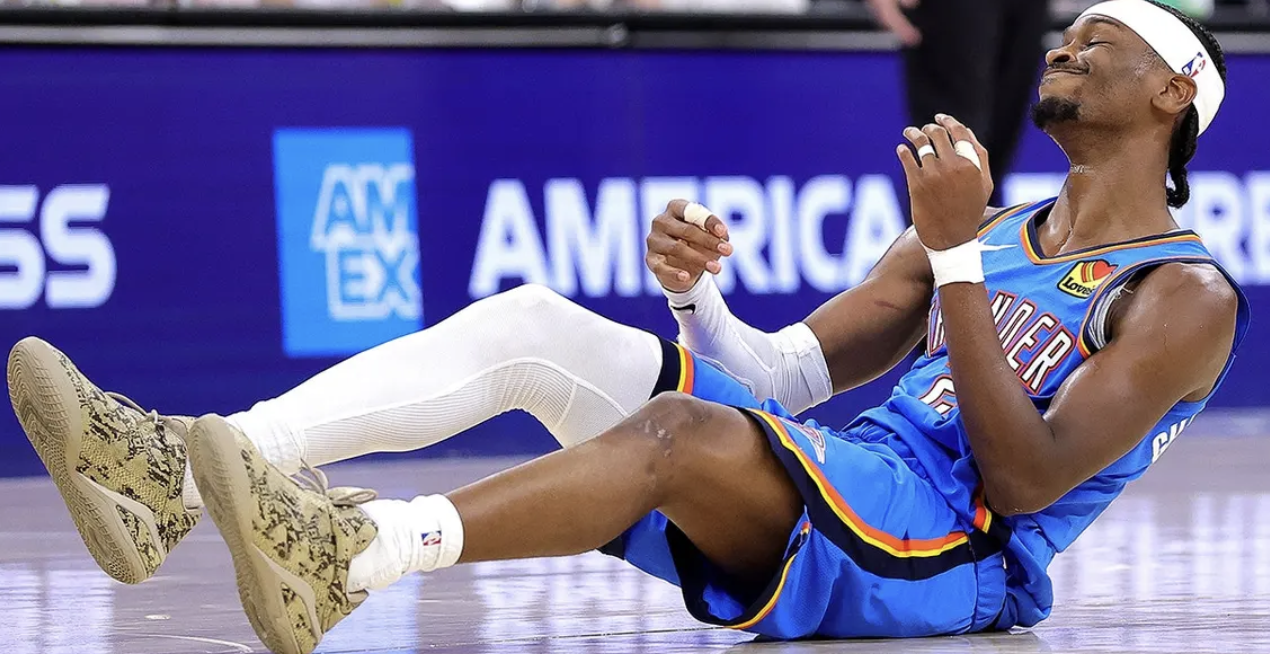
Shai is the league MVP, supremely talented, but can’t stop himself from flopping. It’s cited as one reason NBA ratings are declining.
As impressive as Shai’s faux foul skills are, he would probably slot in as only a third team pick if he were a soccer player. The World Cup has been a multi-week master class of FIFA floppers. I kept count during one ten-minute section of one game this year: on average a player fell to the field and asked for a foul every 37 seconds.
Here’s how it goes. Player A runs close to Player B. They touch. Then Player A falls, looking as if he has been taken down by a sniper. Post-fall, Player A screams, grabs a random body part, contorts face in agony. Peeks up to see if anyone is buying it. If not, he may try rolling multiple times on the field. Peeks up again. If he’s done his act well enough, a foul is called and his team gets the ball back. If not, well, he springs up to continue play as if nothing has happened. When there’s a break, we watch a replay of the incident and, maybe 75% of the time, discover that… nothing foul-worthy happened.
For the first half of the 20th century, it was a source of pride for soccer players to stay on their feet, proving to their opponents that they were tough by NOT being knocked down.
Most people agree that the soccer flop began in the 1960’s, developing in parallel in South America and Italy. Like most revolutions, it started small. A few players did the math and realized two things: 1) with a gigantic field to cover, it’s hard for refs to be close enough to see everything; and 2) in a game as low-scoring as soccer, if you can manufacture a few fake penalties per game, you are helping your team.
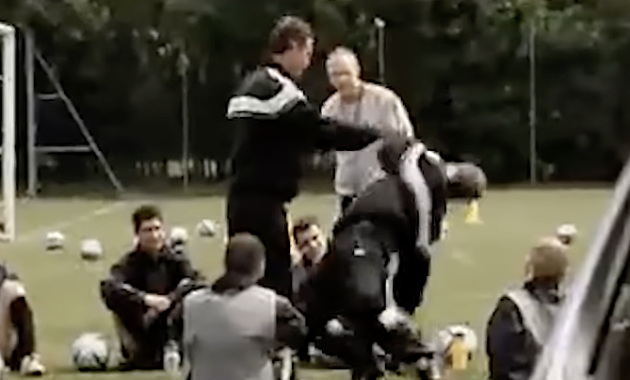
By the 1980’s professional soccer teams would actually have flopping sessions in practice.
Slowly the trend grew, spreading geographically across the world and to every level of soccer.
You can see the seductive logic: If penalties make that much of a difference, why not have everyone try to get one at every opportunity? If we fake 50, maybe the refs will call 5.
But here’s a quick quiz:
· Would you rather see a Maradona stepover or a Neymar flopover?
· What’s more fun: a Wemby windmill or a LeBron air foul?
· What’s more likely to keep you watching a game: a Brazilian player named Oscar bending a belter or executing an Oscar-worthy fall?
· Would you rather see three-balls and screamer goals or free falls and free throws?
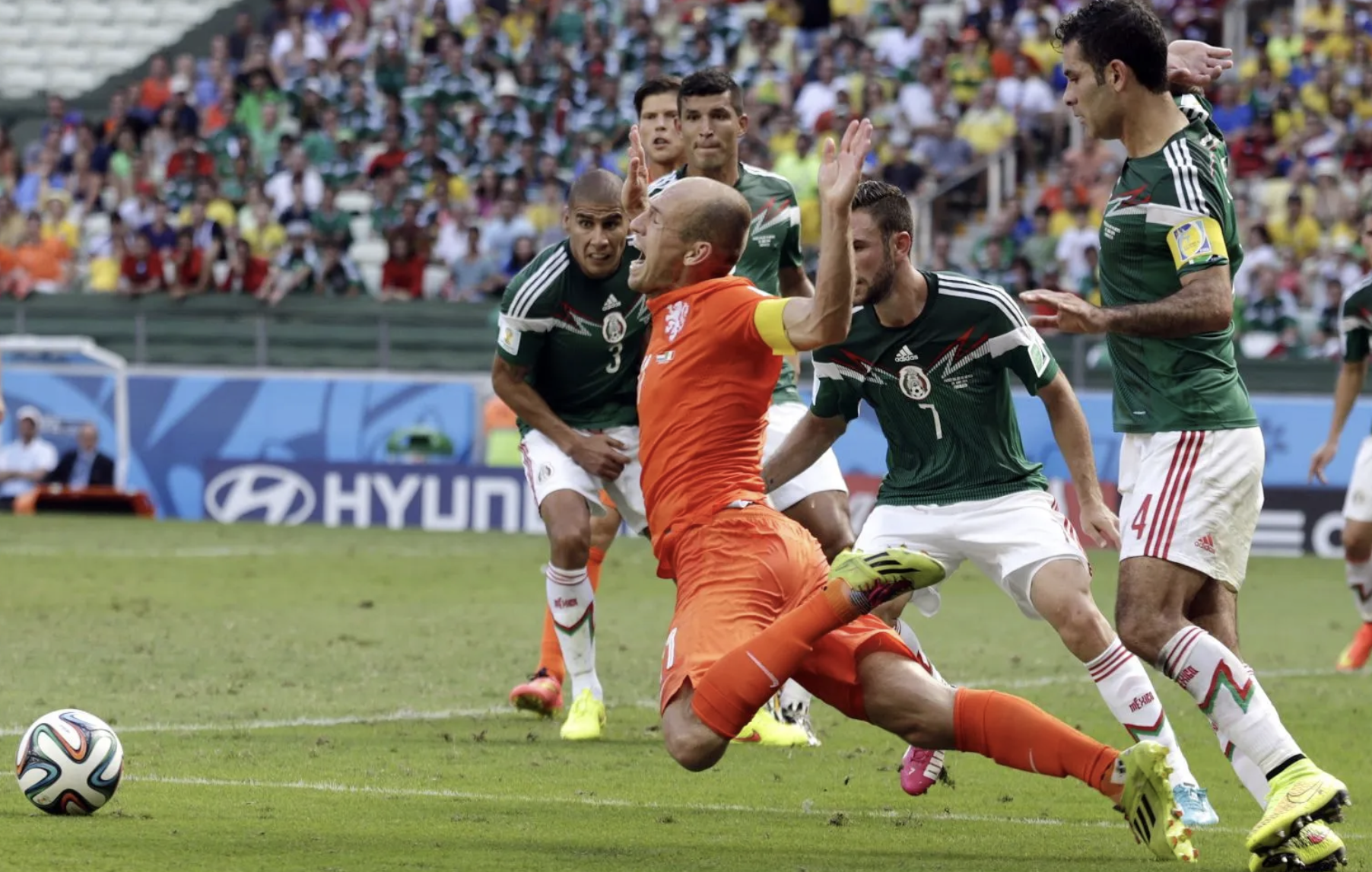
Flopping slows down the game, and turns a contest of athletic skills into a test of acting skill.
A plea to players and coaches: LET US WATCH THE GAME – dribbling and passing and deking and dunking and shooting and scoring -- the game as it was designed. That’s what we want to see.
Accused floppers generally deny the charge, or at least argue they flop no more than anyone else. Flopapologists rationalize: “Our guys are team players; they do what it takes for our team to win.” Or they claim they hate it, but… “If we don’t flop it’s essentially unilateral disarmament, because our opponents won’t.” And then they shrug: “Hey, it’s just part of the game; nothing we can do about it.”
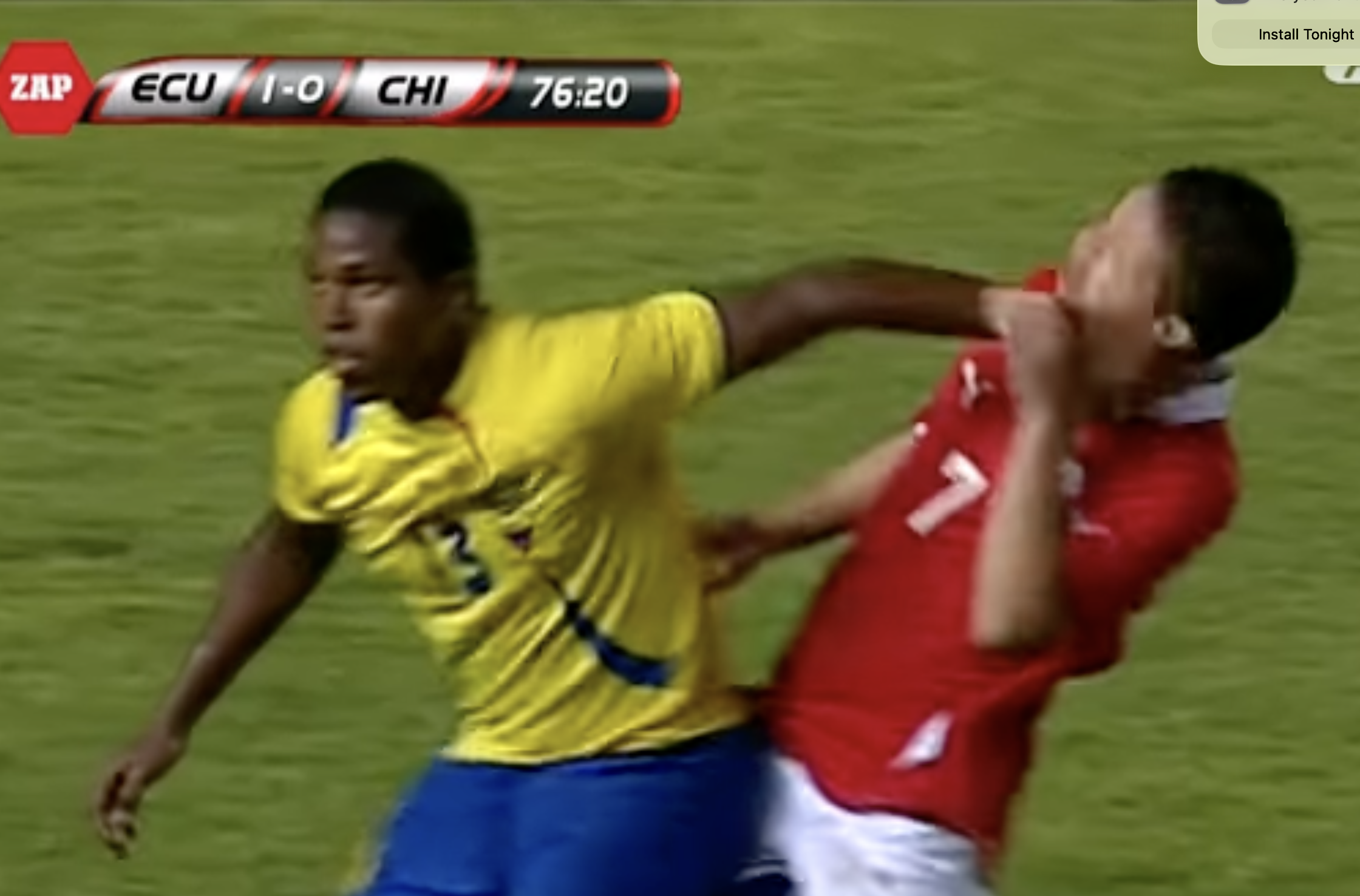
One way to get a foul called: grab your opponents arm and hit yourself with it.
But the number of fans (and players and coaches) who think that flopping SHOULD be a part of the game has to be asymtotically close to zero.
And it’s not true that we can’t do anything about it.
Since 2012 the NBA has a rule against flopping. Refs are allowed to assess technical fouls for flops if they’re called during the game and $2000 fines after the game (these can theoretically increase with repeated offenses). Soccer has a rule implemented for this year’s World Cup that might be even more useful: officials can call a “mistaken identity” foul. If video evidence finds someone flopped without contact, the yellow card originally given to one player can be transferred to the flopper.
The problem is neither rule is actually enforced in practice.
Out of 267 yellow cards issued in the World Cup this year, I could only find TWO instances of “mistaken identity” cards given. And since the flopping rules were instituted in the NBA in 2012, the number of flopping fines per 1500 game season averages… SEVEN. As long as the payoff for playacting is so much greater than the penalty, why would anyone change behavior? The antidote? Enforce the rules. Make cheaters pay.
While the governing bodies do basically nothing about the problem, a curious world watches and learns. Go to any youth soccer game and you’ll find kids, from eight years on up, doing what their heroes do, diving, after contact… or just cuz. It takes a little longer for basketball players to learn (maybe wood is harder than grass?) but by high school they’re collapsing on cue.
Why does this bother me so much? True confession: when I was twelve I was playing a church league basketball game - a bitter Presbyterian vs. Episcopalian throwdown — and guarding Will Head, their best player, a guy infinitely quicker, more skilled (and better looking) than I was. He was destroying us but also slowly picking up fouls. In the third quarter of the game I stepped in front of him as he drove toward the basket. He stopped short, barely touching me. But I stumbled backward, falling to the ground, executing a move I’d seen the week before in a college game. A classic flop. The ref, a 16-year-old probably just trying to earn some spending money for pinball, called a charging foul on Will, his 5th. I knew it wasn’t a foul, but said nothing. And it “paid off.” With Will out, we won the game. My teammates congratulated me on my crafty play — not a block or a steal or a pass or a shot but a flop.
I asked Will about it this week. He says he doesn’t even remember the play or the game. But 50+ years later, while I have no other memory of my basketball career, I remember that moment vividly, a moment I look back on with shame.
You can say games are games and shouldn’t be confused with our “real” lives, but I think they can, and do, teach us and reveal things about us. And I think there is a meaningful message being transmitted this year from our NBA and World Cup idols: it’s okay to cheat if it helps you win. Is that really what we want?
Notes:
An enlightening history of soccer diving: https://www.theguardian.com/football/2016/apr/06/the-fall-how-diving-became-football-worst-crime
Amazing soccer flops: https://youtu.be/meWyEBCo6oo?si=MVcNOmjuC8zWAiuu; https://youtu.be/CKgrTbZGGek?si=WLWZrIhfXU47DEug; https://youtu.be/cRTeqDGeQEY?si=2XPO4Ba2EhwF_XmM; https://youtu.be/sivjWuybfrY?si=tAd2uChJ5Bar_Xne
NBA potential flopping changes: https://www.foxnews.com/outkick-analysis/nba-mistaken-identity-rule-fifa-world-cup-stop-flopping-issue
Analysis of Shai’s flopping: https://www.foxnews.com/outkick-sports/frequently-shai-gilgeous-alexander-actually-flopped-get-foul-calls-nba-playoffs
Shai’s free throw stats:
https://www.statmuse.com/nba/ask/shai-gilgeous-free-throw-attempts-per-game-in-the-post-season
FIFA World Cup 2026 “discipline statistics”: https://www.espn.com/soccer/stats/_/league/FIFA.WORLD/view/discipline
NBA fines 2025-2026 season: https://www.spotrac.com/nba/fines-suspensions/_/year/2025