Two Screens, One Movie
Scott Adams, who died this week, will be remembered by most as the creator of the incredibly popular “Dilbert” comic strip, which satirized office culture, ran from 1989-2023 and won him fame, fortune and US Cartoonist of the Year honors. He’ll be remembered by some for his racist and sexist comments that led to the cancellation of the strip and by others as a stalwart for freedom (President Trump eulogized him as “The Great Influencer” who “will be truly missed”). But it may be that his most important contribution to the world was a phrase he created in his work as a conservative political commentator that perfectly describes our era or political polarization. In this 2016 book Win Bigly: Persuasion in a World Where Facts Don’t Matter, he suggested that most of the divide in American politics is the result of a phenomenon he described as “two-movies-one-screen.”
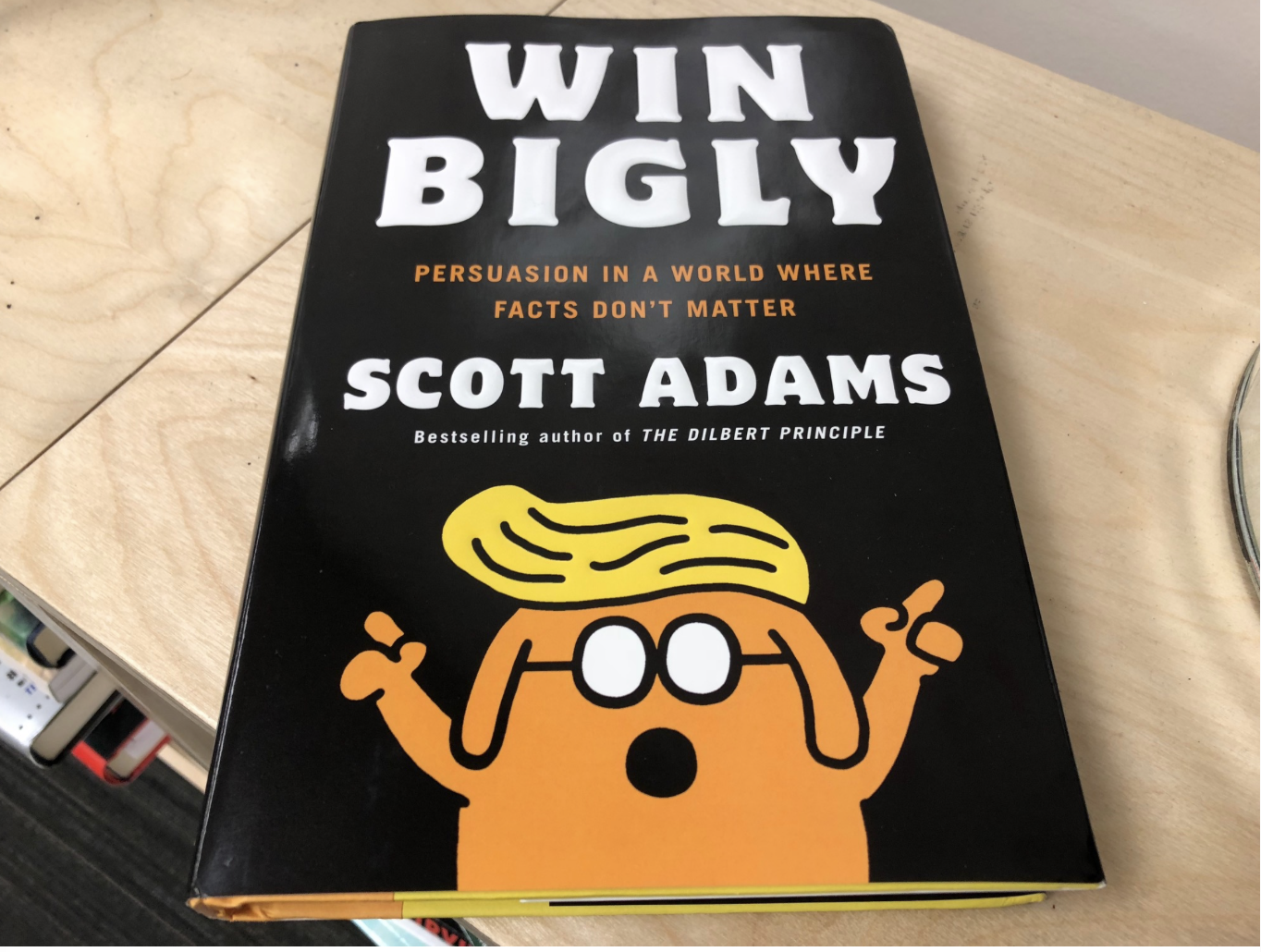
Scott Adams told us how this thing worked a decade ago. Different brains see different movies.
I’ve been thinking about that phrase all week as I’ve tried to understand how rational people could watch the same videos of the event and come to opposite reactions to the killing of Renee Good in Minneapolis. And I think Adams’ phrase answers half of the question.
The idea of “two movies one screen” is that two people can watch the exact same screen (or listen to the same podcast, or read the same story) and come away from it assigning very different meaning to what they just consumed.
Our brains shield us from “intolerable” information — they make the decision about which information we let in.
The phenomenon of selective perception was first described in a 1954 study* by psychologists Albert Hastorf and Hadley Cantril, who asked students from Princeton and Dartmouth about a notoriously violent 1951 game between the two schools. The students watched the same game but, while 86% of Princeton students thought Dartmouth started the rough play, just 36% of Dartmouth students thought so. Some 53% of Dartmouth students thought “both” teams were responsible; only 11% of Princeton students thought so.
What apparently happens to us is that the preconceptions we bring when we sit down in front of our screen cause us to “dissociate.” An article this week on skeptic.com describes dissociation as a “class of mental processes in which certain thoughts, preconceptions or experiences are kept out of conscious awareness.” Dissociation works as a defense mechanism, “shielding the individual from information that is experienced as overwhelming or intolerable. The mind does not reject the data after evaluating it. It fails to perceive it in the first place.”
These are the preconceptions, I think, that the two sides bring to the screens they are watching.
Movie 1: For one side, the movie lens is that Minneapolis is a crime hotbed, with immigrants embezzling hundreds of millions of dollars from the American government while lazy liberal politicians turn a blind eye. Meanwhile, misguided, possibly traitorous progressive activists try to stop law enforcement from doing its best to protect and defend goodness and right. If that’s your lens, you bring that to your screen and attend to the details that confirm those preconceptions. ICE had every right to be there, you believe, and, as tragic as the outcome was, Renee Good brought it on herself.
Movie 2: For the other side the movie lens is that crime in Minneapolis has been trending down, that prosecutors have been cracking down on the embezzlement for the past five years, and now immigrants and citizens are being threatened by an illegal use of force by overzealous rogue agents. If that’s your lens, you believe Americans should have a right and an obligation to protest that overreach. You bring that perspective to the screen and see everything that supports that perception. ICE shouldn’t have been there, you believe, and there was zero reason for the officer to kill Renee Good.
Full disclosure: it’s almost impossible for me to see the world through anything approaching Movie 1. But maybe I’m the one dissociating, not the folks seeing the world through Movie 1. If we accept the possibility that different people can watch the same screen and see two different movies, we can understand part of the problem.
But the second challenge for us trying to make sense of this tragedy is what I would describe as “two screens, one movie.” We often are fed completely different stuff through our screens.
Screen 1: “Domestic terrorist,” officer video: When President Trump described the incident a few hours after it happened on January 7, he said Ms. Good “violently, willfully and viciously ran over the ICE officer.** Vice President J.D. Vance characterized Good’s behavior as “an attack on the American people.” Secretary of Homeland Security Kristi Noem described her as a “domestic terrorist.” Vance said she took action that created a “tragedy of her own making” and referred people to a video taken by Officer Ross on his iPhone.
The key moment of the video comes as Ross crosses in front of the car for the second time. As he crosses we see Renee Good turning the wheel away from him and toward the middle of the road. As Ross continues to cross the path of the car, we hear another agent saying, “Get out of the car. Get out of the f***ing car.” Instead Good drives off, the camera jerks and goes dark for a second. Another video taken from the passenger side of the vehicle makes it appear the vehicle hit Ross’s body, causing it to slide away from the vehicle. On Ross’ video, there is a thud sound.

From the angle of this screen capture there appears to be no gap between Ross’s upper body and the SUV as he shoots.
The New York Post says the videos prove “the left bears full blame for this bloodshed. Her car hit the agent before he shot her; he ended up hospitalized.” White House Press Secretary Karoline Leavitt says the video proves that Renee Good “behaved horribly. And then she ran him over. She didn’t try to run him over. She ran him over.”
Screen 2: “Reckless” officer, bystander video: When the Minneapolis Mayor Jacob Frey shared his reaction to the killing, he referred people to videos taken by people at the scene. He accused the officer of “recklessly using power that resulted in someone dying,” and said ICE was “trying to spin this as an action of self-defense.” Then he referred people to video taken by bystanders at the scene and said “having seen the video myself I want to tell everyone directly, this bulls***” and demanded that ICE “get the f*** out of Minneapolis.”
The videos the Mayor referred to and others that have appeared since, appear to show Ross stepping away (and sliding away – the road was icy) from the car as he shoots, and that it’s his left hand with the phone in it that contacts the car, not the rest of his body.
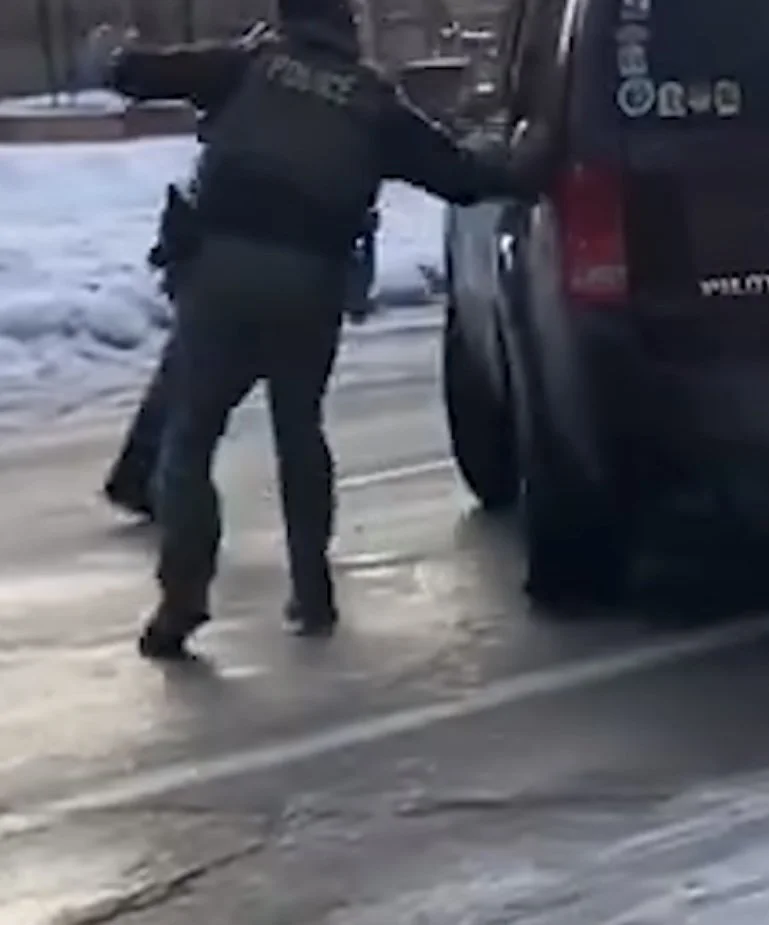
From the angle of this screen capture, there appears to be a considerable gap between Ross’ body (partially obscured by another officer) and the SUV as he shoots.
Jacobin.com concludes “it is very difficult to watch the clips of Good’s killing and not see a belligerent ICE agent who is in zero danger whatsoever shooting multiple rounds into an innocent civilian who is just trying to de-escalate the situation and drive away.”
Which videos have you seen more in the past week?
· If you are a conservative, your algorithms have likely shown you more of the officer video. If you are progressive, they’ve directed you to the bystander videos.
· If you’re conservative, you’ve heard the thud described as proof that the car ran over the officer. You’ve heard audio excerpts from the videos with Becca Good, Renee’s wife, saying “You wanna come at us?” And you’ve heard the officer saying “Get out of the car.”
· If you’re a progressive, you’ve heard the thud described as proof that the officer put his left hand with the phone in it down on the hood of the SUV. You’ve heard excerpts from the videos with Rebecca Good saying “that’s fine dude. I’m not mad at you,” then telling the agents before she moves forward, “I’m pulling out.” And you’ve heard the officer saying “f***ing b****” after the shooting.
So it’s not just that we are using our preconceptions to perceive two different realities from the same screen, our platforms are making sure we see repeated versions of the particular screen they conclude we want to see.
The best re-creation I’ve seen of the shooting is from a story in The New York Times that blends the officer video with five other videos, cutting between each frame by frame. That kind of close reconstruction helps solve the inadequacy of a single perspective. It’s an important piece of work and, for people willing to put in the time, I’ve linked it in the Notes at the end of the piece.
Does anyone really want to put in the time to sort through the two movies and two screens and try to come to an objective conclusion about polarizing issues? At least on this issue there’s some evidence that people are.
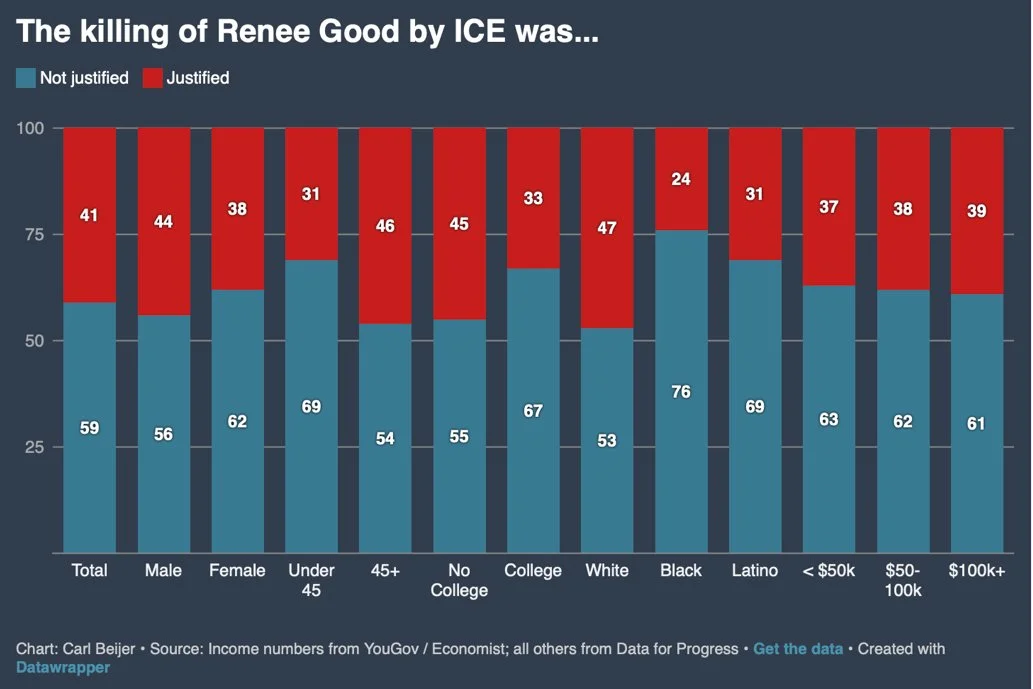
Polling in every demographic on the Renee Good shooting shows a break by a few from pure partisanship (Data for Progress poll; YouGov/Economist demographics)
Take a look at the poll numbers above. It may not seem like a big gap, but in our 50-50 America, we don’t often see any issue poll 60-40. Some people appear to be defying the dissociation of their preconceptions and the drum of the algorithms to come to their own opinion.
Maybe this means something about our willingness to stand apart, but to be anything resembling a trend, it’s going to need to happen for each person on an individual level. Next time I find myself instinctively coming to a conclusion on an issue, will I be willing to consider being part of the defiant, independent 10%? Or do I like my version of the movie too much to watch the other one?
*Thanks to reader Jeff Cartwright-Smith, a former psych professor at Vassar, for bringing the Dartmouth-Princeton study to my attention!
**Update: After hearing on January 20 that Ms. Good’s father is a strong supporter, President Trump described her killing as “a tragedy,” said he “felt terribly” about it and noted that sometimes ICE agents are “going to make a mistake.”
Notes:
Scott Adams obituary: https://www.nbcnews.com/news/obituaries/scott-adams-dilbert-creator-dies-rcna253792
Link to info on Scott Adams’ book, Win Bigly: https://www.goodreads.com/book/show/34427205-win-bigly
Two movies one screen explained: https://www.urbanismspeakeasy.com/p/two-movies-one-screen-why-those-other
Dartmouth-Princeton football game study described: https://psycnet.apa.org/record/1954-07342-001
Crime stats in Minneapolis: https://www.axios.com/local/twin-cities/2026/01/12/homides-fall-sharply-saint-paul-minneapolis
Background on the Somali embezzlement scandal: https://www.reuters.com/legal/government/what-is-minnesota-social-welfare-scandal-that-has-drawn-trumps-ire-2026-01-14/
“The Skeptic” on parallel realities: https://www.skeptic.com/email/516a4329-9afe-4100-9b97-6a6c7558208f/
New York Post take on the shooting: https://nypost.com/2026/01/07/opinion/the-left-bears-full-blame-for-the-minneapolis-ice-shooting/
Jacobin.com take on the shooting: https://jacobin.com/2026/01/renee-good-ice-public-opinion
New York Times recreation of videos from different perspectives: https://www.nytimes.com/2026/01/15/video/ice-shooting-renee-good-minneapolis-videos.html?smid=nytcore-ios-share