
As a former English teacher, it’s a dream picture. Alongside an urban stream, hundreds of young people gather side by side – to read!
It’s downtown Seoul, South Korea and the Seoul Metropolitan Library has organized an event, putting out a selection of titles on makeshift bookshelves and piping in music for young people. A few of the participants pick books and pose, smartphone in one hand while holding a book in the other, and a few of them pretend to read with their phone inside the covers, but most of them settle in with their nose in a book for a couple of hours.
Somehow, against all odds, reading is trending among young people in South Korea. A hashtag, #texthip, celebrates the new coolness of the written word. Publishers have started printing a new kind of book set-up, with left side pages left blank to encourage readers to practice “pilsa,” hand-copying favorite passages from the right side pages. Across the country, book events, book clubs and book merch are all increasing. In the first quarter of 2026, book purchases by young people were up 13.6%, the second year of 10%+ growth.
Reading in the US is in something resembling freefall.
The percentage of Americans who report reading for fun on any given day declined from 28% in 2004 to 16% in 2023; fewer than half of all US adults reported reading a book of any kind in 2022 and only 38% read a novel or short story.
If you think that’s a problem, it’s worth looking at what is happening in South Korea to see what’s fueling the reading renaissance among young people.
Making reading cool
In 2024, Korean author Han Kang won the Nobel Prize for Literature, the first female Asian winner, igniting a flood of national pride and a stream of purchases of her books. But it may have been even more important that RM, one of the superstars of the boyband phenomenon BTS, outed himself as… A READER! Since then, when he posts on the latest book he is reading, BTS nation buys.
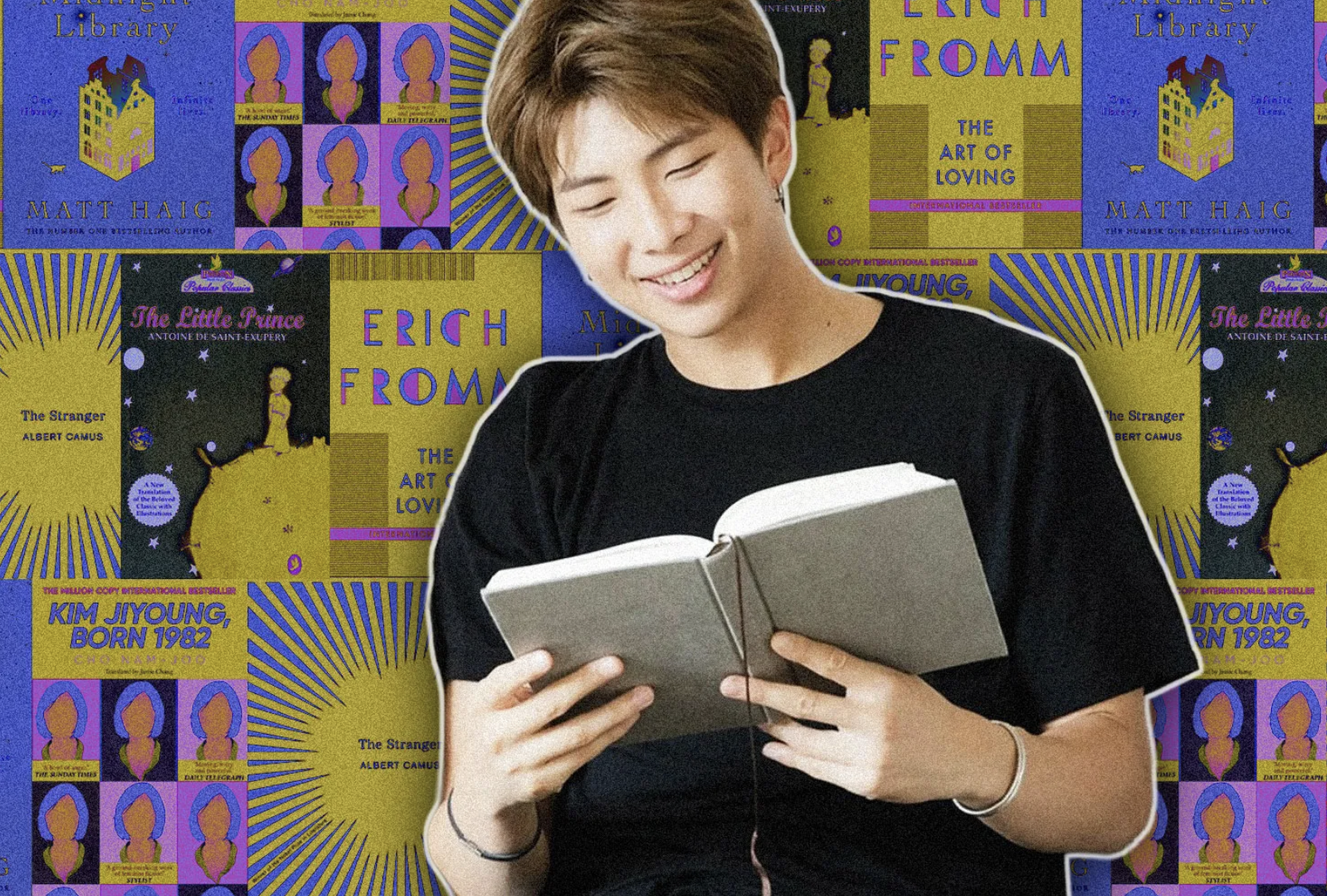
Kim Nam-joon (AKA Rap Monster, or RM). BTS front guy. Teen idol. Fierce rapper. Book nerd (image from GQ India).
Over the past year, Mimusa, the biggest publisher in South Korea, has created a full line of cute book merch, including stickers, book covers, keychains and bookmarks that people are buying. Recently, they partnered with a convenience store to create a line of milk cream buns that looked like book covers and contained cute book marks inside. It flew off the shelves.
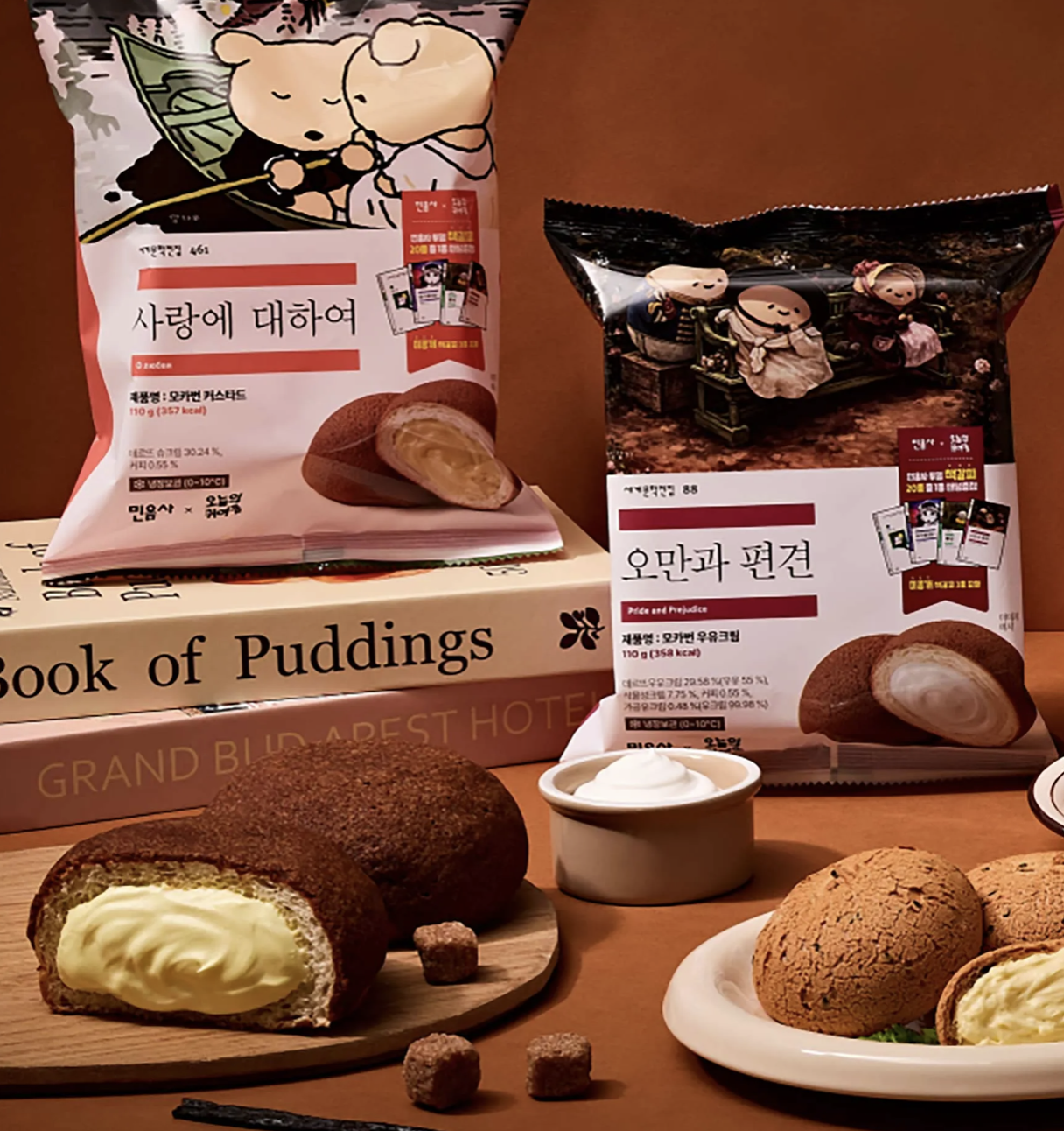
Think baseball trading cards. You never know what reading merch you might get with your bread! (Photo Bloomberg)
Somehow that all gels into #texthip, Oh Ji Eun, director of the Seoul Metropolitan Library told Bloomberg: “For young people, reading is a flex. It’s also a fashion – there’s an aesthetic to being seen holding a book.”
In a digital world, he notes, “thinking and reflection have become something rare – and therefore something they consider hip.”
Creating reading clubs
An alternate approach that also appears to be working is creating clubs that build community and accountability.
Last year the Seoul Metropolitan Library created an online book club called the Hipdok (“dok” means reading in Korean) Club, but made it seem exclusive – registration was only open for a day. There were 10,000 registrations in the first two hours. They’ve also created programs that enable readers to track how much they are reading – and then show their progress off to their friends.
A company called Trevari adds money into the mix. Some 6000 members across the country pay about $75 a month to participate in small, highly-structured meetings, with required questions and essays. Founder Yoon Sooyoung says the membership fee ensures literal buy-in from members, financially nudging them to do what they know they “should” do, but might not:
“I love doing Pilates,” he says. “But I pay for it, because if I didn’t pay for it, I would not exercise.”
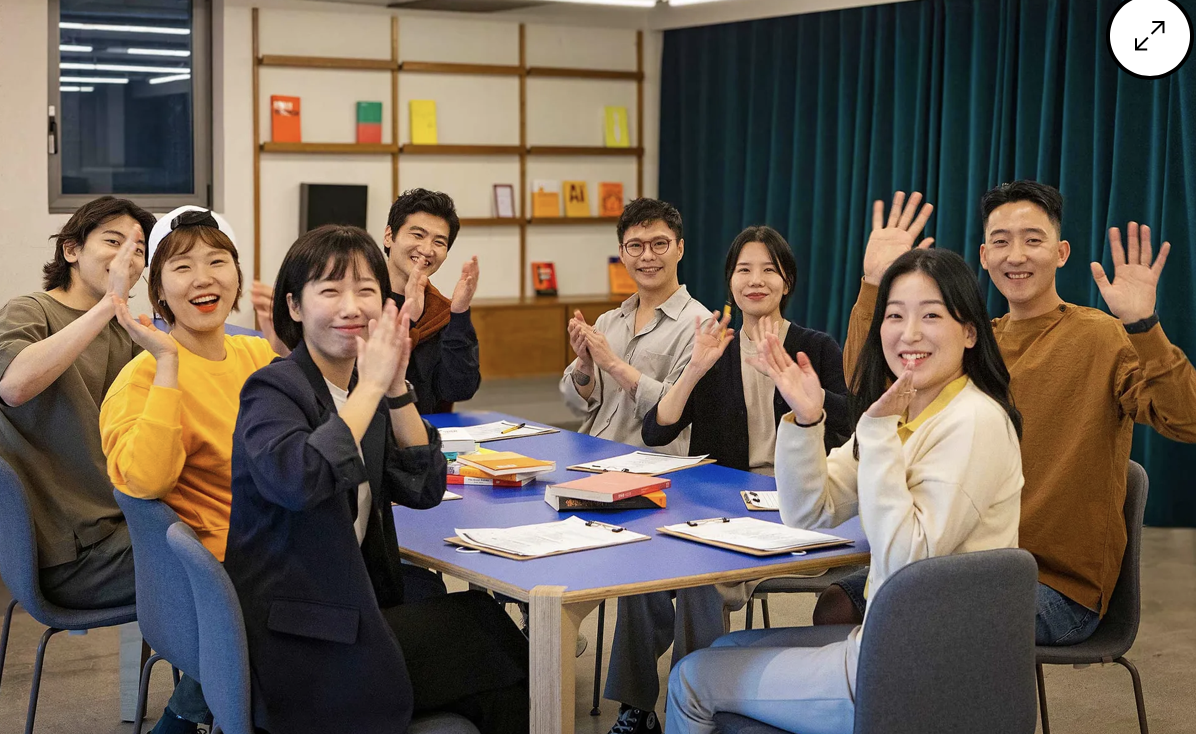
Paying money to be part of a book club? It works in South Korea (photo Bloomberg).
The clubs are trying to find a balance between discipline and drudgery. Participants are allowed to bring in alcohol to meetings. There are occasional reading parties with DJ’s. The company gets high profile politicians and celebrities to host discussions, and members get an easy way to meet new friends.
Strategists trying to increase US reading are trying a range of approaches as they try to get people’s attention in a manic media landscape. Publishers are trying partnerships with TikTok’s Booktok” creators (you pull up a video, watch highlights of a bookfluencer reading a book (no, I’m not kidding), then listen to them give it a review).
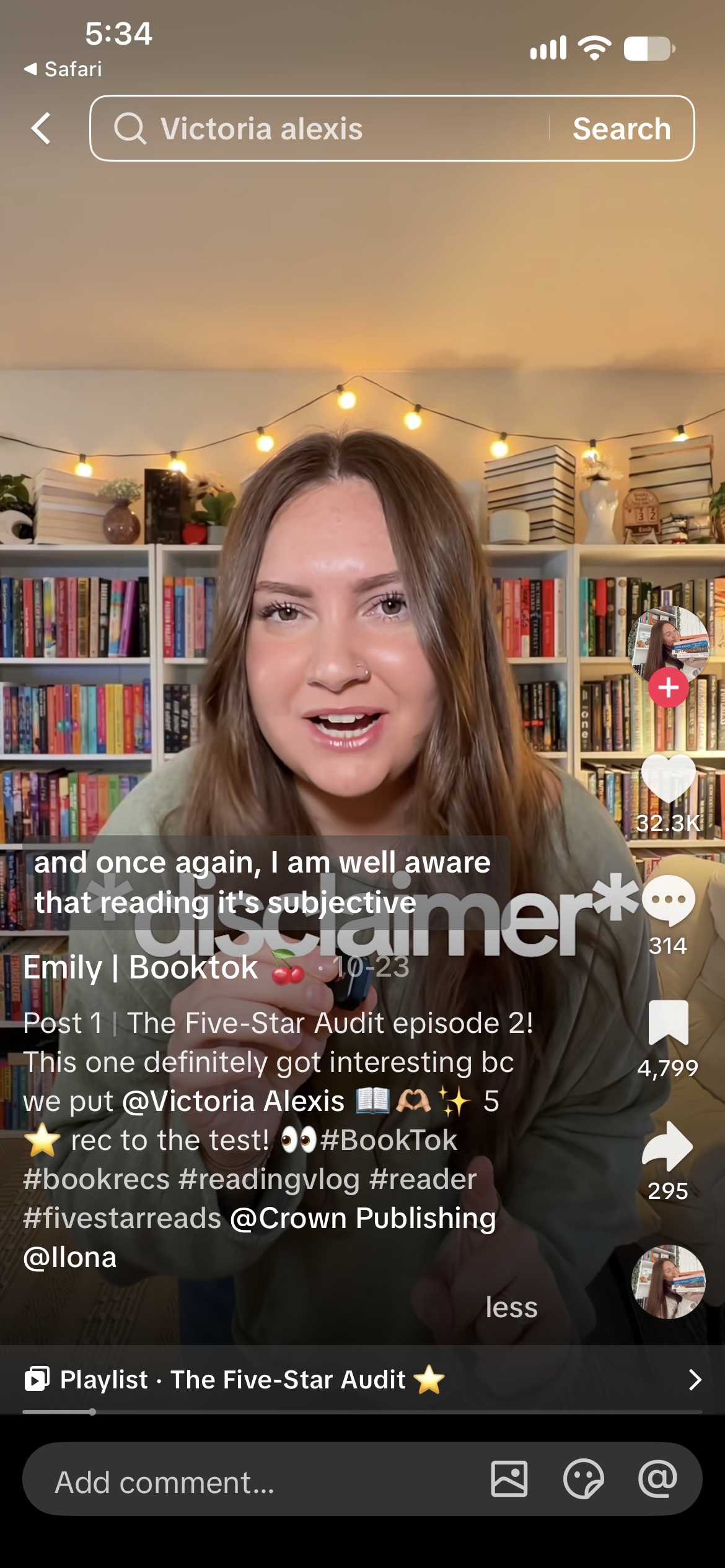
In this video, Booktokker Emily reviews Booktokker Victoria Alexis’ book recommendation and makes sure to do a shoutout to Crown Publishing.
Bookstores are imitating the success of British booksellers in making their stores less generic, more personal and community-specific. Big bookstores like Barnes and Noble have tried to go hyperlocal, encouraging their outlets to cater each store to the local community, and, somehow, the number of local independent bookstores has increased by 600 in the past year, even as the number of readers decline.
Linda-Marie Barrett, author of Creating a Salon, told NPR: “You’re kind of like a bartender or therapist when you’re a bookseller, so you have a really good insight into what your community might be missing or needing.”
With those insights, some US bookstores are hosting open mike nights or reading raves. Others are creating highly niche gatherings (“banned book” clubs and “romantasy” discussions are apparently popular these days), bringing mobile bookmobiles to bars and even trying reading events in nightclubs.
Public libraries are trying things like Blind Dates with Books (you get a surprise book wrapped in a generic brown wrapper), outdoor story walks for kids and their parents and intergenerational book clubs, writing columns with book recommendations for local news outlets.
If any of that works, it will be an amazing two-fer — the restoration of community and a book reading boom.
But so far it’s hard to see any quantifiable payoff in the number of readers.
Book sales in the US are up slightly, but the number of readers is still declining. A smaller number of readers is buying a greater number of books (it’s possible I may have contributed to this phenomenon).
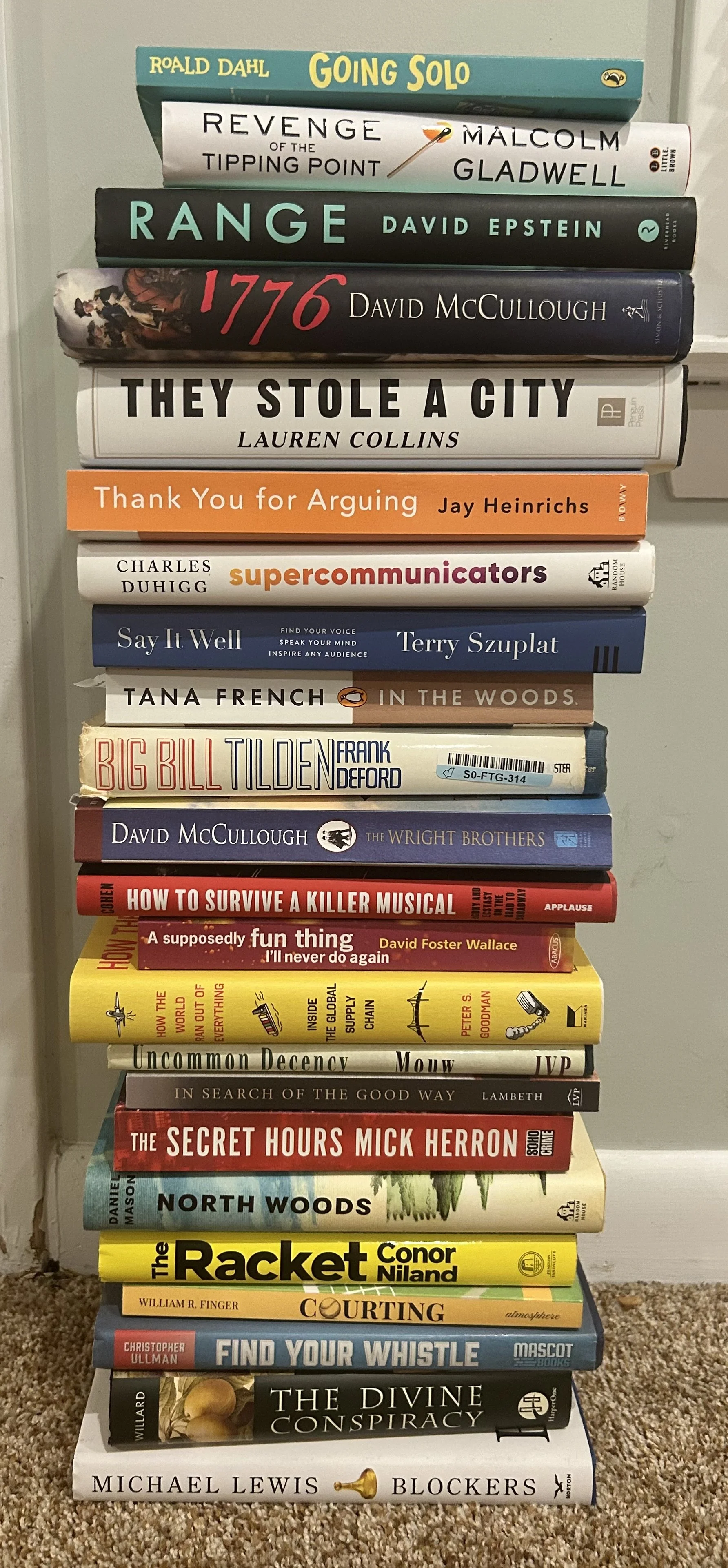
The latest research shows that 20% of readers buy 80% of books in the US. Not sure who they are talking about, but these are some of my purchases for 2026 (don’t tell Ret).
The End of Reading?
In August 2026 The Atlantic published an essay called “The End of Reading,” arguing that maybe the whole book-reading thing had a great run, but maybe now that’s all over. For most of human history, after all, almost all of us learned stuff orally, and even when books came along, they were expensive, so reading them was limited to a tiny fraction of the population. The invention of the printing press in 1440 lowered the cost of books, supercharged literacy and launched a 586-year book-reading bonanza. Maybe it’s time to declare in 2026 that the book is dead, book-reading it a quaint activity limited to a small niche of the population that can afford to buy books and will choose them over videos, movies, games and short-form articles. Tomorrow’s bookreaders may be the equivalent of today’s vinyl collectors – cute eccentrics that normal people cross the street to avoid.
God I hope not. Reading novels and nonfiction gives me something I don’t get other places. Books force me to focus my 12-track mind. They encourage me to collaborate with authors in conjuring different worlds. They face me off, in a nonthreatening space, with people I may disagree with. They give me time to understand the nuance of ideas that I may just be barely able to grasp if I work at it.
Every other force in this world seems to be pushing us toward simpler, more comfortable, more passive activities. Reading books is mental floss.
So if we can find any way to expand the percentage of people doing it, I’m for it. What would it take to convince Taylor Swift or Victor Wembanya or Mr. Beast to start a book club like Oprah and Reese did? How much would it cost to convince more libraries to bring bookmobiles to bars, parked in the lot beside the food trucks? Would it work if we were challenged to keep up with the Kardashian consumption of books, not Bulgari? Could Dominos do a limited run literary line, starting with a “Five Little (Green) Peppers,” beer or liquor companies launch a series (I’d start with “Catcher in the Rye)? Maybe FTD could market a bouquet line starting with The Name of the Rose? I think it could be fun if Expedia send me a reading list of appropriate books every time I picked a travel destination. And how hard would it be for Starbucks to sell little coffee cup bookmarks?
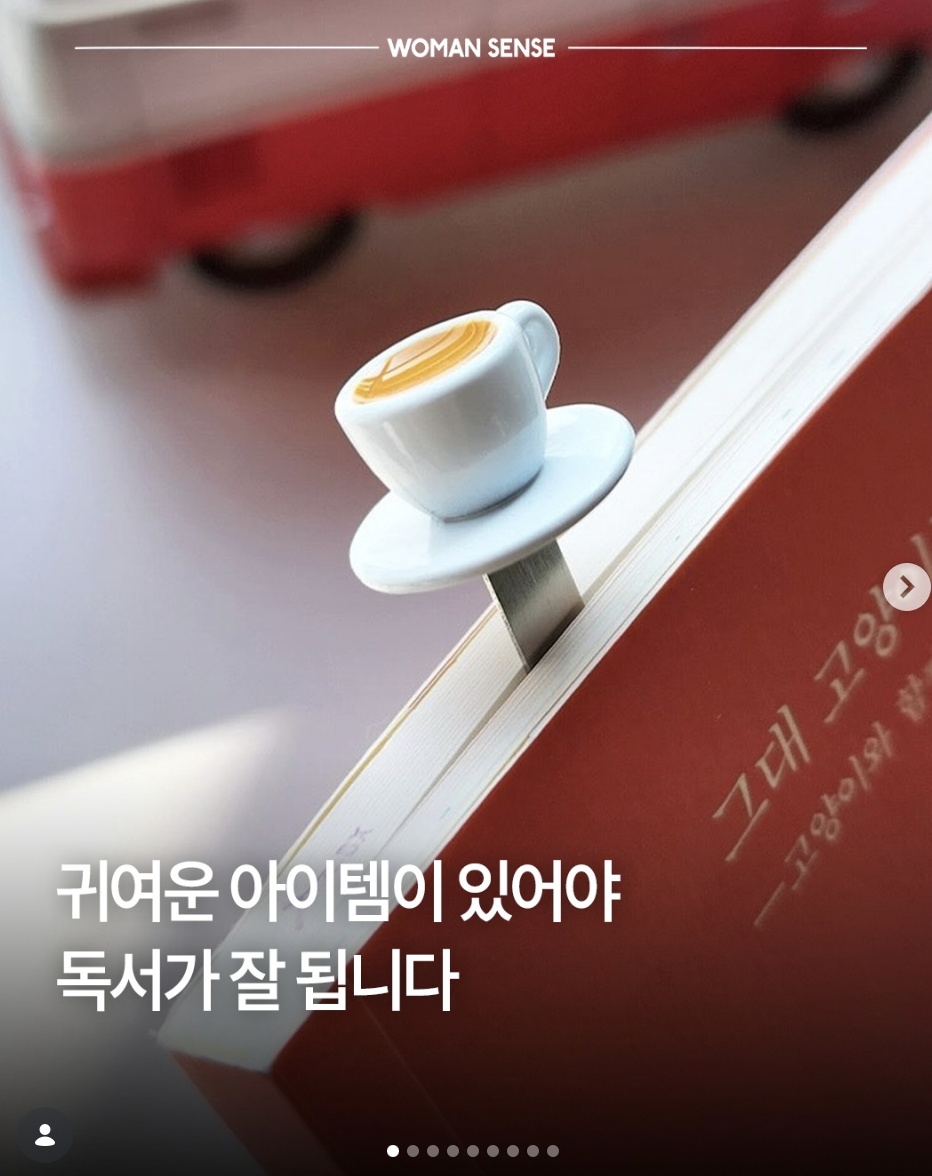
Proof of concept, Starbucks. Just sayin’…. (image from Instagram)
Maybe that’s not as crazy as it sounds. Ask your friends in South Korea. Just don’t ask me to pay to be part of a book club.
Notes:
A few of RM’s reading recommendations: https://www.gqindia.com/content/gq-reads-5-books-recommended-by-rm-that-flaunt-the-bts-leaders-lyrical-prowess
Decline in reading: https://www.cell.com/iscience/fulltext/S2589-0042(25)01549-4
The end of reading: https://www.theatlantic.com/magazine/2026/08/reading-crisis-postliterate-age/687618/
Comeback of independent bookstores: https://www.npr.org/2026/07/31/nx-s1-5909575-e1/encore-bookstore-growth
More bookstores, less reading: https://www.axios.com/2026/07/03/bookstores-barnes-noble-james-daunt
Libraries as “third places”: https://www.boneconnector.com/writings/work-libraries
What great books give us: https://www.theatlantic.com/books/2026/11/age-ai-is-the-time-for-a-great-books-revival/689242/