One Big Thing to Learn from… Japan
While my wife and I were in Japan over the past couple of weeks, I got a steady stream of memes and threads and articles from US media about the behavior of the Japanese national soccer team and its fans during the World Cup.
After each game, there was some mashup of the same videos and pictures.
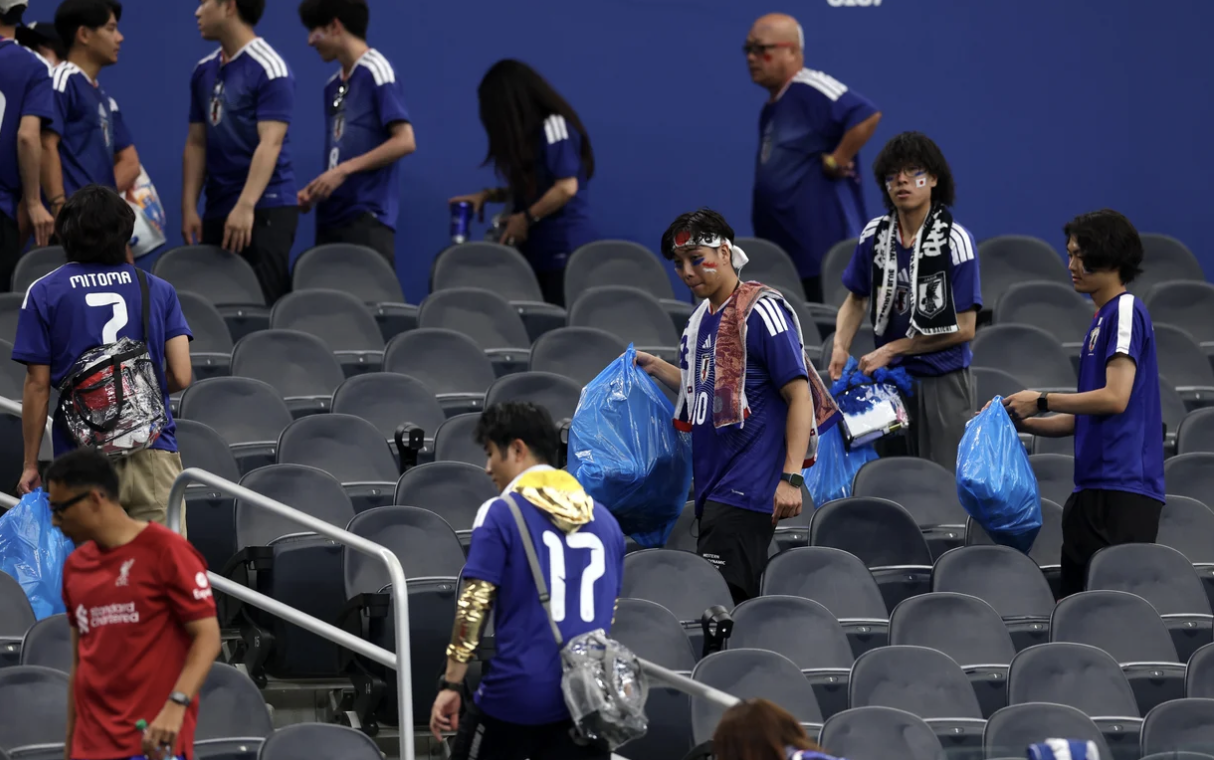
Since the World Cup began, images like this were everywhere following Japan games.
-Look at the Japanese fans cheering for their team – but not against the opposing team. Oh, and there they are cleaning up the stadium after the game.
-Look at the players bowing to the fans in appreciation for their support. Goodness, they left the locker room supplies neatly folded after they left. And there’s the note they left the event city as they went home in thanks for hosting them.
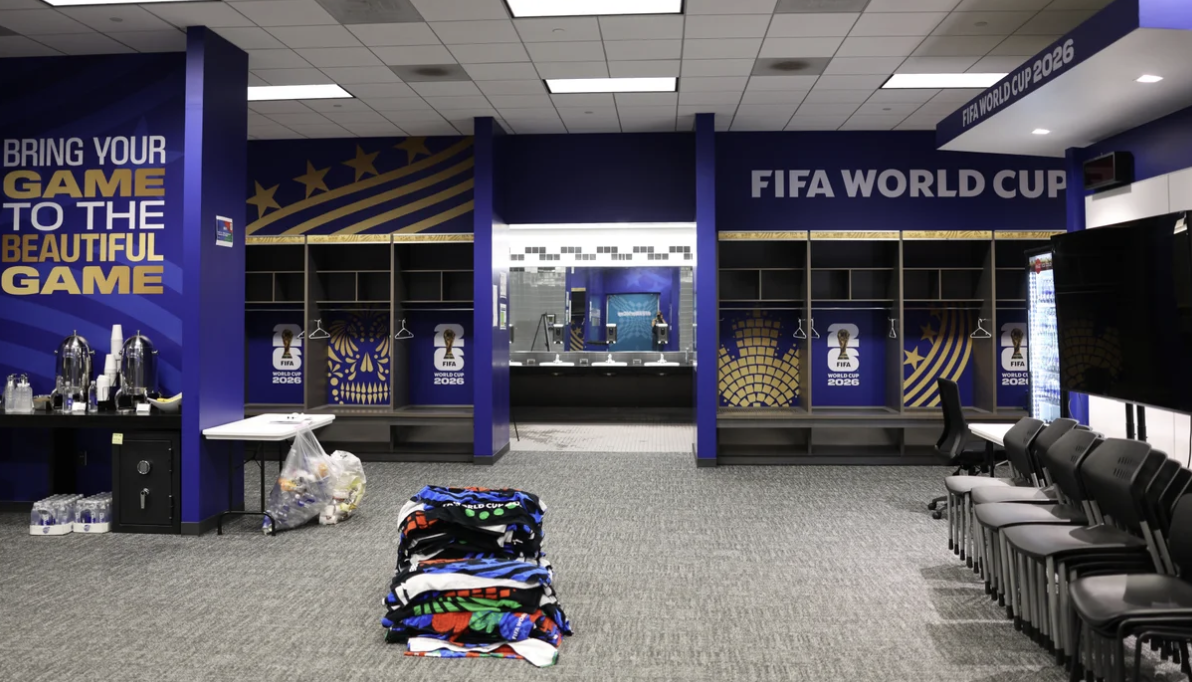
The Japanese locker room following a game in Arlington, Texas.
The folks watching the Japanese couldn’t figure out how to react to this kind of behavior. The posts seemed divided into equal categories of wistfulness, bemusement and snark.
“What’s their angle?” some wrote. “Oh, isn’t that cute,” others muttered condescendingly, patting an entire country on its head. For people like me, it was much closer to “Why can’t we be more like that?”
****
My wife and I are waiting to cross the street in southwest Tokyo. The light goes green and we head toward 500 others, starting on five different corners and going ten different directions. Thirty seconds later, we and everyone else have made it to the other side. It’s another successful “Shibuya Scramble” — the nickname for the path across the busiest intersection of the world. There have been no collisions, no arguments, maximum efficiency.
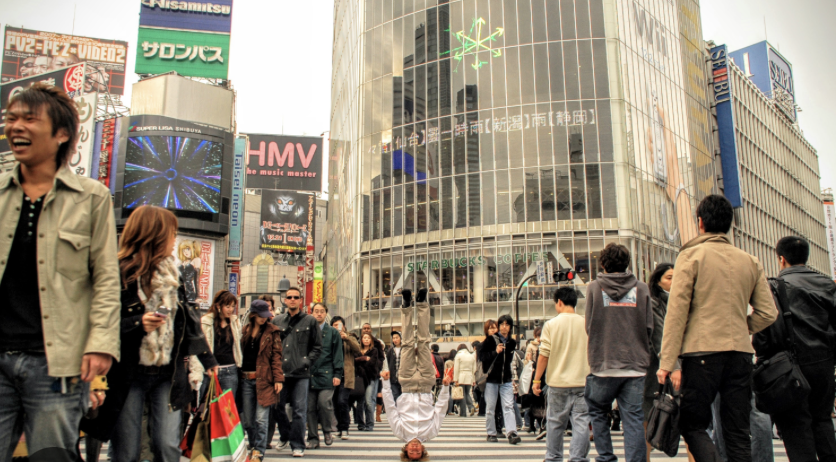
Two of the ten directions folks go during the Shibuya Scramble.
A few minutes later we’re two stories underground in Shibuya Station, standing in one of sixteen lines of people waiting for a subway. The subway arrives. Those of us waiting to get on stand on either side of the doors corresponding to each car. Three hundred people get off; then 300 of us get on, flowing in from our neat lines on either side of the doors. The process takes maybe twenty seconds. Then we’re off.
On the subway, nobody eats or drinks. There’s no music, loud phone conversations or graffiti. Seats reserved for the elderly or young pregnant or disabled are filled by, well, those folks.
We get off a few stations later and go back up to the streets. We didn’t notice it for the first few days but now we can’t unsee it. There are no trashcans anywhere, but also no trash on the streets.
None of this is remarkable to the folks who live here. All of it is remarkable to me. And all of it seems to fit neatly under one big concept that Japanese society seems to operate by and the US seems to have given a big middle finger to.
Even if all you know about Japan is samurais, Shogun and Sony, you have a sense that respect is at the core of the culture.
Over my couple of weeks in Japan, I came to appreciate how that respect manifests itself in a wide range of daily life there. Here’s what it looked like to me.
Respect for the world you live in: The underlying idea that keeps the stadiums, the streets, and the subways clean is something the Boy Scouts taught me decades ago: we should leave the places we visit better off than we found them. When my wife and I set off each Japan morning to discover a city, explore a small town or hike a trail, we bring a small bag with us for whatever waste we create along the way. At the end of the day, we dispose of our waste. We don’t really have a choice: remember, no trash cans. Scale that and you see how it works: when everybody takes responsibility for their own waste, public places are better for every member of the public.
Respect for the work you do: the Japanese principle of kaizen (literally “change”+”good”), celebrating the idea of continuous incremental improvement in work, has been exported worldwide, with varying success. But it started and grew and is successful in Japan because it is consistent with the culture. Over the course of our two weeks, I saw more people taking more pride in their work than I do over any given two years in the US. I watched a group of firefighters get their daily psychup briefing at the beginning of their shift.
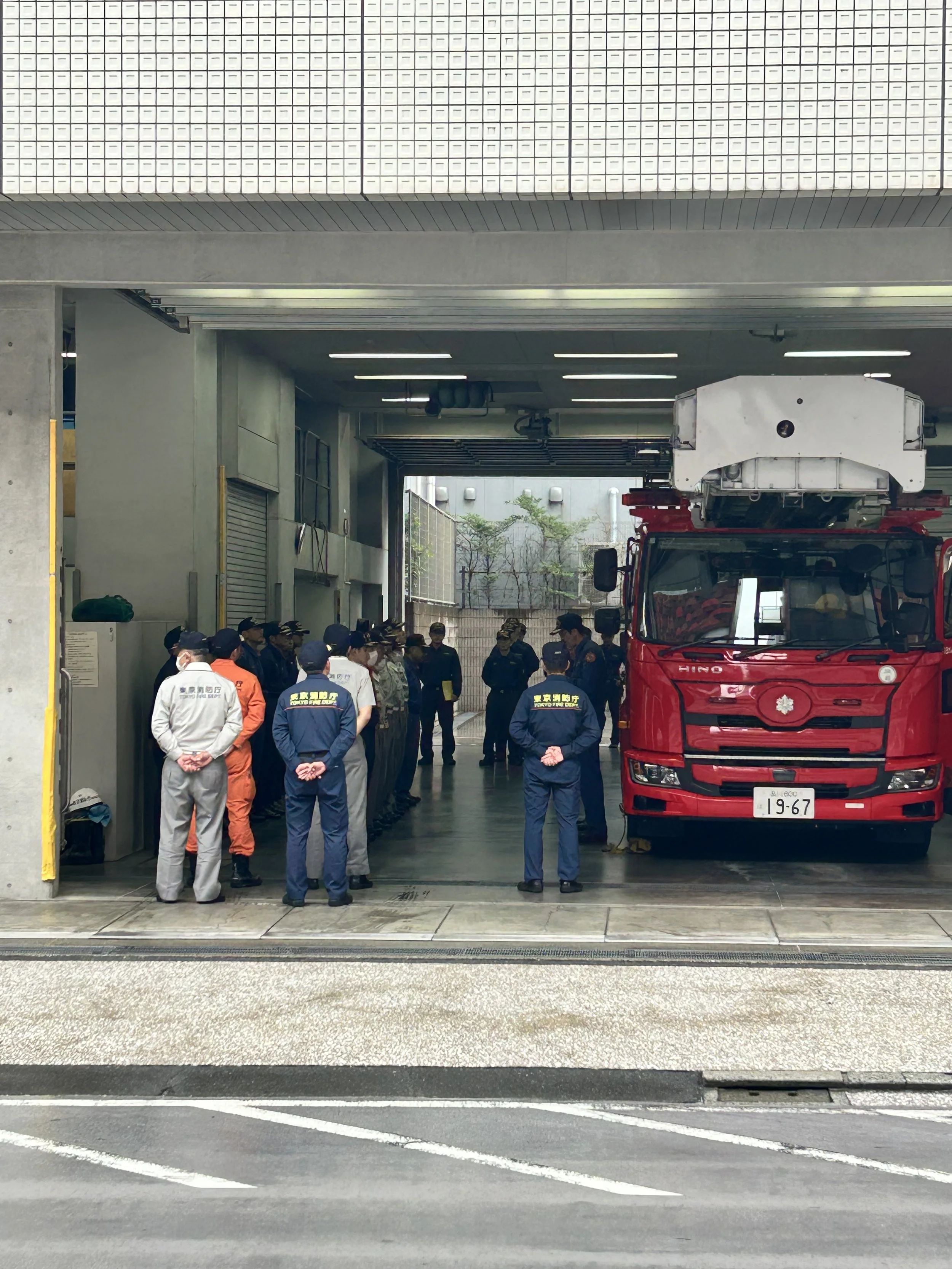
Daily prework meetings, or chourei, can last 10-15 minutes and include chanting company mottos, health check-ins and motivational talks.
In stores I watched the care with which our presents were wrapped. In restaurants it wasn’t only the renowned sushi and tempura chefs who were meticulous; I saw a bartender spend ten minutes trying to get a tray of nachos just right for presentation to guests.
Respect for the people you live with: Elders aren’t the only ones who get respect in Japan. Bowing is imbedded at every level. When young people meet. When strangers meet. When entering, during and following a conversation. When we met deer in Nara, we bowed to each other.
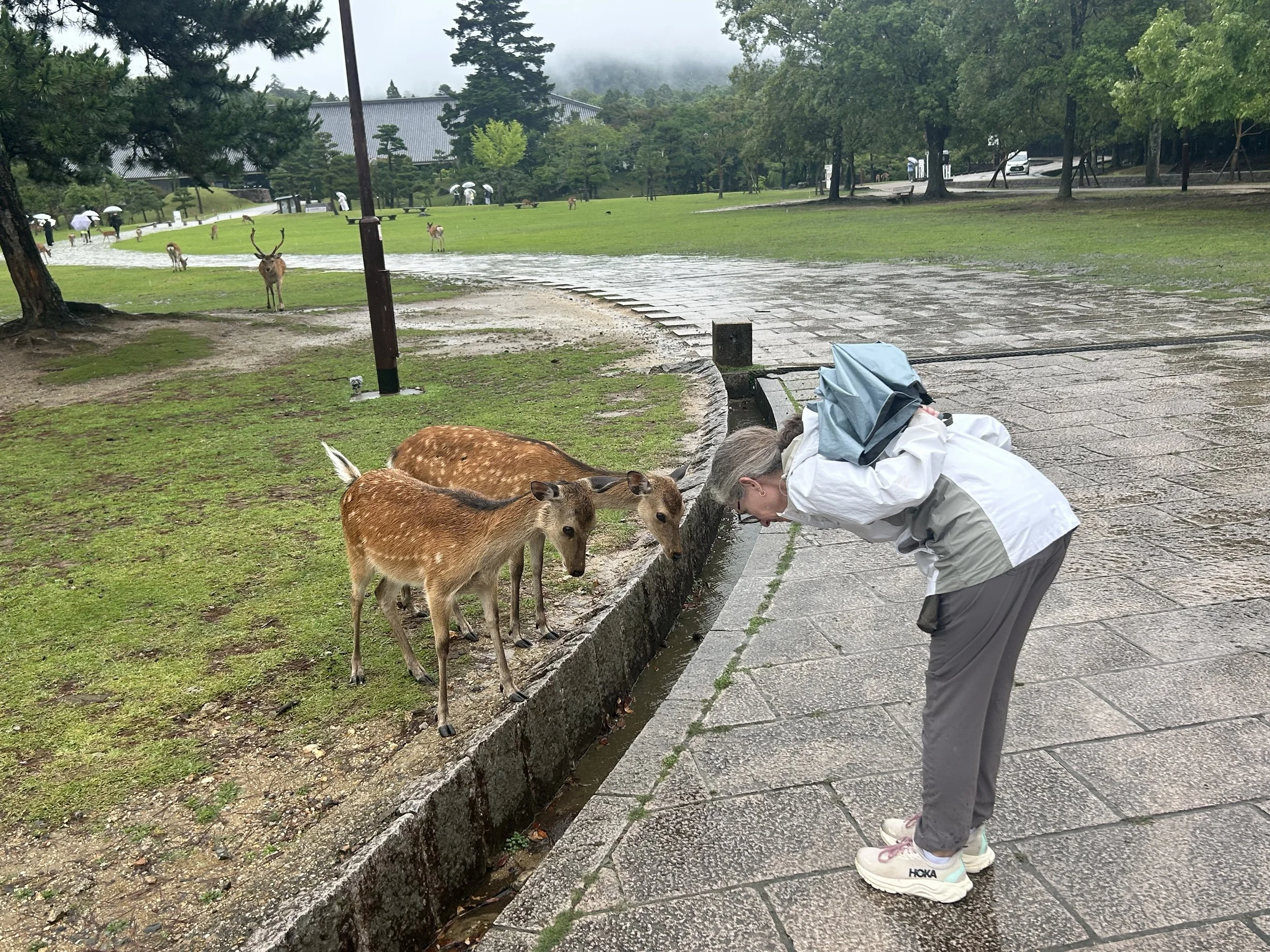
Cultural norms can sometimes grow viral.
But bowing is just the most obvious part of interactions; underlying it seems to be an actual acknowledgement that the person you are speaking with is worth paying attention to, worth taking seriously.
I’ve heard some pushback on some of these observations over the past couple of weeks. Japanese women note that the same men cleaning up stadiums after games can be slobs inside their homes. Americans watching the Japanese at the World Cup are engaging in a sort of ninja logic to rationalize it: maybe there’s something wrong with despoiling our stadiums and heckling the opposing team --or cutting in line or jaywalking or celebrating self over society -- but, hey, it’s even more important to celebrate our freedom to do whatever the heck we want. It’s precisely our unwillingness to abide by rules and act collectively, we argue, that is the source of American invention and creativity, and if things get broken along the way, well, that’s an unfortunate tradeoff.
But trashing our public spaces, dissing our workplaces and kneecapping anyone who gets in our way doesn’t make America great. It makes us jerks.
Rediscovering respect wouldn’t make us sheep. It might make us civil.
It might also save us some time and money and anxiety. When everybody works together to take care of our streets and stadiums and sidewalks, our air and water, our rails and trails, we don’t have to pay as many people to clean them up – there are no custodians in Japanese schools. When we realize lines are pretty efficient tools, the trains and subways and buses actually run on time and we get where we are going faster. When employees feel a sense of responsibility, at least to each other and maybe even to their companies to each other, they may stay on longer and will probably produce better products. When others acknowledge our existence and show us respect, we become more happier and more productive. And it ripples outward.
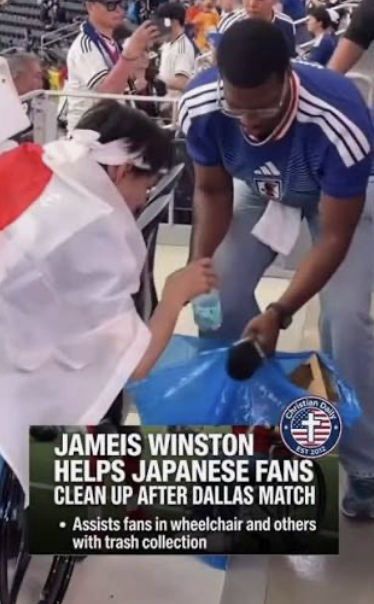
Maybe the stadium cleaning will ripple in America. After one of the games NFL QB Jameis Winston went viral when he was spotted helping with cleanup. And Portugese fans started doing it too.
There’s something valuable here. There’s got to be some middle ground between “rules are made to be broken” and “rules are rules.”
****
It’s one of our last days in Japan, midmorning. My wife and I are waiting in a train station in downtown Kyoto. We look to our right. There are two other people in the station. Only two people. But they wait patiently in the boarding area for the train.
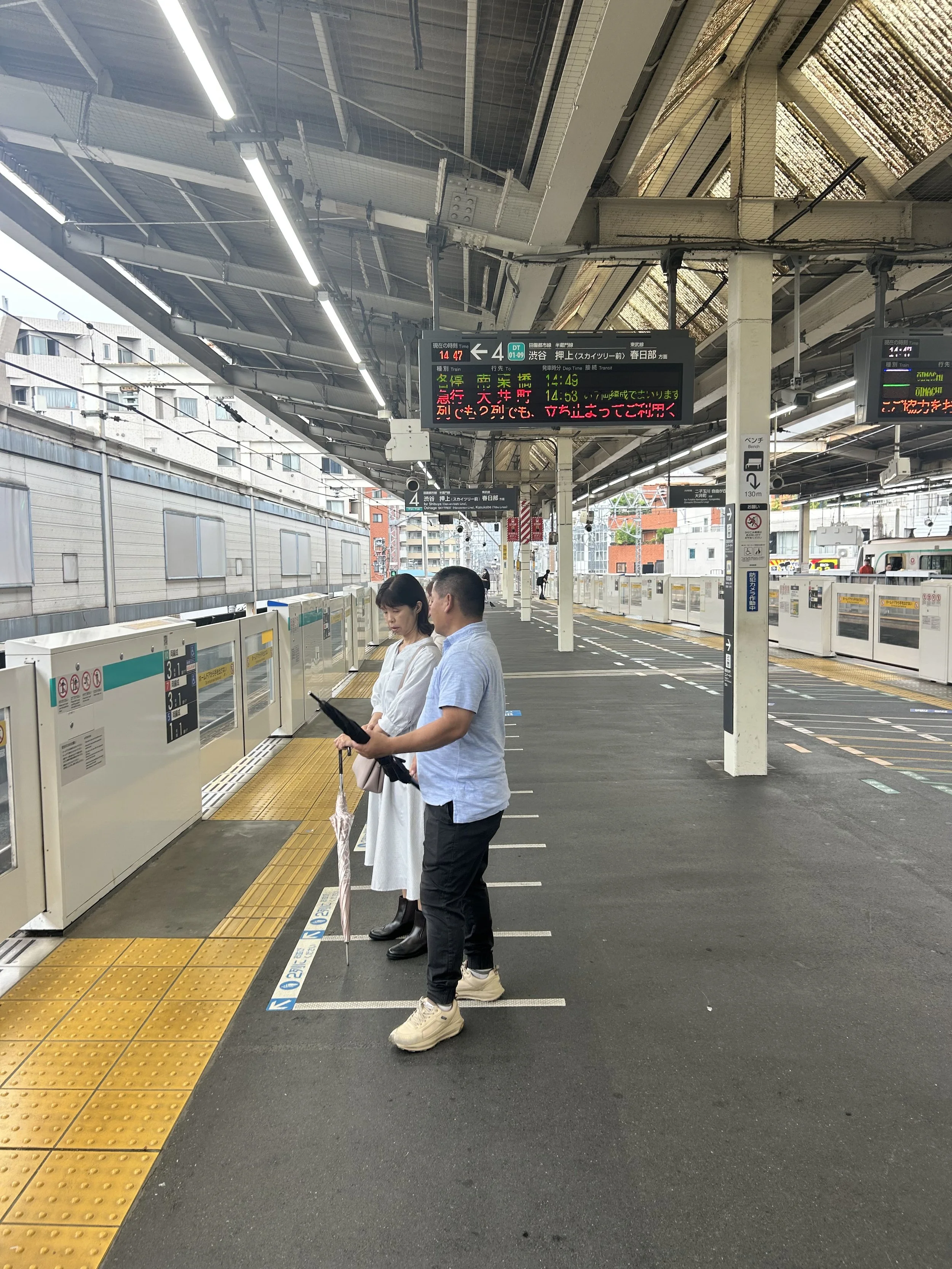
Maybe there’s some value in respect, even when nobody’s looking.
I shake my head, then look down at the instruction on the pavement. “Line forms here for train.” I take a step back to stand behind my wife. Now we have our own line. We respect the rules not just because we are visitors but because it feels kinda good, as a wild experiment, to respect anything.
Notes:
In Japan, the tradition of gomi hiroi (trash cleaning up) flows from the proverb “ Tatsu tori ato wo nigosazu," which translates to "a bird leaves no trace behind." The Boy Scout version of this is “leave it better than you found it.”: https://www.cbsnews.com/texas/news/japanese-fans-win-hearts-clean-dallas-stadium-world-cup/https://www.scout.org/who-we-are/scout-movement/scoutings-history
The order of the Shibuya Scramble breaks down only after a Japanese victory: https://www.tiktok.com/@emmathomasson83/video/7653733770549415190?is_from_webapp=1&sender_device=pc
Kaizen wiki: https://en.wikipedia.org/wiki/Kaizen
Some pushback from Japanese women on stadium cleaning – “do it at home too!”: https://www.bbc.com/news/articles/crel9xlp8r1o